
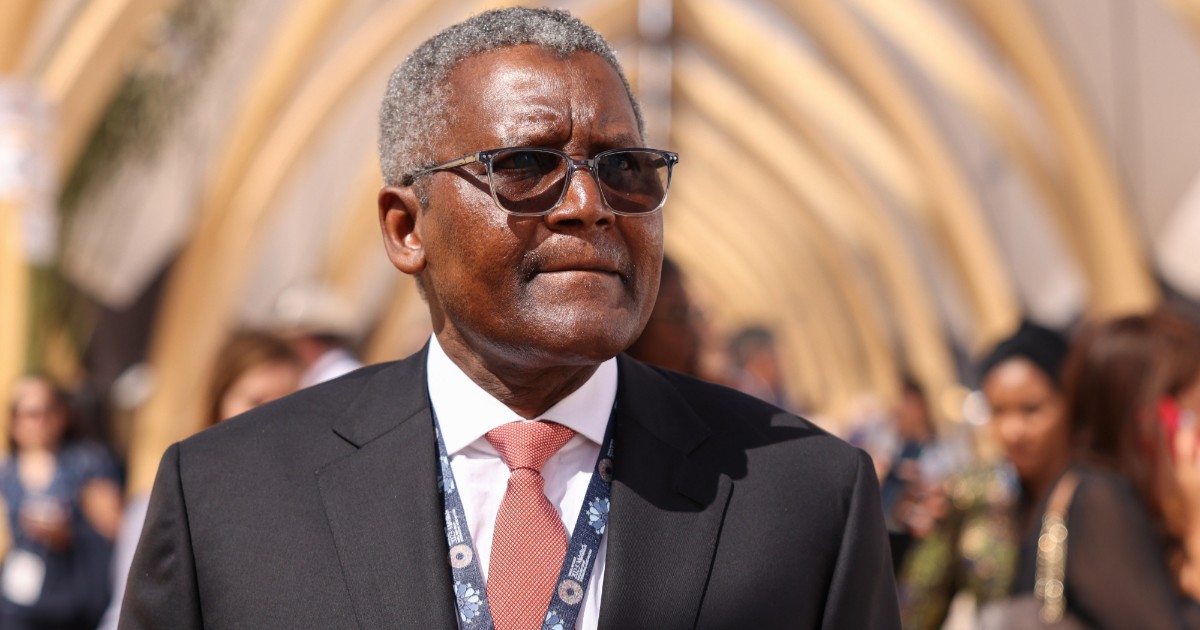
The report, released as world leaders and executives gather for the World Economic Forum in Davos, shows that global billionaire wealth rose by more than 16 percent in 2025 to a record $18.3 trillion. In Africa, the surge was even steeper, with billionaire wealth expanding at more than twice the global pace.
Oxfam’s report, titled Resisting the Rule of the Rich: Protecting Freedom from Billionaire Power, argues that the rapid accumulation of wealth at the top is being reinforced by political influence and policy choices that favour the ultra-rich at the expense of the wider population.
The organisation points to Nigeria’s tax system as a stark illustration. A case study cited in the report shows that Dangote Cement, despite recording profit margins as high as 86 percent over the period reviewed, paid an effective tax rate of just 2 percent.
![Shoppers and traders in a congested street market in Lagos, Nigeria, on Monday, July 17, 2023. [Benson Ibeabuchi/Bloomberg via Getty Images]](data:image/svg+xml;charset=utf8,%3Csvg%20xmlns%3D'http%3A%2F%2Fwww.w3.org%2F2000%2Fsvg'%20width%3D'790'%20height%3D'445'%20data-ring-placeholder%3D'1'%3E%3C%2Fsvg%3E "Shoppers and traders in a congested street market in Lagos, Nigeria, on Monday, July 17, 2023. [Benson Ibeabuchi/Bloomberg via Getty Images]")
Ahmed Hamza Tijani, Oxfam’s Country Director in Nigeria, said the situation highlights deep structural failures. He noted that small businesses and ordinary citizens are burdened by multiple taxes, while the wealthiest individuals benefit from concessions that sharply reduce their tax obligations.
The report also links the rise in billionaire wealth to Africa’s deepening debt crisis. Across the continent, spending on debt servicing is now about 150 percent higher than the combined expenditure on education, healthcare, and social protection, according to Oxfam’s analysis.
Tijani warned that Nigeria’s reliance on borrowing is worsening pressure on public services, arguing that weak taxation of the super-rich is forcing the country to prioritise debt repayments over investments in schools and hospitals.
Oxfam is calling for more progressive taxation and stronger oversight to curb what it describes as the growing influence of billionaire power on economic policy, both in Nigeria and across Africa.