
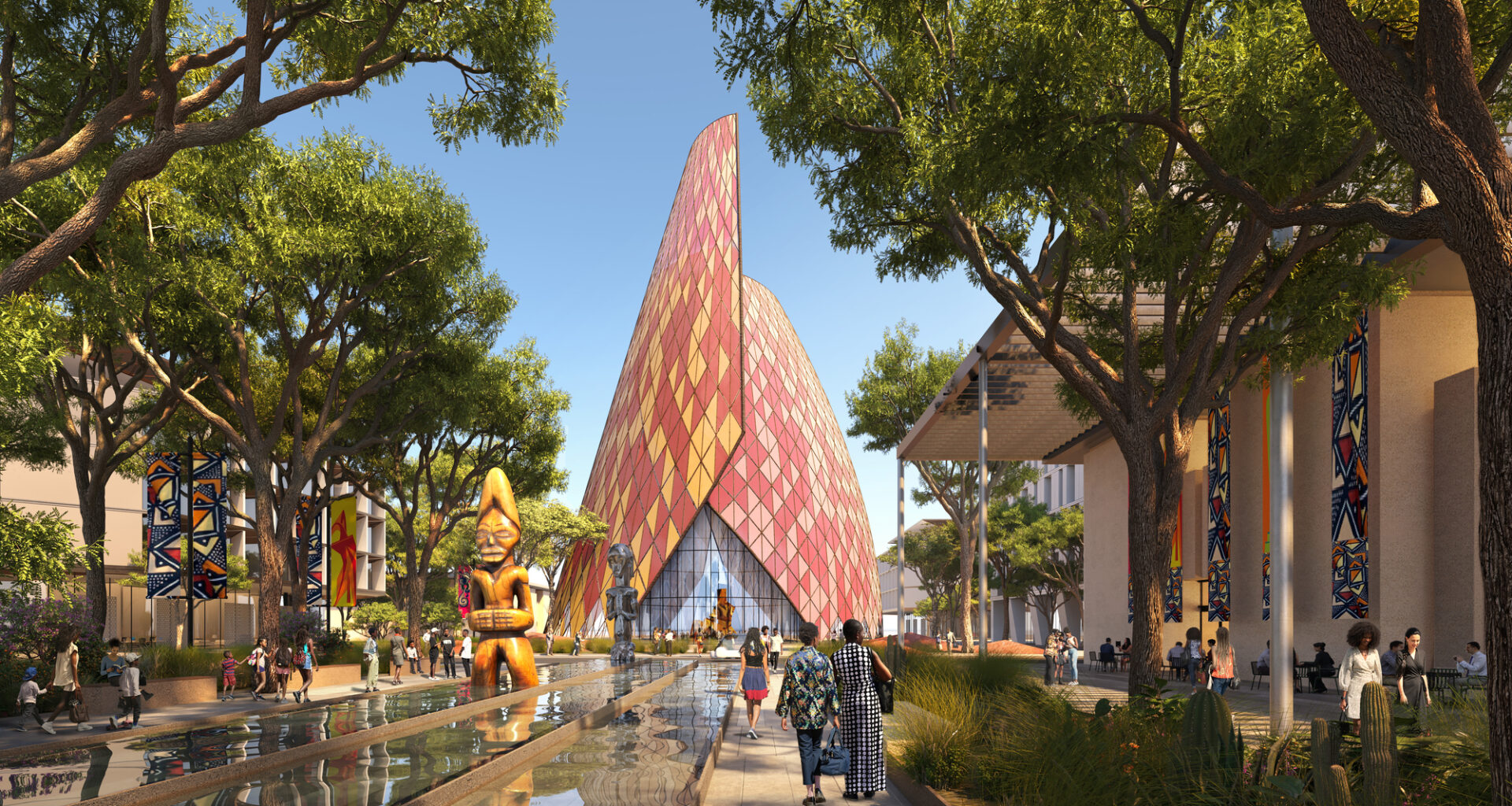
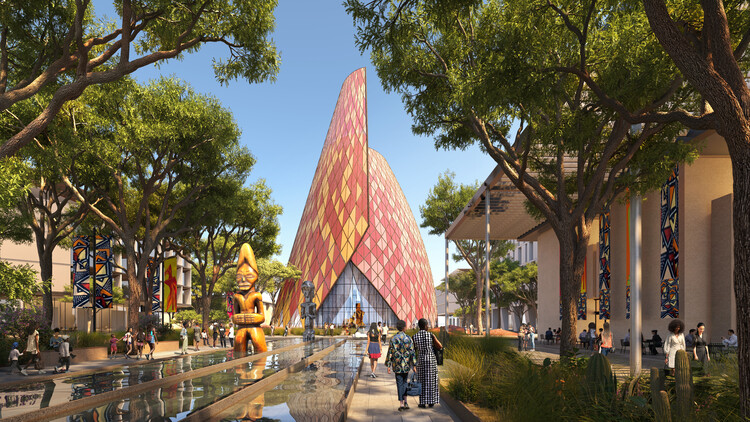
 A high-rise business and cultural district to the north connects with Luanda’scity centre. Image © Foster + Partners
Share
Or
https://www.archdaily.com/1038201/foster-plus-partners-plans-airport-led-urban-development-outside-luanda-angola
Foster + Partners, in collaboration with Angola‘s Ministry of Transport, has unveiled the master plan for the Icolo e Bengo Aerotropolis, a large-scale development planned around the recently completed Dr. Antonio Agostinho Neto International Airport. The proposal organizes business, research, residential, and hospitality programs within a landscape-led framework structured around the airport. Development is planned to proceed in phases, beginning with the business and cultural district located to the north of the site.
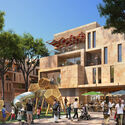

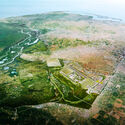
The master plan occupies a 13,480-hectare site approximately 40 kilometers inland from central Luanda and is conceived as a regional hub for Central and Southern Africa. It is structured around three districts positioned to the north, west, and south of the airport. The northern district comprises a high-rise business and cultural zone intended to strengthen connections with Luanda’s existing urban core. To the west, a low-rise research and innovation district interfaces with adjacent residential neighborhoods, while the southern district is planned as a hospitality-focused area with resorts, hotels, villas, and sports facilities overlooking Quisama National Park.
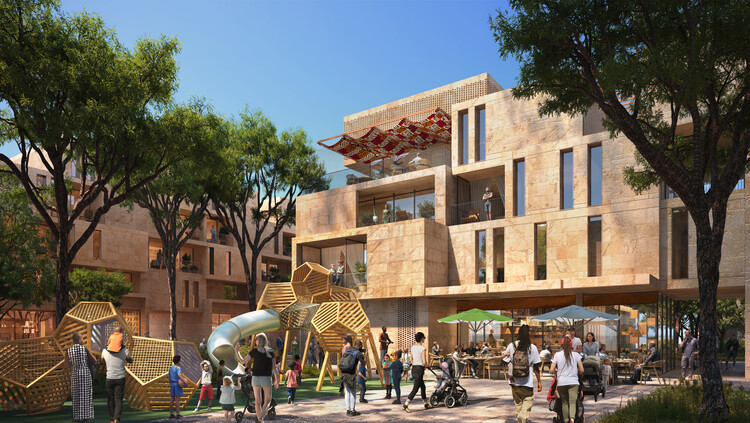 A business and cultural district to the north connects with Luanda’s city centre. Image © Foster + Partners
A 42-kilometer landscaped green loop acts as the project’s primary connective element, linking the three districts while integrating open space, mobility infrastructure, and environmental systems. The loop incorporates public transport routes, including buses and trams, alongside cycling paths to support sustainable movement across the site. It also forms part of the drainage strategy, directing rainwater toward the Kwanza River.
Related Article Angola Introduces Large-Scale Concrete 3D-Printing to Address Housing Crisis
Environmental considerations are embedded through renewable energy systems and passive design strategies. Approximately three square kilometers of photovoltaic panels are planned alongside the airport runways, contributing to the project’s energy supply. The alignment of the urban grid with the runways and prevailing wind directions is intended to enhance natural ventilation across public spaces.
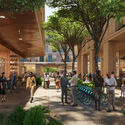
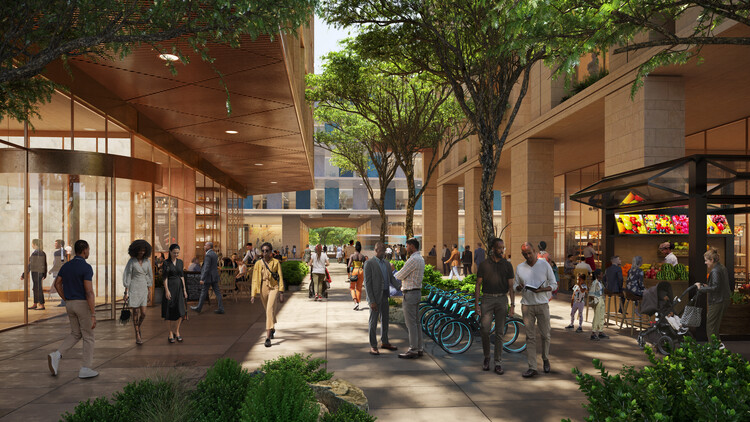 A low-rise research and innovation quarter to the west joins up with an existingresidential neighbourhood. Image © Foster + Partners
In other news from Angola, discussions around the country’s housing shortage continue alongside emerging approaches to construction, including recent experiments with automated 3D concrete printing. Meanwhile, further announcements from Foster + Partners include plans for a public sculpture garden adjacent to the Rijksmuseum in Amsterdam, planning approval for the redevelopment of 1 St James’s Square in London, and the public opening of the Zayed National Museum in Abu Dhabi as part of the Saadiyat Cultural District.