
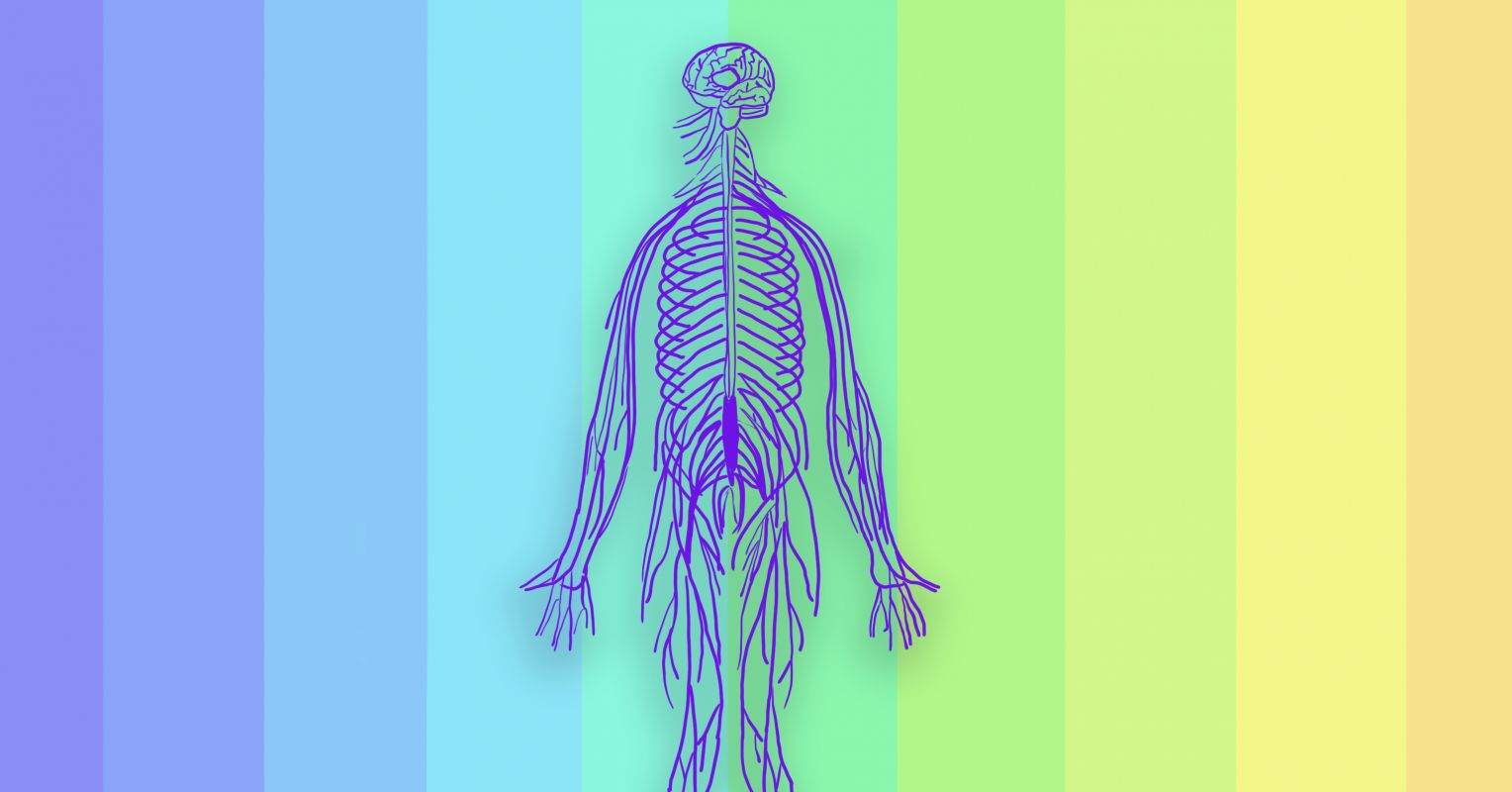
At every moment, there is something a person or animal is trying to do (a goal) and a reason they are trying to do it (a context for that goal). In the Affect Management Framework (AMF; Haynes-LaMotte, 2025), contextualized goals are constantly shifting in the brain, informed by the senses of the world and the body (vision, hearing, touch, taste, smell, interoception, and proprioception) as well as the semantic factors of meaningfulness, certainty, and agency.
Because our affect is attached to our goals, the contextualized goals we take on and how and when we choose to pursue or relinquish them across similar situations can be described as different affect management policies.
In this post, I hope to expand upon the affective side of the interoceptive senses as described in the AMF:
Interoception and Its Idiosyncrasies
Interoception, or the brain’s sense of the internal milieu of the body, is one way that the brain’s goals are evaluated. For example, when stepping on a LEGO by accident, it is the interoceptive pain signals and when they stop that tell a person when they have satisfied the relevant goal. Several actions humans perform every day are evaluated interoceptively (e.g., eating, sleeping, going to the bathroom, turning the thermostat up or down).
As pointed out by Velasco and Loev (2021), interoceptive senses are not always strictly evaluative (e.g., the feeling of air filling your lungs is neutral), but they become evaluative to the extent they might prompt a person to act (i.e., by creating a goal; Köteles, 2021).
Nearly all of the interoceptive sensations travel through a shared homeostatic afferent pathway to the brain’s insula, where they are represented in conscious experience (Craig, 2015). Also included in this pathway is “affective touch,” mediated by slow-conducting nerve fibers dispersed throughout the skin called C-tactile afferents (Crucianelli, Enmalm, & Ehrsson, 2022).
Interestingly, the common cold is believed to impact affect via the humoral pathway to the brain, where cytokines from the immune system and hormones make it into the brain via blood and cerebrospinal fluid (Dantzer, Konsman, Bluthé, Kelley, 2000; Savitz & Harrison, 2018). Ceunen, Vlaeyen, and Van Diest (2016) point out that, from these kinds of examples, “it should be clear that really any type of sensory information, and not merely that from homeostatic pathways, can get integrated into the overall body percept” (p. 12).
Compared to the purely exteroceptive senses (i.e., vision and audition), there are a few idiosyncrasies about the ways in which interoception operates: First, interoceptive accuracy for most people tends to be quite poor (Ferentzi, Drew, Tihanyi, & Köteles, 2018; Köteles, 2024), and accuracy for one type of body sensation is not generalizable to accuracy for others (Ferentzi, Bogdány et al., 2018). This also coincides with the finding that primates (including humans) are the only animals with physiology that allows a spatially distinct mapping of the viscera to enter conscious awareness (Craig, 2015), which suggests that conscious interoceptive accuracy could not have been a necessary trait in evolutionary history.
Second, evidence suggests that the balance between prediction and error in interoception is heavily biased toward prediction. Evidence for this includes the agranularity of visceromotor cortices, which means that they are structurally similar to other areas of the brain that are in charge of action (e.g., the primary motor cortex) and work by issuing hyper-precise predictions to the body (Barrett & Simmons, 2015).
Additionally, Shaffer, Barrett, and Quigley (2023) found that, in the vagus nerve, a key player in interoception and allostasis that communicates between the brain and the body’s viscera, “the ascending and descending signals modulate one another, calling into question the strict segregation of sensory and motor signals” (p. 1). This likely reflects the brain’s need to keep the organism within biologically viable bounds (i.e., allostasis), so interoception and the processes that control it operate as a mixture of perception and action (pers-action).
The third interoceptive idiosyncrasy, related to the above points, is that body sensations in consciousness are highly susceptible to top-down influences (Köteles, 2021). For example, about 50-60 percent of people report a tingling sensation in one or another body part when it is purposefully the focus of attention (Tihanyi & Köteles, 2017; Tihanyi, Ferentzi, & Köteles, 2017).
The fourth idiosyncrasy is that interoception is frequently evaluative (i.e., affective) in a way that exteroception is not without additional meaning-making: If someone feels a pain in their leg, knowing the reason it’s happening is not required for the pain to be a negative evaluative part of consciousness. The neuroscientific support for this idea lies in the substantial overlap between the SN and the interoceptive cortex in the insula (Katsumi et al., 2022; Molnar-Szakacs & Uddin, 2022).
Taste and Smell as Interoceptive Senses
In addition to interoception itself, Köteles (2021) classifies olfactory and gustatory senses as partly interoceptive and partly exteroceptive, since they represent the state of objects in the environment, but ones that might interact with one’s own body (more distally in the case of smell and more proximally in the case of taste). Smell has been hypothesized to be the most ancient sense in animals and has a clear evaluative component, as evidenced by its involvement in behavior, attention, learning, and mood (Keller, 2011; Köteles, 2021; Miranda, 2012; Soudry, Lemonge, Malinvaud, Consoli, & Bonfils, 2011). Most tastes and smells can be meaningfully described from pleasant to unpleasant (Köteles & Babulka, 2014; Louks, 2024), and the existence of aromatherapy (Cooke & Ernst, 2000; Herz, 2009) and the use of food to reduce negative and enhance positive mood states (Cardi et al., 2015) further support their affective nature.
Feldman and colleagues (2024) describe that “primary interoceptive cortex has structural features more akin to primary olfactory (O1) and gustatory cortex (G1),” which also supports their inclusion as partly interoceptive senses. In summary, what the interoceptive senses (i.e., interoception, taste, smell) share is that they operate as one way to evaluate the brain’s goals, and can create their own goals as needed. Other ways of evaluating the brain’s goals involve semantic processes, deeply interwoven with interoceptive and exteroceptive ones (Pessoa, 2022), but which I would argue are worth the theoretical distinction. These can be broken down into the categories of meaningfulness, certainty, and agency, and these will be the focus of my next several blog posts.