
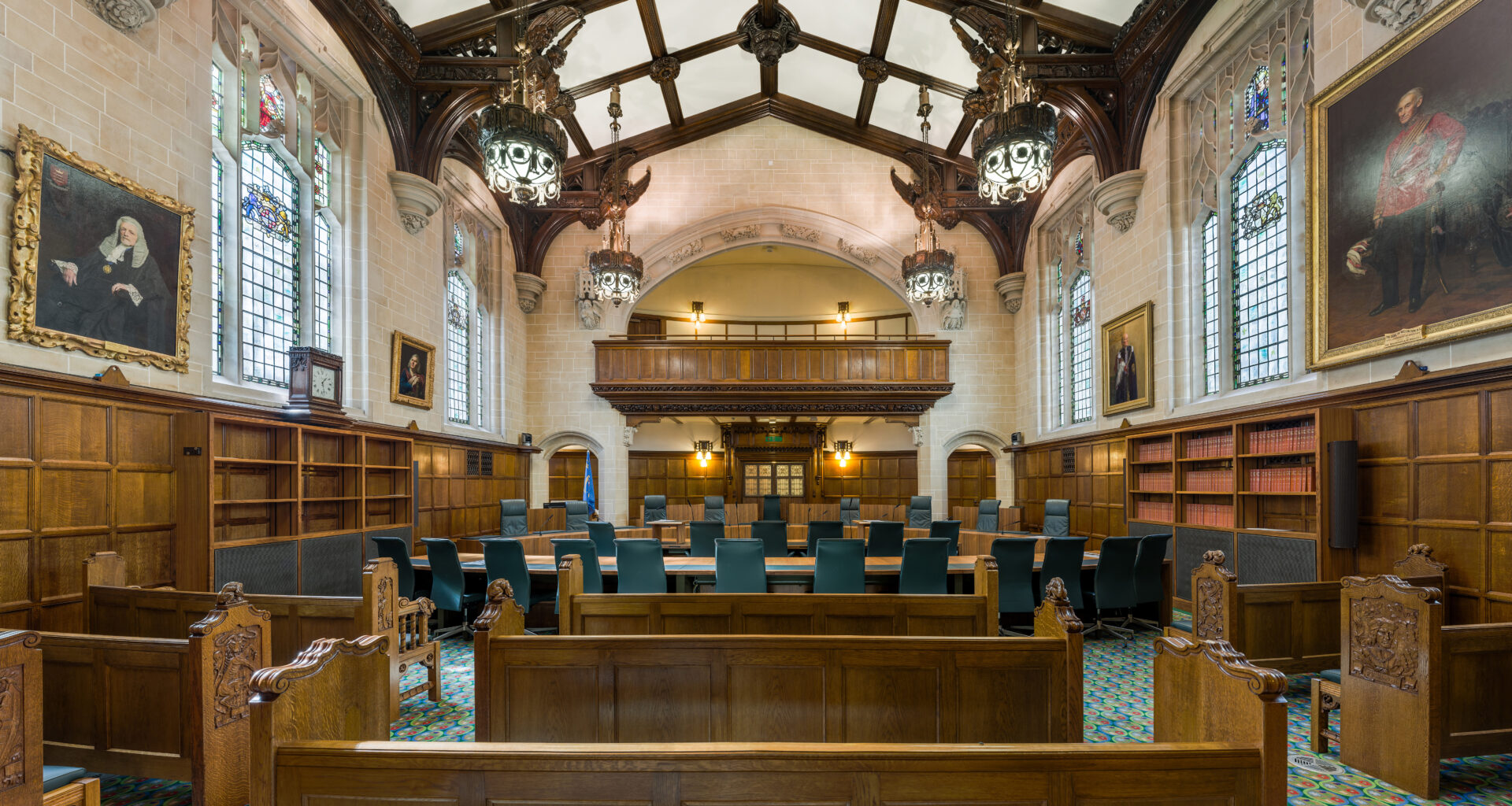
The United Kingdom’s Ministry of Justice on Tuesday announced its plans to expand the court estate by transforming four temporary court buildings into permanent fixtures, in a move to increase access to justice. The four courts in Fleetwood, Telford, Chichester, and Cirencester have been used as Nightingale courts since the Covid-19 pandemic.
“This move secures 11 additional courtrooms across the country where capacity is most needed, covering a mixture of criminal, family, and civil cases–tackling the caseload and delivering swifter justice for [countless] victims,” the press release stated.
Nightingale courts were introduced during the pandemic to provide additional space for hearings, but many were kept open afterwards to address the backlog of cases.
The UK Law Society data in March 2025 showed that the backlog in UK criminal courts reached nearly 77,000 cases. More than 18,093 Crown Court cases have been outstanding for a year or more. The BBC also reported that “Crown Court backlogs in England and Wales had risen to nearly 80,000 cases in a new record, with trials listed as far ahead as 2030.”
According to the Institute for Government, “The length of delays now poses a fundamental risk to the integrity and functioning of criminal justice.” “At the heart of this problem is poor productivity: magistrates’ courts and the crown court are processing fewer cases per day than before the pandemic, even though average case complexity has fallen since 2016.”
Both courts are failing to keep up with the ever-increasing demand. The key contributors to the low demand include inadequate funding, high workloads, staff shortages and inexperience, poor court administration, crumbling infrastructure, and problems with technology.
Minister of Justice Sarah Sackman, when addressing the state of the UK Justice System, emphasised that investment alone is not enough. She said the government must deliver bold reforms to fix the broken system it inherited and make it more favourable for the efficient administration of justice. She added, “This marks a new chapter for these courts. We’re ending the Nightingale era and making a lasting investment in justice. The permanent courtrooms, as part of our Plan for Change, will help deliver faster justice and give much-needed clarity to victims and the staff who serve them.”