
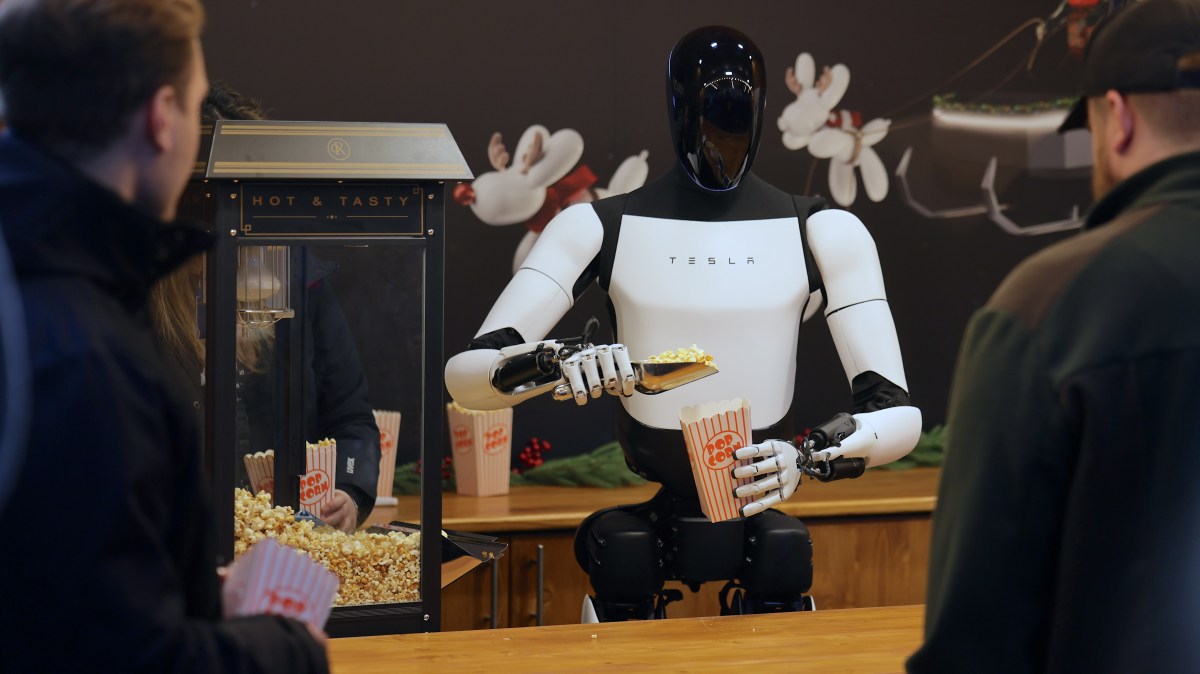
Tesla said it will increase capital expenditure to more than $20 billion this year as it invests in factories to build batteries, robots and artificial intelligence chips to “position the company for the next era”.
The electric vehicle maker plans to ramp up its production of Optimus humanoid robots and Robotaxi vehicles that operate without human drivers. It also wants to ensure it has greater control over its supply chain amid rising geopolitical risks.
Elon Musk, 54, Tesla’s chief executive, said the company is trying to “make sure that we can scale to very high volume with autonomous vehicles, with human robots and that we address geopolitical risk”.
He said a lot of companies have their “head in the sand” regarding geopolitical risk and “hope nothing bad will happen”. “I’m way more paranoid than that,” he told investors on an earnings call on Wednesday night.
He said he wants to ensure that Tesla “can continue to build batteries and robots and AI chips no matter what happens”.
Tesla plans to start production in six new factories this year, build more capacity at existing plants, and spend money on building Tesla’s AI compute infrastructure. The company is halting production of its S and X model vehicles and will repurpose the production facilities in Fremont, California, for Optimus.
• UK Tesla sales are biggest casualty as electric vehicle growth slows
Last year, Tesla’s capital expenditure was $8.5 billion.
Vaibhav Taneja, the chief financial officer, said the company would initially use its own cash reserves to fund the spending increase, but said Tesla has also had conversations with banks about loans. Tesla had $44 billion of cash and investments at the end of 2025.
The electric-vehicle maker plans to invest $2 billion in xAI, Musk’s artificial intelligence company, as it shifts its focus towards AI after reporting its first annual decline in revenues.
Tesla’s 2025 revenue fell 3 per cent to $94.8 billion, hit by the end of federal tax credits and competition in China and Europe. In the three months to the end of December, the company reported revenue of $24.9 billion, down 3 per cent year-on-year but narrowly beating analysts’ average estimate of $24.79 billion. Adjusted net income fell 16 per cent to $1.8 billion in the fourth quarter, ahead of Wall Street expectations.
The shares rose $9.28, or 2.2 per cent, to $439.74 in after-hours trading on Wednesday.