
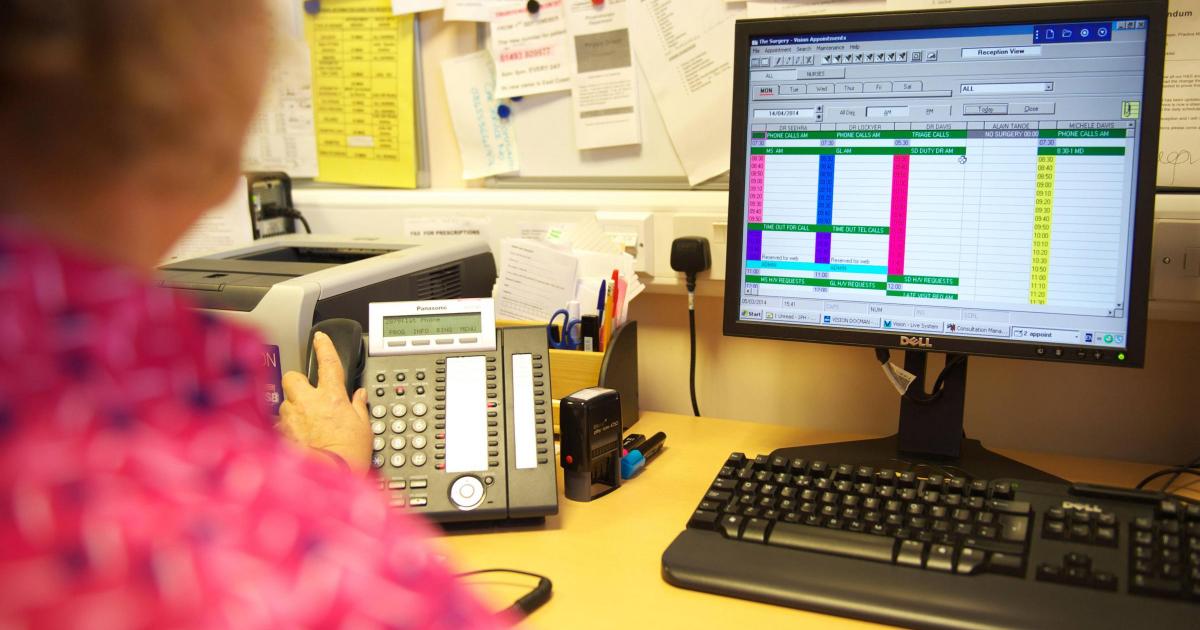
The call follows the College’s annual GP Voice Survey.
Some 45% of doctors disagreed when asked if their PC or laptop hardware was fit for purpose, while a majority, 53%, said the same of their practice software.
Only 43% agreed that their hardware was adequate, falling to just 35% for software.
Concerns were even sharper when GPs were asked about their systems’ ability to share information across the health service.
The survey revealed that 55% of respondents did not believe their IT systems were capable of working effectively with secondary care or community pharmacists.
A briefing by the RCGP Scotland and the BMA warns that these “interfaces are points of high risk for patients, accounting for 50% of all medical errors”.
In its manifesto for the 2026 Scottish Parliament election, General practice: The solution to the NHS crisis, RCGP Scotland is calling on all political parties to commit to providing GP practices with modern, fit-for-purpose IT systems and premises capable of supporting contemporary models of patient care.
The College warns that “stagnant IT and infrastructure” is part of the “perpetual crisis” facing GPs.
RCGP Scotland states: “A general practice premises and infrastructure strategy is needed to modernise general practice, boost efficiency, and to distribute the capital investment required for these upgrades.
“The poor state of general practice buildings and IT is hampering the ability of GPs and their teams to deliver the best patient care. Both in-hours and out-of-hours GP premises need the space and resources to accommodate the necessary education and growth of the GP workforce and expanding primary care staff teams.
“IT systems and equipment are clunky, and investment is urgently needed in solutions to boost efficiency and modernise general practice now and for the future.”
Dr Chris Williams from the RCGP said poor IT was leaving GPs with one hand tied behind their back (Image: Stewart Grant)
RCGP Scotland Vice Chair Dr Chris Williams told The Herald: “GPs across Scotland are working tirelessly to meet rising patient need, but too often they are doing so with one hand tied behind their backs due to poor and unreliable IT systems.
“The results of our GP membership survey are unequivocal: even the most basic tools, such as functioning hardware and software, are not consistently available in GP practices.
“When more than half of GPs tell us their IT systems are not fit for purpose, and when safe, seamless communication between primary and secondary care cannot be relied upon, patient care is put at risk and clinicians are forced to work under entirely avoidable pressures.
“No GP should be waiting 20 minutes every morning for slow computers or outdated systems to start up.
“That is valuable time that should be spent on essential clinical work. This is why we are urging the next Scottish Government to make modern, fully interoperable IT infrastructure for general practice an urgent priority.
“Investing in proper digital tools will reduce inefficiencies, ease frustration for GPs, and, crucially, ensure patients receive faster, safer and more joined-up care.”
In its manifesto, RCGP Scotland warns that general practice is being pushed to breaking point by chronic underinvestment and workforce shortages.
GPs deliver around 90% of patient contact with only a small share of NHS funding, yet Scotland now has fewer full-time equivalent GPs than in 2013 and is set to miss the Scottish Government’s target of recruiting 800 additional GPs by 2027.
The manifesto calls for a major rebalancing of NHS spending towards primary care, with general practice’s share of the budget restored to 11% in the next parliament and rising to 15% over the longer term.
It argues that shifting care out of hospitals and into communities will improve outcomes, reduce pressure on acute services and offer better value for money.
The College also calls for extra resources to be targeted at deprived communities to break the “inverse care law”, where those with the greatest need often receive the least care.
The manifesto also emphasises prevention, urging cross-government action on the wider drivers of poor health, such as housing, poverty, addiction and the environment, and backing measures including community link workers in every practice and a “compassionate, public-health-led” approach to drug deaths.
A Scottish Government spokesperson said: “We recognise the importance of GPs having equipment and systems that are fit for purpose.
“Our draft budget for 2026-27 allocates £1.4 billion for General Medical Services and the Primary Care Fund, which includes funding to ensure GP practices are properly supplied with IT.”