
Britain recently increased the amount the NHS pays for branded, pharmaceutical drugs, following heavy industry lobbying and following trade negotiations with the Trump administration — all in the hopes of attracting new investment into the struggling sector.
Shadow Trade Secretary Andrew Griffith was blunt in his assessment. “AstraZeneca’s a great British company but under this government it’s investing everywhere in the world other than its U.K. home. When we are losing investment to communist China, alarm bells should be ringing in No 10 Downing Street.”
Conspicuously absent from Starmer’s haul was any mention of net zero infrastructure imports, like solar panels, a reflection of rising concerns about China’s grip on Britain’s critical infrastructure.
Xi returns
So what next? As Starmer prepares to fly back home, attention has already turned to his next encounter with the Chinese leader.
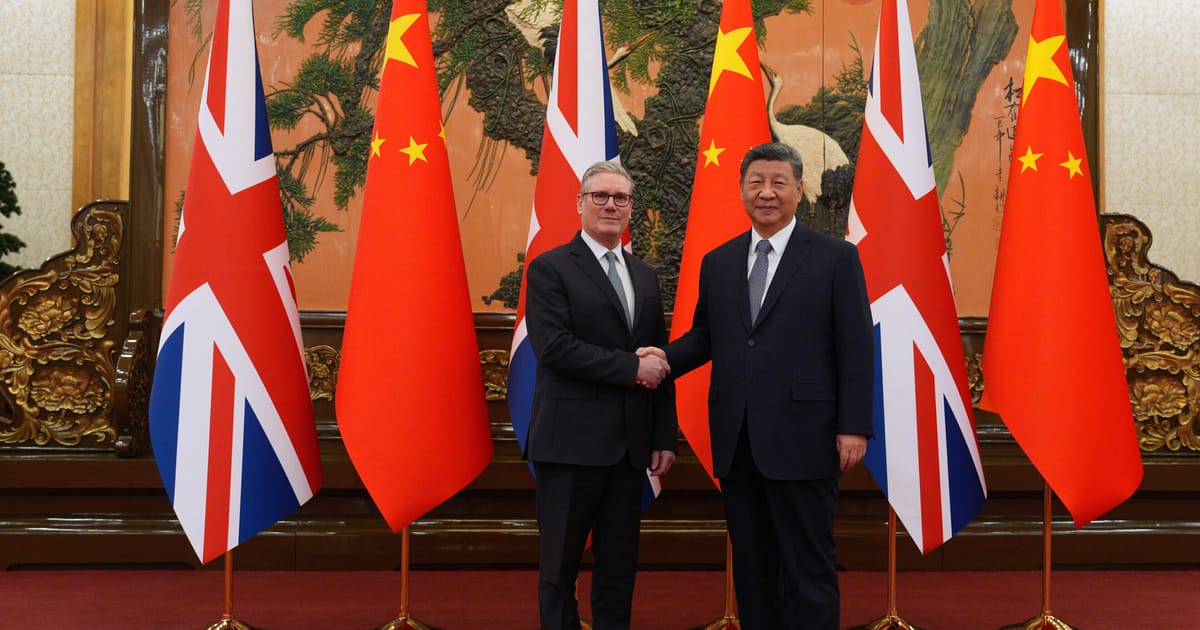
On Thursday, Britain opened the door to an inward visit by Xi Jinping, with Downing Street repeatedly declining to rule out the prospect of welcoming him in future.
Asked about the prospect of an inward visit — which would be the first for 11 years — Starmer’s official spokesperson told reporters: “I think the prime minister has been clear that a reset relationship with China, that it’s no longer in an ice age, is beneficial to British people and British business.”
As Starmer’s trip draws to a close, one thing is certain: there is more to come.
“This isn’t a question of a one-and-done summit with China,” Starmer’s spokesperson added. “It is a resetting of a relationship that has been on ice for eight years.”