
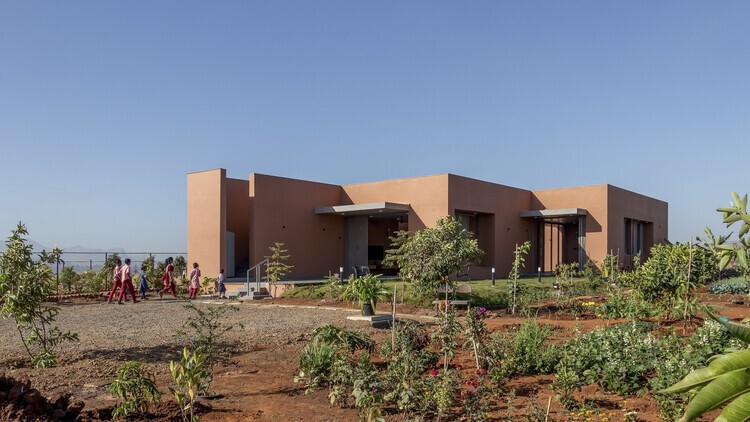
 Void House/ pk_iNCEPTion. Photo © Yash Katariya
Share
Or
https://www.archdaily.com/1038156/framing-life-through-voids-and-verandahs-the-architecture-of-pk-inception
Founded as a practice working across architecture and community-focused projects, pk_iNCEPTiON is based in Maharashtra, India. The studio, one of the winners of the ArchDaily 2025 Next Practices Awards, works on rural schools, houses, libraries, and public buildings, with a focus on spatial organization and adaptability. Operating across varied social and climatic contexts, pk_iNCEPTiON approaches design through careful attention to movement, scale, and the relationship between built form and open space.
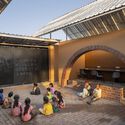
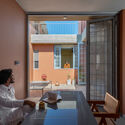
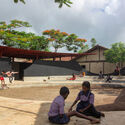
pk_iNCEPTiON does not begin its projects with form. It begins with people, routines, and the spaces where everyday life unfolds. Across schools, houses, and community buildings, the practice works deliberately with thresholds, shared edges, and moments of overlap, treating architecture not as an object to be admired but as a framework that supports use, change, and occupation over time. Meaning is built gradually, through spatial sequences, calibrated scales, and a careful balance between the built and the unbuilt.
 Background image courtesy of pk_iNCEPTiON
This approach is evident in how the studio responds to context. In Hiwali, a remote farming settlement in the Satmala range, the school avoids the language of an institutional building. Instead, it settles into terraced farmland, shaped by wind, water flow, and the scale of children’s bodies. A water moat protects the site from mountain runoff, while a zigzag plinth organizes movement across the sloping terrain. Circulation, seating, and gathering are combined into a single surface, allowing learning to extend beyond enclosed rooms and into daily movement through the building.
Related Article 20 Practices Shaping the Future of Architecture: Winners of the ArchDaily 2025 Next Practices Awards
The same attentiveness to use and occupation informs the practice’s residential work. House of Overlaps, set on a narrow plot in the semi-rural town of Vani, is organized around a sequence of open-to-sky voids that structure light, ventilation, and degrees of privacy. A street-facing verandah operates as both an informal office and a living space, mediating between domestic routines and public engagement. Rather than fixing boundaries between functions, the plan allows them to shift throughout the day, acknowledging that domestic life is layered and temporal rather than static.
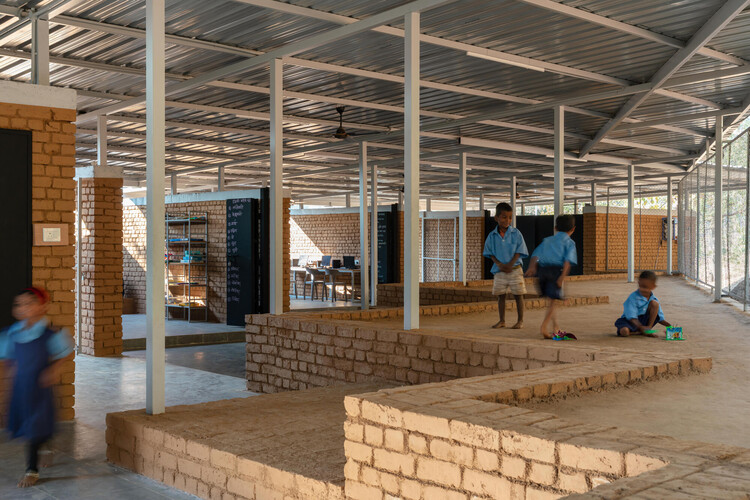 Hiwali School/ pk_iNCEPTion. Photo © Pranit Bora Studio
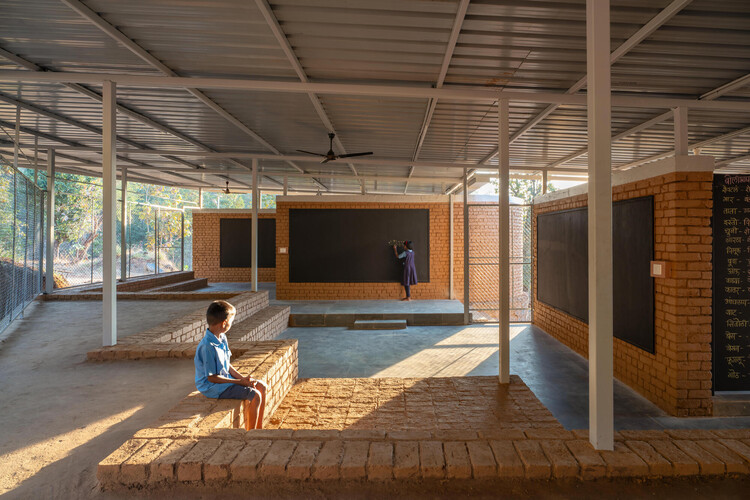 Hiwali School/ pk_iNCEPTion. Photo © Pranit Bora Studio
Void House develops this idea through subtraction rather than division. Positioned at the edge of farmland, the house is structured around a central open void, with parallel load-bearing walls supporting a floating roof. Movement is slowed and redirected: entry leads first to an open court before opening toward the fields. Shaded verandahs and spill-out spaces extend living outward while maintaining privacy, allowing the house to frame sky and landscape without dissolving its boundaries.
In its public and semi-public projects, pk_iNCEPTiON tests how architecture can invite participation without prescribing behavior. The Rural Library in Kochargaon is organized around a central courtyard, with reading rooms and book stacks arranged as pavilions rather than enclosed halls. Books are made visible from the street and the adjacent temple pavilion, drawing people in through curiosity. Sliding shutters transform into blackboards, enabling the courtyard to shift between reading space, classroom, and gathering area. Material choices such as load-bearing masonry, pitched metal roofs, and local stone are pragmatic, supporting durability and ease of maintenance while reinforcing openness.
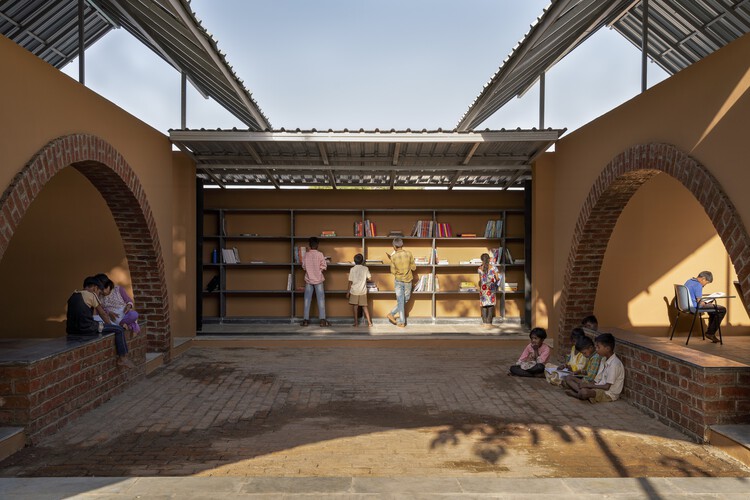 Rural Library/ pk_iNCEPTion. Photo © Pranit Bora Studio
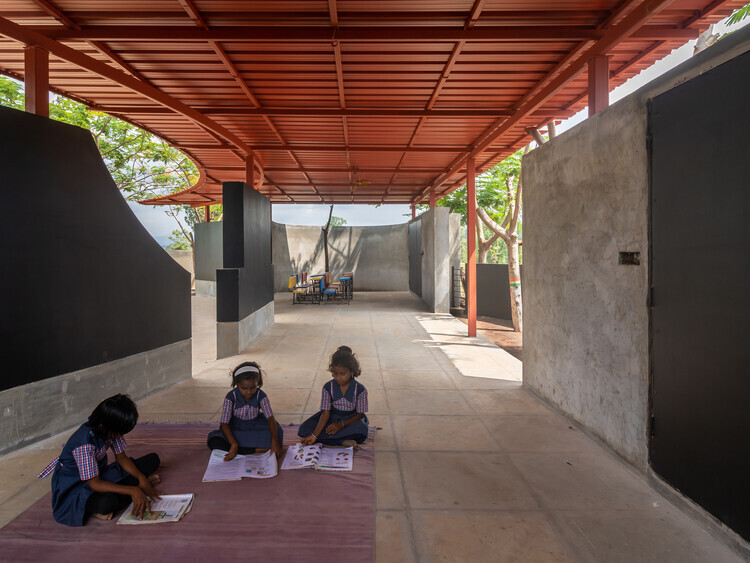 Community Canvas School/ pk_iNCEPTion. Photo © Yash Katariya
This participatory intent is most explicit in Community Canvas School. A single continuous curved wall defines the project, functioning simultaneously as boundary, classroom surface, and communal interface. Classrooms, courtyards, and an amphitheater-like plinth are carved from this gesture, allowing learning to extend outdoors and into the village. Inverted arches puncture the wall, enabling visual exchange and shared use. Education here is not isolated behind gates but embedded within the life of the settlement, accommodating learning alongside festivals, meetings, and gatherings.
Across these works, pk_iNCEPTiON consistently prioritizes spatial relationships over formal expression and adaptability over finish. Walls become surfaces for use, courtyards become organizing devices, and verandahs mediate between interior life and the public realm. Simple structural systems are employed not for nostalgia, but for their capacity to absorb change and encourage occupation. Rather than producing singular architectural statements, the practice constructs environments that remain open to reinterpretation, where architecture operates as a quiet collaborator in everyday life.
Hiwali School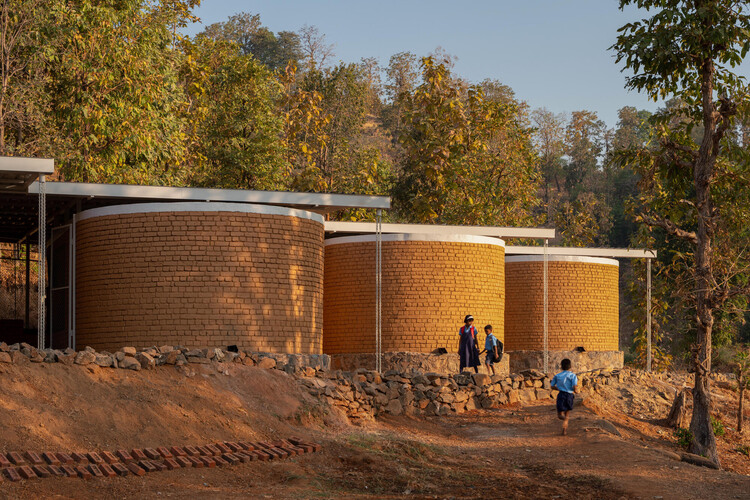 Hiwali School/ pk_iNCEPTion. Photo © Pranit Bora Studio
A rural school organized through diagonally placed blocks and a zigzag plinth that integrates circulation, seating, and learning across terraced farmland.
House of Overlaps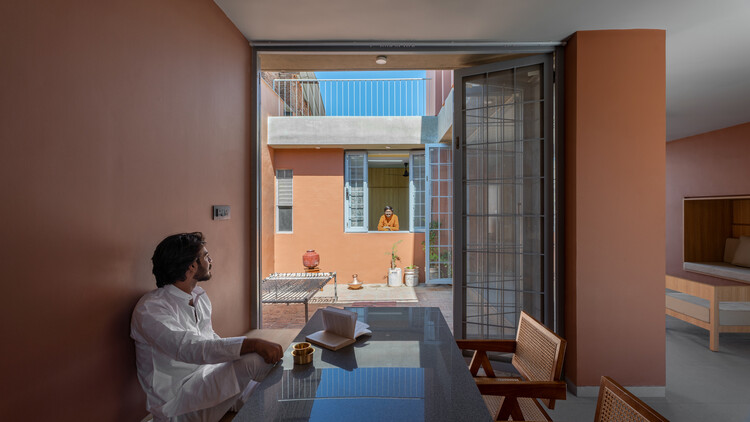 House of Overlaps/ pk_iNCEPTion. Photo © Pranit Bora Studio
A semi-rural house structured by open-to-sky voids that mediate between public engagement and domestic life on a narrow plot.
Rural Library in Kochargaon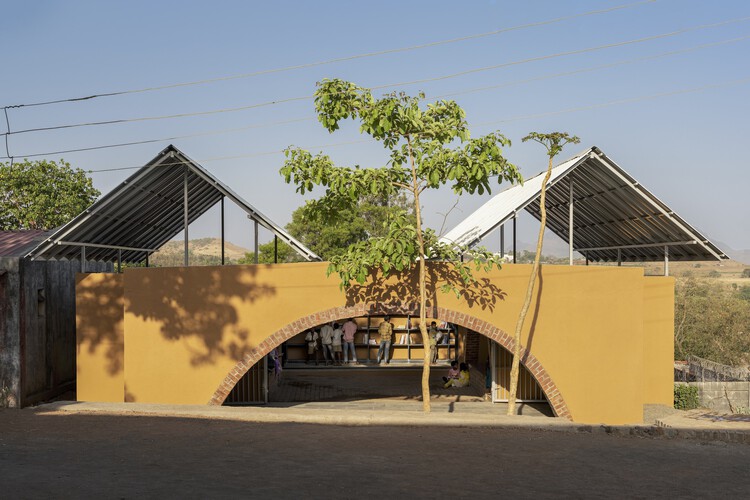 Rural Library/ pk_iNCEPTion. Photo © Pranit Bora Studio
A community library arranged as pavilions around a central courtyard, enabling reading, teaching, and gathering through flexible spatial use.
Void House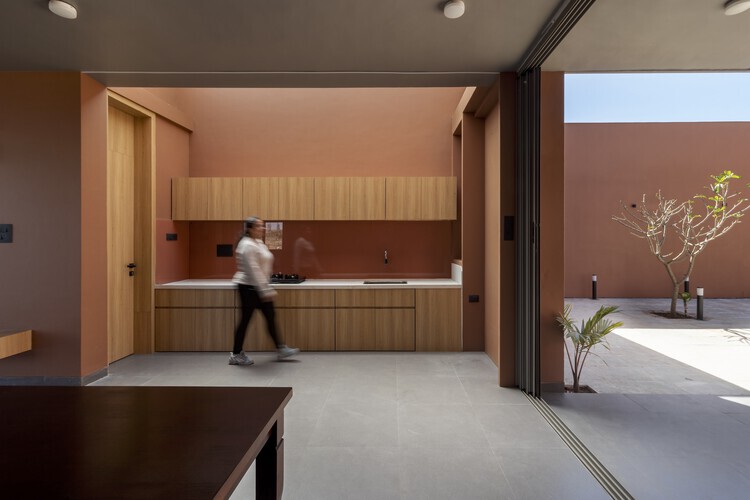 Void House/ pk_iNCEPTion. Photo © Yash Katariya
A farmhouse defined by a central open void and parallel load-bearing walls that frame movement, sky, and farmland.
Community Canvas School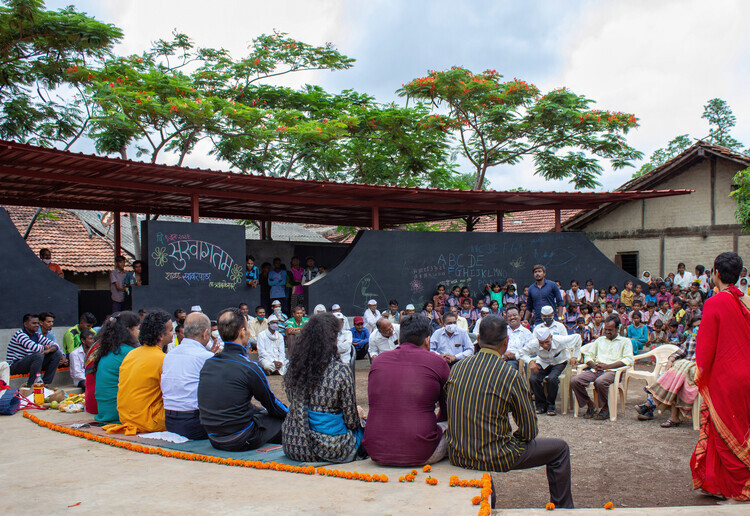 Community Canvas School/ pk_iNCEPTion. Photo © Ashlesha Bhosale
A primary school shaped by a continuous curved wall that supports learning, play, and communal activity beyond enclosed classrooms.
This article is presented by Buildner. As sponsor of ArchDaily’s 2025 Next Practices Awards, Buildner—the world’s leading architecture competition organizer—helps architects get what they enter competitions for: recognition, opportunity, and progress.
Exercise your creativity now: the Buildner UNBUILT Award 2026 is open to all, with a €100,000 prize fund. Submit your unrealized designs and celebrate your creativity now.
Related Article 20 Practices Shaping the Future of Architecture: Winners of the ArchDaily 2025 Next Practices Awards