
Fela Kuti’s musical evolution was shaped not only by Nigeria but also by Ghana. During the 1950s and 1960s, highlife music, pioneered by Ghanaian musicians such as ET Mensah, Ebo Taylor and Pat Thomas, became a defining sound across West Africa.
Its melodic guitar lines, horn sections, dance rhythms, and cosmopolitan identity deeply influenced Fela Kuti’s early musical direction.
He spent time in Ghana absorbing highlife’s structure, horn phrasing, and dance-oriented arrangements before fusing it with jazz, funk, the rhythms of his own Yoruba people, and political storytelling.
The DNA of highlife can be heard in Afrobeat’s melodic sensibility and its balance between groove and sophistication.
In this sense, Afrobeat is not only Nigerian. It is West African, pan-African, and diasporic in origin, carrying Ghana’s musical imprint at its foundation.
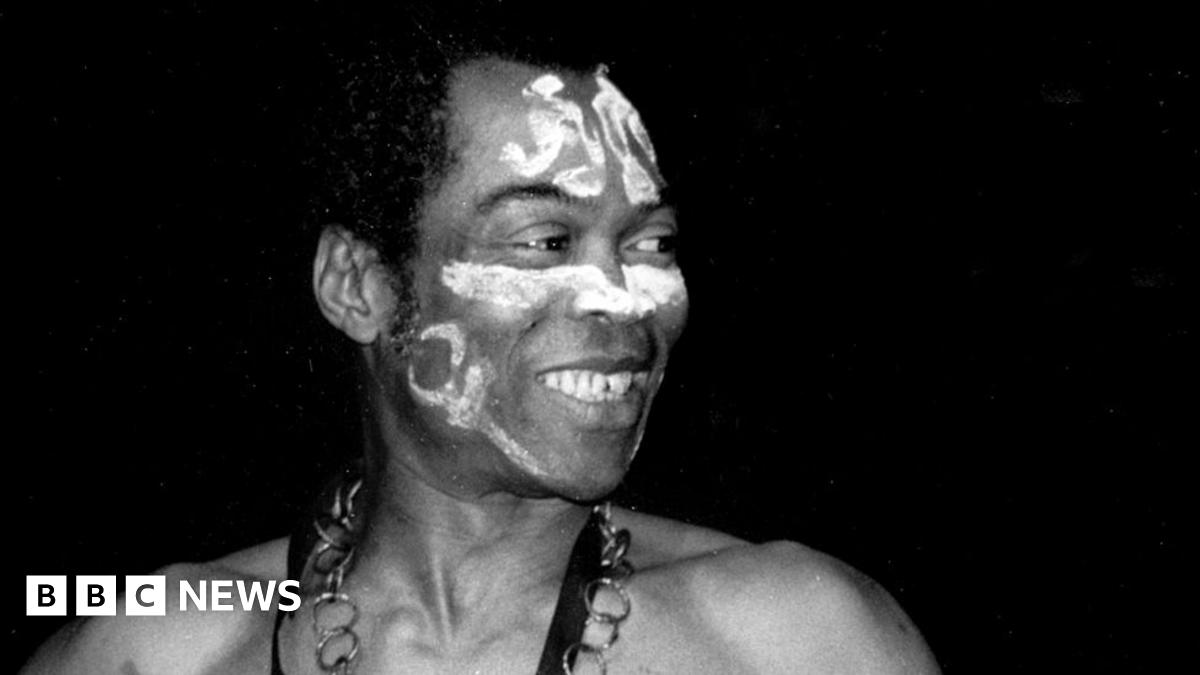
On stage, Fela Kuti cut an unmistakable figure. Often bare-chested or draped in the wax-printed fabric popular across West Africa, hair shaped into a crisp Afro, saxophone in hand, eyes alert with intensity, he commanded a large band of more than 20 musicians.
His performances at the Afrika Shrine in Lagos were legendary, part concert, part political rally, part spiritual ceremony.
Stein recalls that performances at the Shrine were immersive rather than conventional.
“When Fela played, nobody applauded,” he tells the BBC. “The audience wasn’t separate. They were part of it.”
Music was not spectacle. It was communion.