
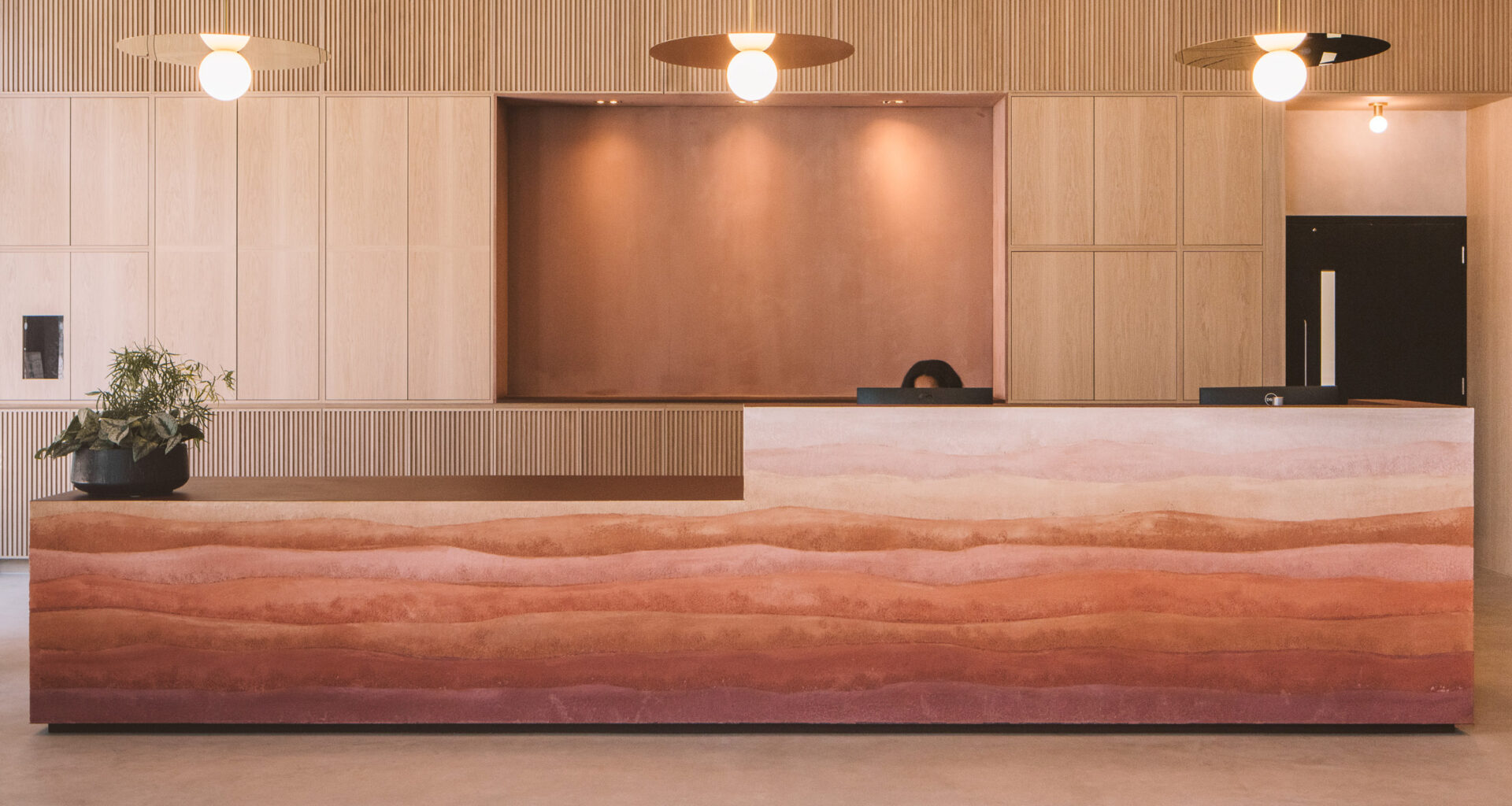
Local architecture studio Anomaly has designed the Apex co-working space with textured materials including leather, timber and a bespoke rammed-earth welcome desk.
Set within the Bennetts Associates-designed concrete Tribecca development in London’s King’s Cross area, Apex is a waterfront co-working space that was interior designed by Anomaly to eschew harsh and unwelcoming office environments.
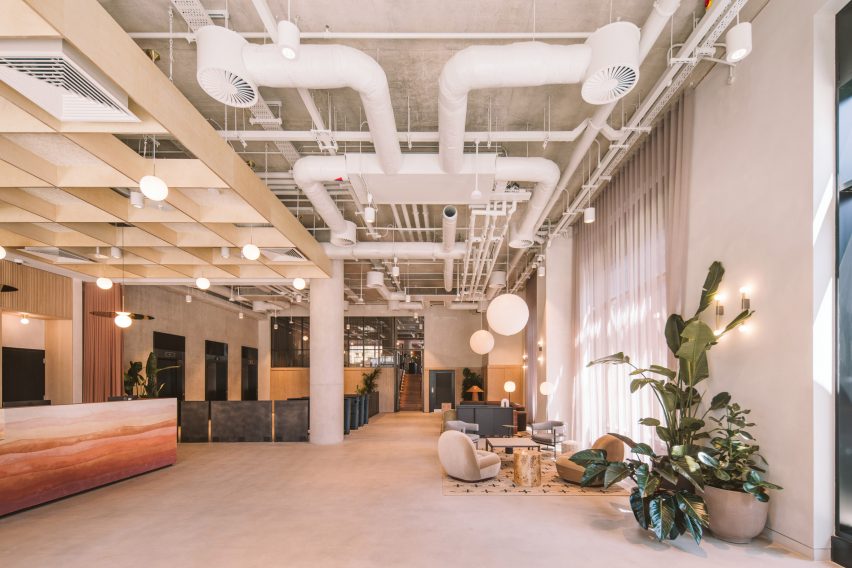 Apex is a co-working space in the King’s Cross Tribecca development
“Introducing and playing with a variety of textures that are tactile and soft created a welcome contrast to the firmness and solidity of the basebuild architecture of Apex,” said Anomaly head of interior design Lucy Hillyer-Riley.
“The aim was to create a space that feels just as good once it’s been properly used and occupied as it does on day one,” she told Dezeen.
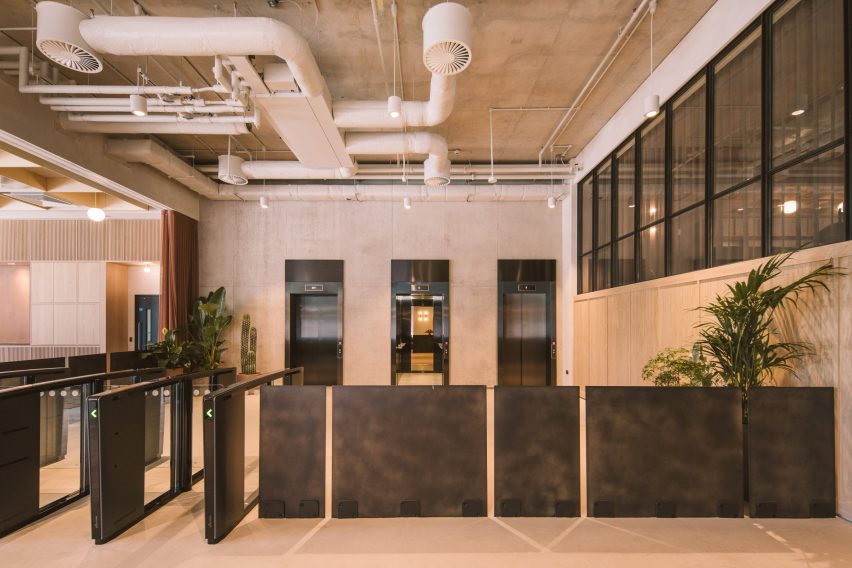
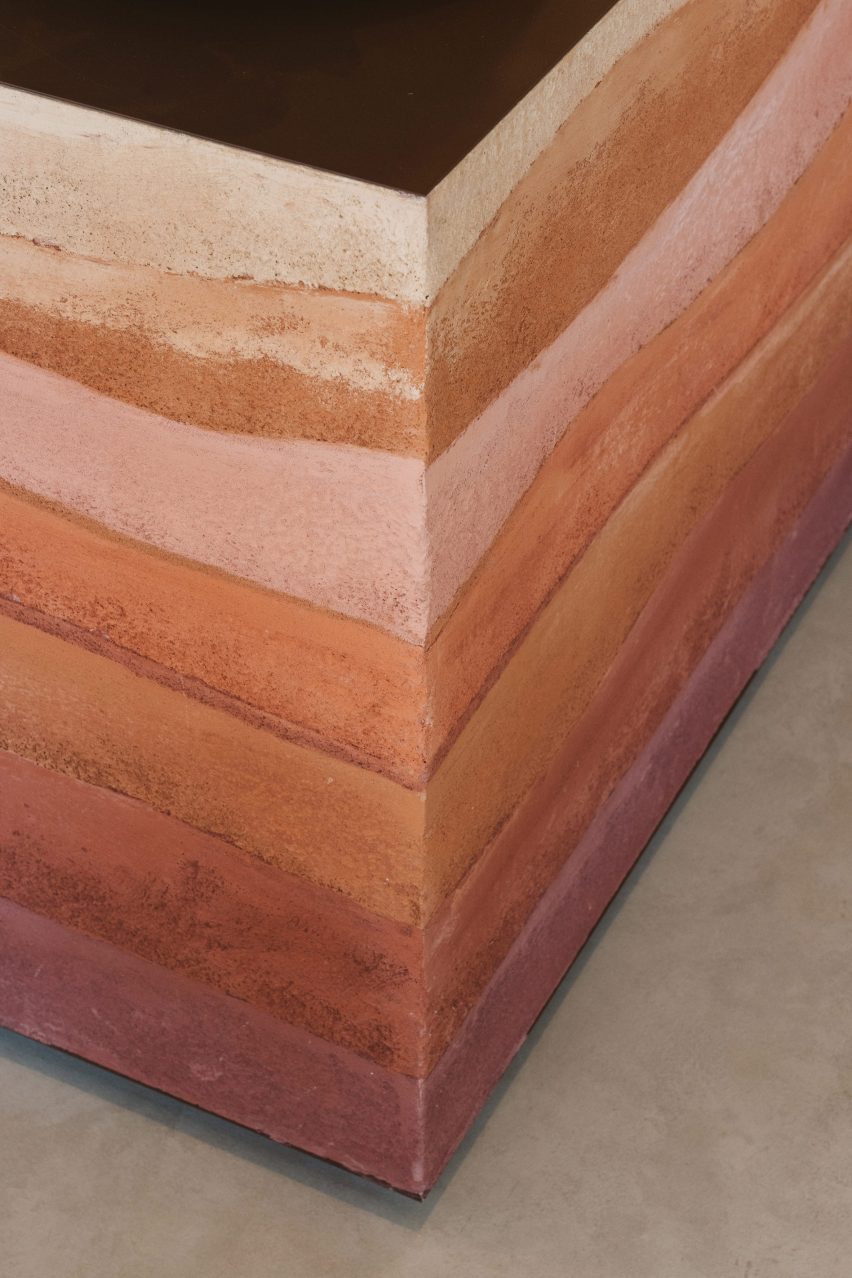 Visitors are greeted by a bespoke rammed-earth welcome desk
When entering the workspace, visitors are greeted by a rectilinear welcome desk made from dusty pink, brown and orangey slabs of low-carbon rammed earth, designed in collaboration with British natural finishes specialist Clayworks.
Hillyer-Riley explained that the team originally planned to salvage earthwork from the site excavation, but were met with constraints during the project.
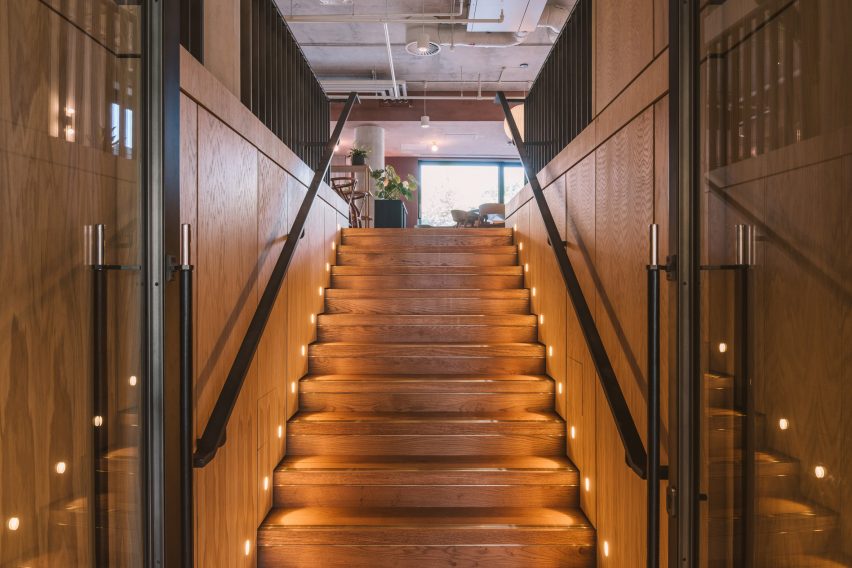 Timber-clad stairs lead to a similarly textured cafe
“What we love about rammed earth is that you can read how it’s made,” said the designer.
“The layers, the texture, the slight imperfections. It is built up using natural pigments and aggregates, compacted to create a solid, monolithic form,” she continued.
“No two rammed-earth elements could ever be the same, which felt right for a building that’s meant to have its own identity.”
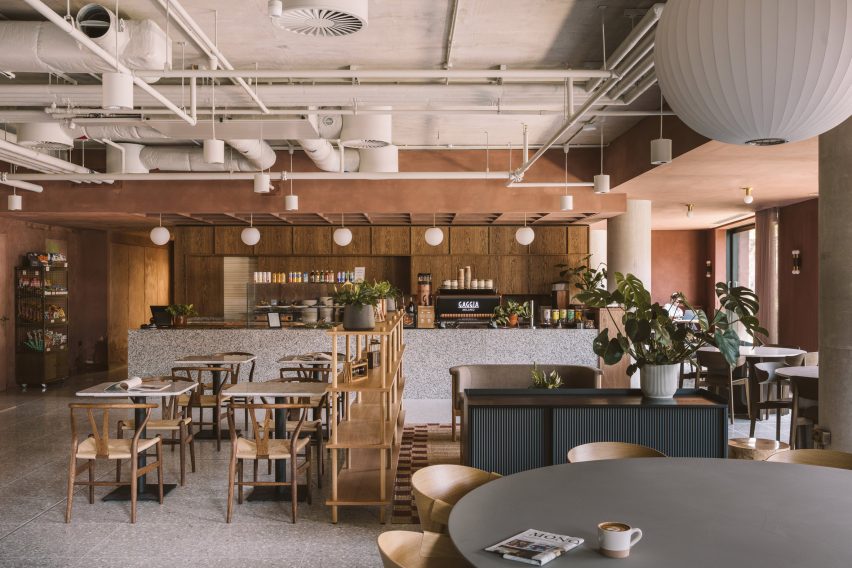 Wishbone chairs were paired with marble-topped tables
Timber-clad stairs lead to a similarly textured cafe dressed in chocolatey brown hues, which overlooks the canal.
Wishbone chairs were paired with marble-topped tables, while terrazzo grey flooring offers a cooler antidote to the panelled wood behind the long coffee counter.
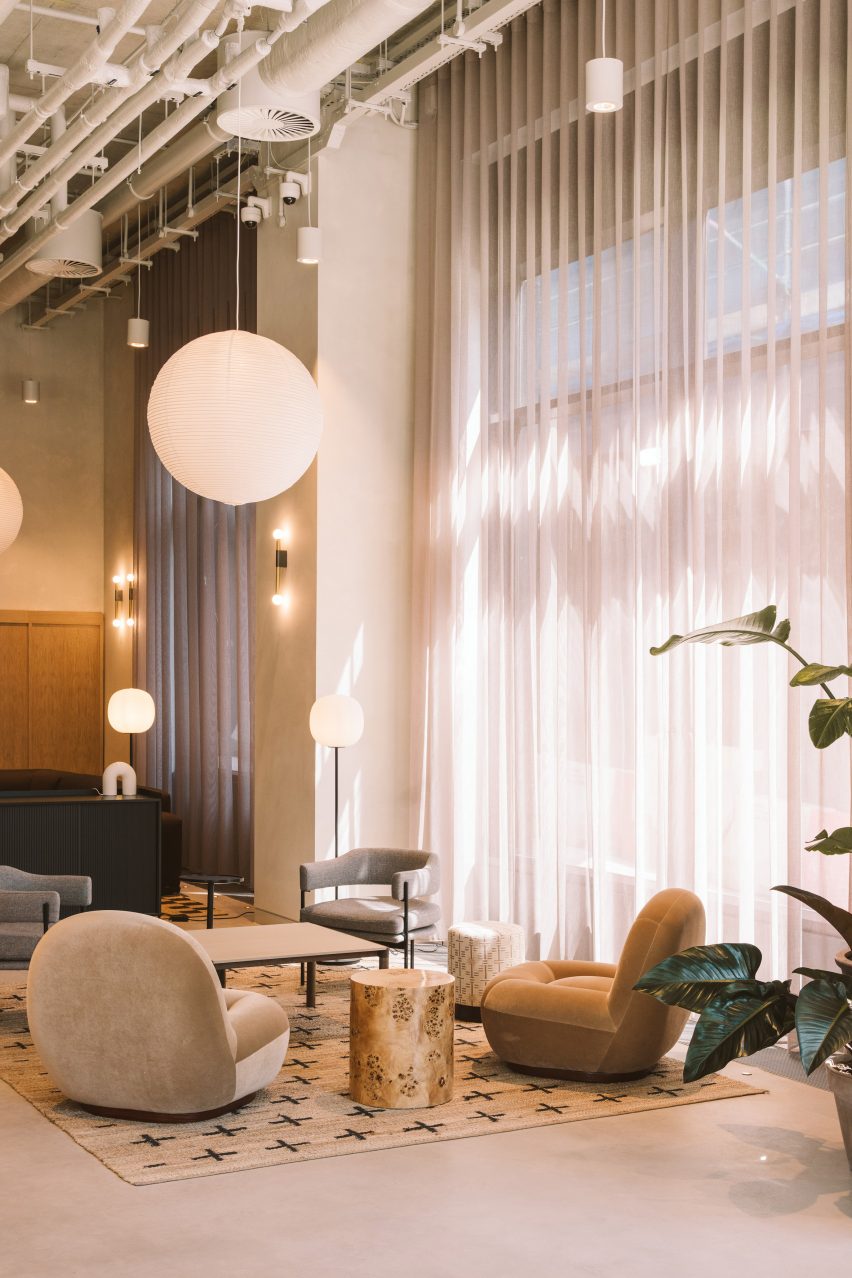 Other work and meeting spaces were designed with a similarly homely feel
“The palette is tonal, soft and embracing, drawing on the canal frontage and making the most of daylight and long sight-lines,” said Hillyer-Riley.
Other work and meeting spaces were designed with a similarly homely feel. Rather than rigid desks, communal tables were placed alongside a selection of chairs finished with materials including leather and upholstery.
Eight living areas that make a feature of exposed rammed-earth walls
“Leathers introduce softness and comfort, particularly in seating, and were chosen because the material wears in rather than wearing out,” considered Hillyer-Riley.
“In addition to soft, plush zones, this adds a sense of ease and familiarity, helping the space feel relaxed rather than overly formal.”
 Anomaly designed Apex “to be used, enjoyed and returned to over and over again”
“Texture plays a big role,” she added. “Softer seating, layered materials and generous planting sit against the hardiness of the existing building, creating a space that feels comfortable and aims to have a positive impact on the workers’ wellbeing.”
“Overall, it’s a space designed to be used, enjoyed and returned to over and over again.”
Co-working spaces have soared in popularity over the last decade as global working patterns have become more varied, especially post-pandemic.
Other recently designed co-working spaces featured on Dezeen include Forum, a space in Melbourne by Foolscap Studio dubbed as the Australian city’s Silicon Valley and Spaced Agency’s design for the New York City headquarters for non-profit Welcome to Chinatown.
The photography is courtesy of Anomaly.