
Space junk measuring 13 metres and weighing 11 tonnes is expected to fall to Earth today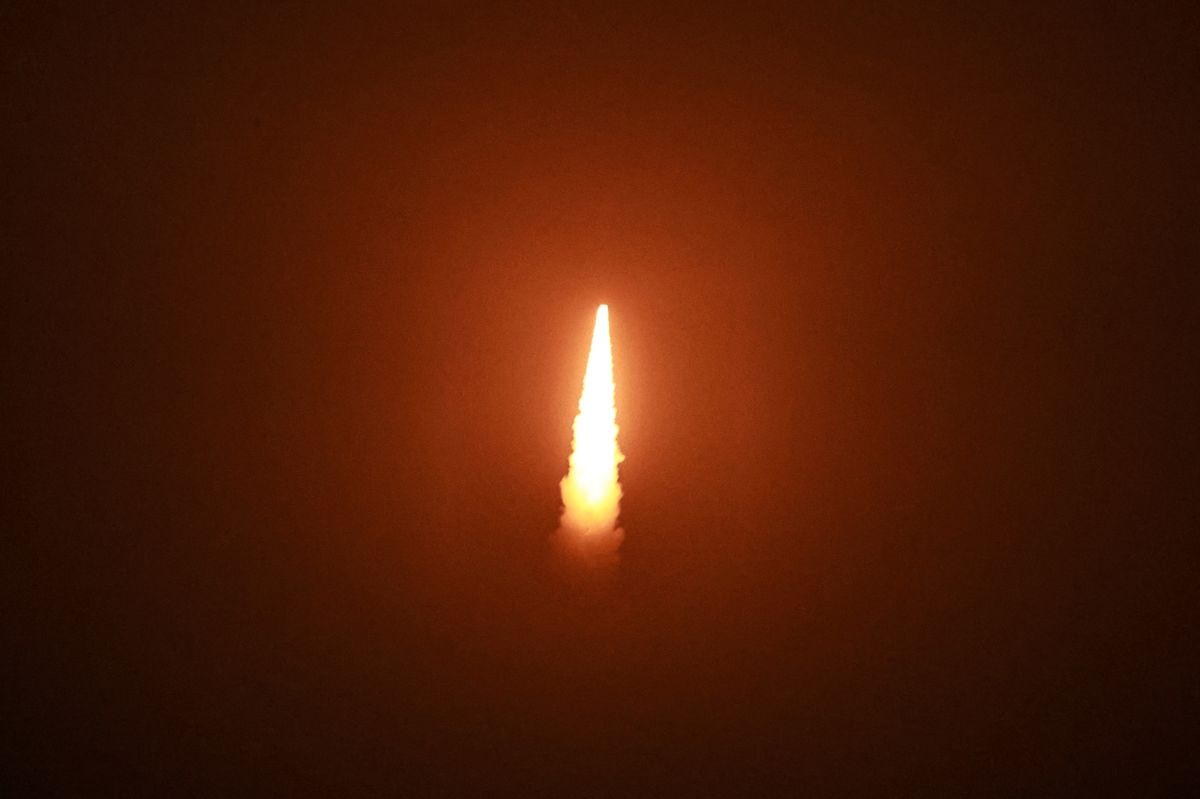
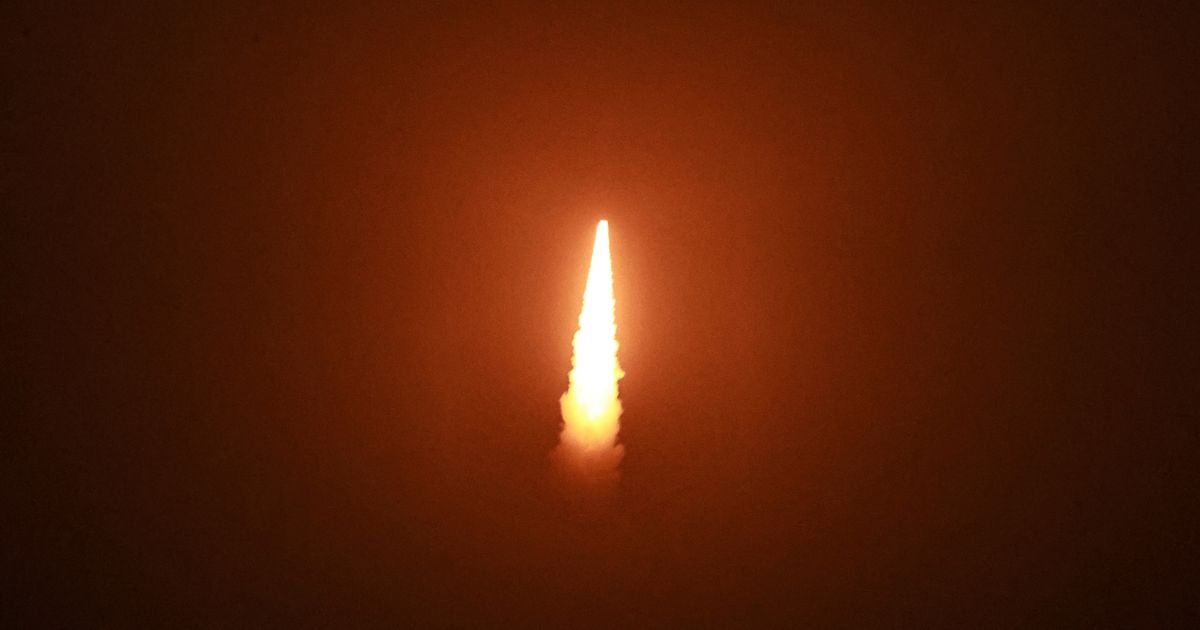
It is understood the debris is from the Chinese Zhuque-3 (ZQ-3) rocket(Image: VCG via Getty Images)
A huge piece of Chinese rocket debris is falling back to Earth, with parts of the UK lying in the possible re-entry path. Experts say the object is due to make an ‘uncontrolled re-entry’ on Friday (January 30), meaning its exact landing point cannot be predicted.
The space junk is understood to be the second stage of China’s Zhuque-3 rocket, measuring around 13 metres long and weighing an estimated 11 tonnes, according to EU Space Surveillance and Tracking (EU SST).
Space agencies are closely monitoring the object, known as ZQ-3 R/B, as it makes its final orbit around Earth. The EU SST has not yet confirmed whether the debris has re-entered the atmosphere, but said in an update earlier today its most likely re-entry time would be around 11.20am UK time.
Officials said the predicted re-entry time had an uncertainty of less than an hour, suggesting ZQ-3 R/B may already have fallen back to Earth. Graphs by the EU SST show a green line over the north of the UK, depicting possible re-entry locations of the object.
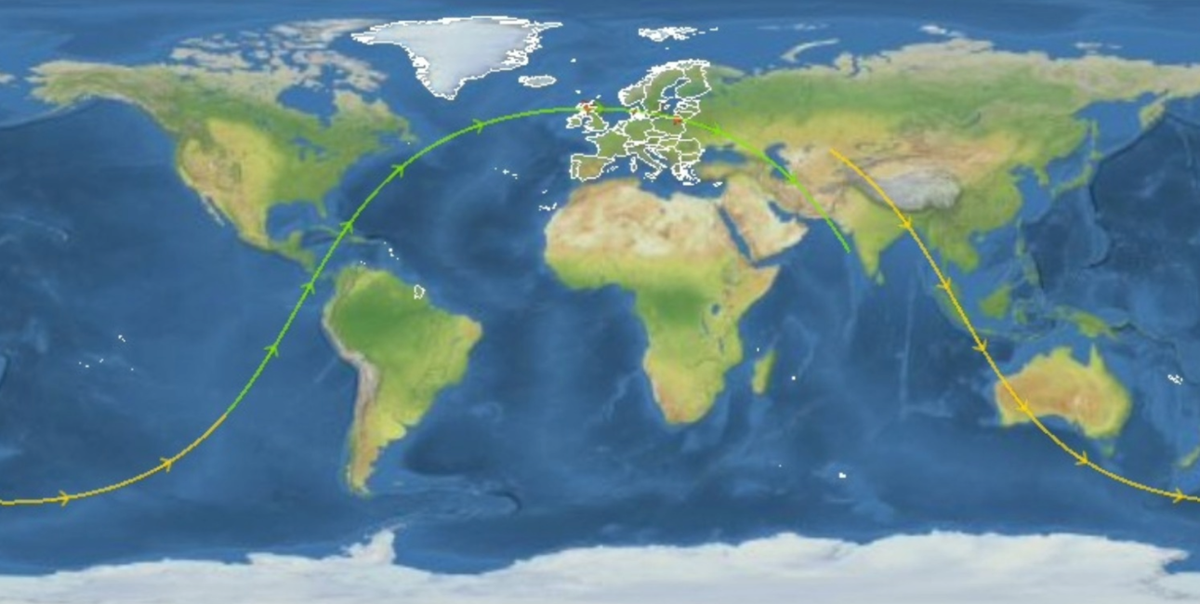
Possible re-entry locations lie anywhere along the yellow and green lines(Image: EU SST)
However, the EU SST stressed even small changes in timing could dramatically shift where debris might fall. Scientists say the most likely landing zone lies in the ocean or over uninhabited land.
Dr Constantinos Charalambous, Research Fellow, Imperial College London, said: “For the public, the risk is very low. Most of Earth is ocean and sparsely populated land, and much of the mass typically burns up.
“The real issue is uncertainty, which can force cautious measures like aviation routing or preparedness planning, even when the probability of harm is low.”
According to Dr Charalambous, uncontrolled re-entries usually undergo a ‘rapid, chaotic fragmentation phase’, meaning the space debris is likely to break up as it enters the atmosphere, which makes tracking its whereabouts difficult.
Dr Charalambous added: “Once the object is in the atmosphere, confirmation can come from multiple independent sources…If a strong enough sonic boom couples into the ground over a seismic network, seismic data can also help reconstruct the actual in-atmosphere path after the fact.”
If debris is ever found, people are warned not to touch it. Any suspected space fragments should be reported to authorities.
Dr Mike Peel, Research Associate in the Department of Physics, Imperial College London, said incidents like this may become more common in future due to the ‘ever-increasing amount of rockets and satellites’ being launched.
He said: “While most re-entering debris burns up in the atmosphere, there have been recent events of debris reaching the ground, for example, debris from a SpaceX launch landing in Saskatchewan in 2024.
“Tracking and managing the space environment is becoming increasingly important, as is understanding the effects that satellite de-orbiting will have on the atmosphere.”