
Exclusive: Major international collaborations with Cern and US Department of Energy in jeopardy
The leaders of four large-scale physics infrastructure projects have been told that they have “not been prioritised” for funding, throwing British participation in major international science facilities into question, Research Professional News can reveal.
Despite being promised funding of more than £280 million from UK Research and Innovation, the projects now face being defunded, putting in doubt hundreds of potential research jobs, many for early-career researchers.
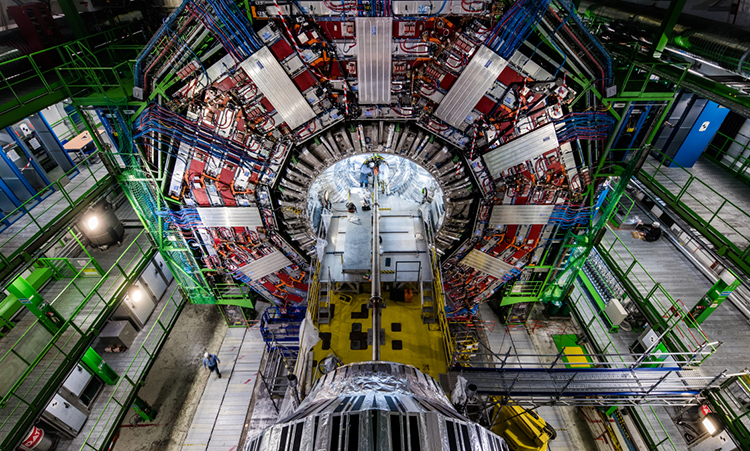
One of the projects affected is a collaboration with Cern, the globally significant particle physics laboratory. The project, involving 25 countries and led by the UK, is an upgrade to the Large Hadron Collider (pictured)—currently the world’s largest and highest-energy particle collider.
A well-placed source told RPN that if the British contribution were to be cut, the project would not be able to go ahead and the UK’s reputation as a reliable international collaborator would be severely damaged. The source said that £5m of the planned £49.4m had been spent, with the remainder now in jeopardy.
The other three projects include British participation in a major new particle accelerator in the US, and two national facilities planned in the UK.
RPN understands that despite previously having been announced as having won funding, each principal investigator on the four projects was sent a letter on 19 December saying that their project “has not been prioritised by UKRI at this time”.
While not confirming details of specific projects, UKRI confirmed to RPN that after a review of its infrastructure funding, some projects had been “paused or discontinued”.
‘Tough decisions’
The potential defunding of physics infrastructure projects comes on top of substantial cuts to research grants and facilities supported by the Science and Technology Facilities Council. RPN revealed earlier this week that STFC has to find savings of £162m in its budget by 2029‑30, which will require “major change”.
In a letter to the UK’s physics community sent on 28 January, STFC executive chair Michele Dougherty said the news that some research grants would be stopped or reduced came on the heels of “tough decisions on Infrastructure Fund projects before Christmas”.
Since 2022, UKRI’s Infrastructure Fund had planned to invest a total of £481m into a portfolio of research and innovation infrastructure investments, which it said would “maintain the UK’s position as a research and innovation superpower”.
The project involving Cern was due to move into its construction phase, with funding to be spent over eight years starting in 2026. RPN understands that 12 UK universities are involved in the project, and that hundreds of positions for postdocs and PhD students could be at risk. A source close to the project warned that a freeze could endanger the UK’s position in an area of science in which it is currently world-leading.
‘Complete loss of credibility’
Another project affected by the infrastructure cuts is a major new particle accelerator facility, the Electron-Ion Collider, being built at the Brookhaven National Laboratory near New York in the US. That is led by the US Department of Energy and includes more than 40 countries. The UK’s contribution was meant to be £58.8m over nine years, funding seven different universities in the UK and two national labs, Daresbury and Rutherford Appleton.
Speaking to RPN, Daria Sokhan, senior lecturer in physics and astronomy at the University of Glasgow who is the principal investigator for the project’s planned UK contribution, described the EIC as the “next premier facility for nuclear and hadron physics”. She said that for a “relatively modest investment, [the] UK was providing systems which were fundamental to underpinning the facility’s science goal, and buying us significant influence”.
As with the Cern project, Sokhan said, the UK’s withdrawal from EIC would damage the country’s international reputation “enormously”. With the project due to start in April, she said pulling out would be a “complete loss of credibility and a complete loss of trust”.
Sokhan said that the EIC project was meant to fund about 50 people from the UK, more than 10 of whom were early-career researchers, but the wider impact on the workforce would be “much bigger”.
In addition, Sokhan continued, the loss of UK expertise would be a major hit to the project. “The EIC’s power lies in its extremely high luminosity (intensity of colliding beams) and in the precision of measurement possible with its detectors. The UK’s contribution is absolutely crucial for both.”
Projects ‘paused or discontinued’
Other projects whose funding has been thrown into doubt include a national facility due to be built at the University of Liverpool, dubbed Relativistic Ultrafast Electron Diffraction and Imaging. UKRI said the project, which was to receive £124.4m over six years from 2026, was to be “a globally unique national user facility for the direct observation of fundamental dynamic structural and chemical processes”.
The fourth project was a national facility for mass spectrometry called C‑MASS, due to receive £49.35m over five years from the Infrastructure Fund.
A UKRI spokesperson said: “Following the spending review that gave UKRI a record four-year settlement to deliver a new mission, UKRI has reviewed a number of Infrastructure Fund projects which had been planned but were yet to begin.
“We sought independent advice and have taken forward an exciting portfolio of new infrastructure investments, which include projects in clean energy, medical imaging and cultural heritage. However, as usual, there were also many exciting projects that we could not support.
“Some projects, which had begun scoping work subject to business case approval, have been paused or discontinued. It is not unusual that we release investment in tranches, and we should always be pursuing the most transformative projects that deliver against national priorities and our mission to advance knowledge, improve lives and drive growth.”
UKRI said that it will formally announce successful projects soon, and that unsuccessful projects could be reconsidered for funding in 2027.