
Pakistan’s World Cup stance remained wrapped in uncertainty even as travel plans reportedly pointed towards participation, with a report suggesting the Pakistan squad is expected to depart for Sri Lanka on February 2 on an Air Lanka flight that could also carry Australia.
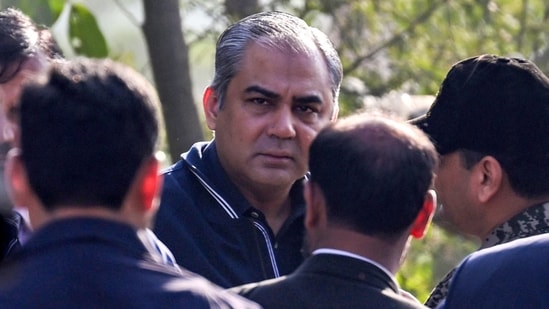
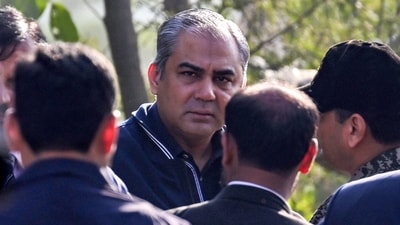 Mohsin Naqvi, PCB chairman. (AFP)
Reportedly, there was a press release leak from the PCB that revealed the development around the team’s travel. However, it was later republished with the particular paragraph deleted. A few of the Pakistan journalists have also tweeted about this development.
As per RevSportz, the lack of a clear, formal confirmation continues to fuel intrigue around Pakistan’s final posture, even though logistical movement would ordinarily signal that the matter is settled. The report states the ongoing ambiguity as posturing that risks pushing cricket into deeper turbulence at a time when the tournament is set to begin on February 7 across aIndia and Sri Lanka.
At the centre of the debate is PCB chairman Mohsin Naqvi, with the Pakistan’s cricket administration having been unable to keep political signalling separate from cricketing decisions. Pakistan’s approach has found little backing within ICC circles, leaving the PCB isolated as it weighs the optics of taking a stand against consequences of escalating a standoff.
A major strand of the wider controversy has been tied to the Bangladesh-linked flashpoint that has spilled into the World Cup conversations. Pakistan’s posture has been interpreted as an attempt to keep a broader support base intact by aligning itself with Dhaka’s concerns. But any escalation, including the idea of not playing a specific fixture, would put Pakistan on a collision path with the ICC rather than strengthen its leverage.
The sharpest questions are about consistency. If the hard line is limited to one opponent, what happens if the draw throws up an India clash in the knockouts – a semi-final or a final? And if the stance is framed as a principle, does it extend beyond the senior team? The India vs Pakistan Under-19 World Cup match on February 1 in Zimbabwe has become an obvious reference point in that argument, because selective application undercuts the moral framing.
Pakistan cricket has high stakes involved and they are quite straight forward: sanctions, financial loss, strained relationships and the lingering image of instability are all potential costs if the situation tops from posture into action.
India, meanwhile, have largely stayed in cricket mode. Selection discussions have continued around the top order and the balance of the XI – the kind of noise teams want in the final week.