
(Credits: Far Out / Sven Mandel)
Sat 31 January 2026 19:00, UK
When counterculture boomed in the 1960s, a whole host of post-war parents clutched their pearls in fear of what felt like an overwhelming change.
What started with a modest wobble of the knee from Elvis in the mid-1950s ended in a declaration that The Beatles were more important than Jesus Christ from John Lennon only a decade later. The kids were rebelling against the norms set before them, and music was the tool through which they were doing that.
While The Beatles captured that spirit through the esoterica of their psychedelic lyrics, The Who decided that a true anthem was required to address the state of the nation. Their breakout 1965 hit ‘My Generation’ was a stirring yet simple soundtrack for a legion of kids, staring in the face of their parents who just couldn’t quite comprehend that changing make-up of their children, buoyed by a culture of liberated creativity and disillusioned by a history of conflict.
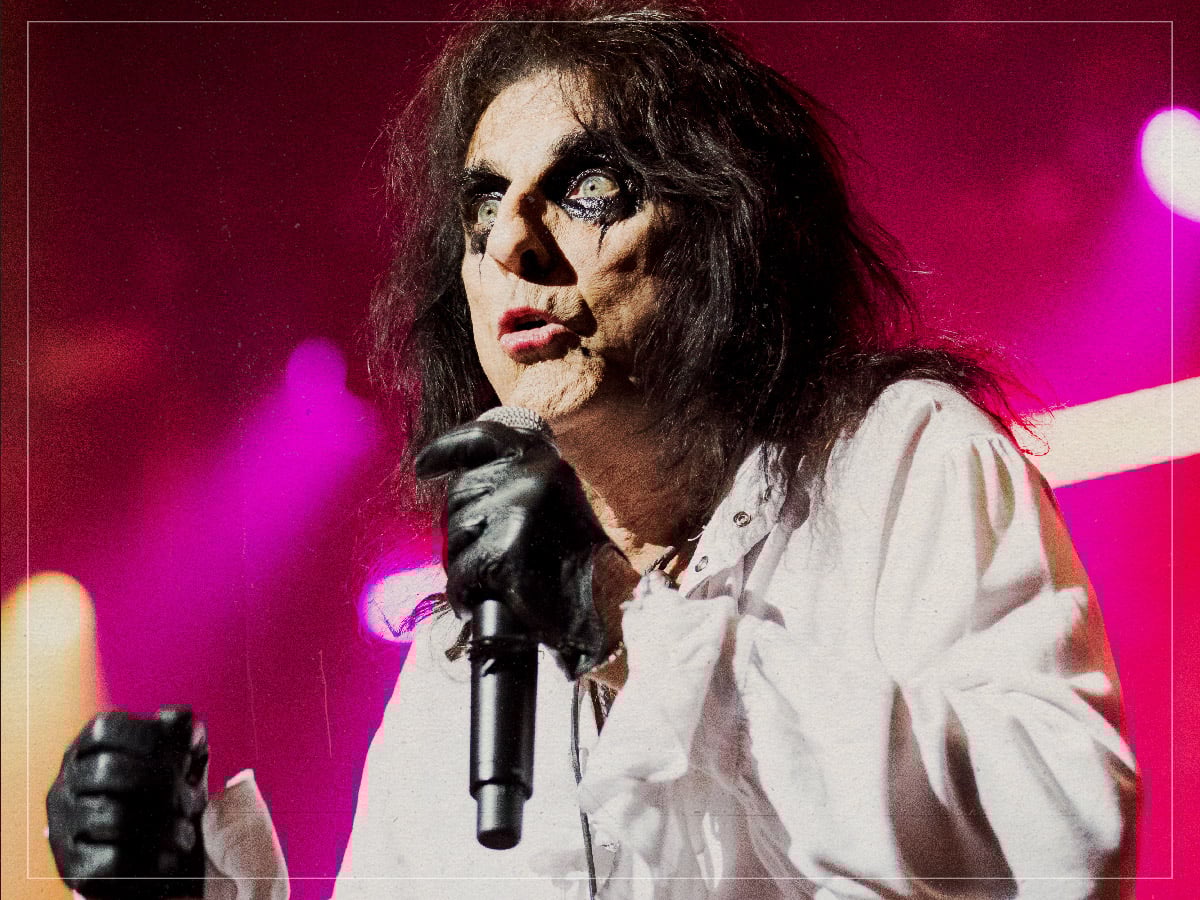
In that crowd of children was a young Vincent Damon Furnier, later known as Alice Cooper. Upon hearing ‘My Generation’, Cooper not only made sense of the feelings that stirred within him, but also used them to write a track aimed to similarly rebel against societal norms.
“We understood what an anthem was after hearing ‘My Generation,’” Cooper said. “[A song’s] an anthem because 100 years from now, a 16-year-old kid hears that song and goes ‘Oh, he’s talking about me!’”
Cooper cited that feeling as the catalyst for writing ‘School’s Out’. His rock and roll hit took a similarly straightforward approach to lyrics of teenage rebellion and centred them around a hook ready-made for children to scream back at their teachers.
Of penning ‘School’s Out’, Cooper recalled, “Everybody hated school. We thought, if you can capture the last three minutes of the last day of school before summer vacation, that would be a joyous song.”
He continued, “When I heard ‘My Generation’ by The Who, I thought…Okay, this is an anthem, because every kid is going to relate to that song”.
“The other anthem like that was ‘I Get Around’ by the Beach Boys,” he added. “And I thought, what is the common denominator for every teenager? For me, it was the last three minutes of the last day of school…When that bell rings, you’re done for three months. You’re free.“
Cooper’s take is a little more tongue-in-cheek than The Who’s and removes the sort of social anger that threads the lyrics of the British band. Where The Who grapple mortality in the face of societal change by singing “I hope I die before I get old,” Cooper captures simple schoolground rebellion with “No more pencils, no more books / No more teacher’s dirty looks, yeah.”
However, albeit a touch weaker, Cooper’s anthem continued stoking the fire of musical revolution that existed throughout the second half of the 20th century. He snatched the baton from Pete Townshend and Roger Daltrey, and carried it through the 1970s and 1980s, where real cultural rebellion was needed even more than in the swinging sixties.
Related Topics