
(Credits: Far Out / TIDAL / George Martin)
Sat 31 January 2026 16:30, UK
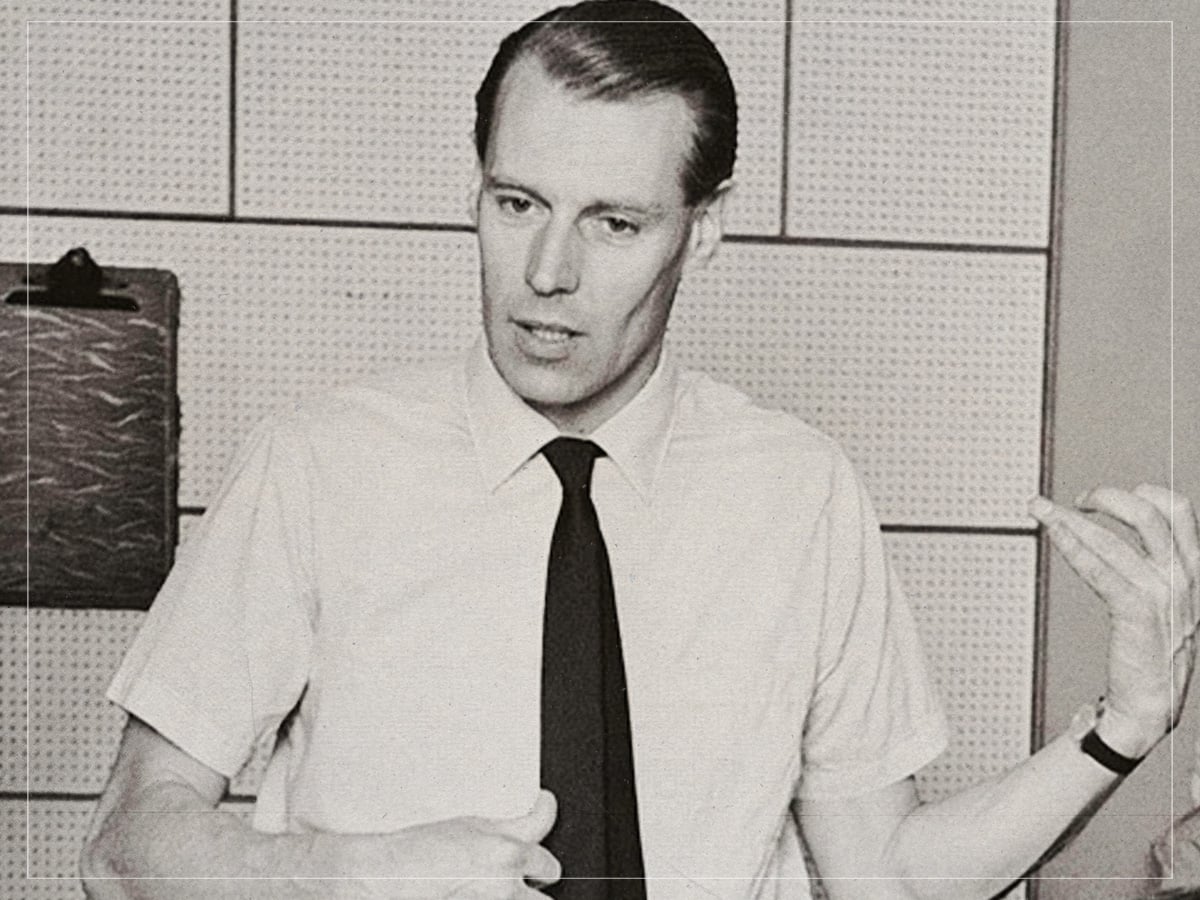
In the world of Fifth Beatles, no one quite had the same impact that George Martin did.
There were many actual musicians who played with the band more than a few times, like Billy Preston and Pete Best, but throughout their entire career, no one was there to crack the whip and suggest new ideas quite like their producer did when he laid down arrangements. Above all else, he saw potential in those scrappy kids from Liverpool, but that didn’t mean that he was impressed with every single thing that they brought to the table.
Even right out of the gate, there were already a few tunes that were too by-the-numbers for Martin to take seriously. ‘Please Please Me’ was already a showstopper in their catalogue, but had Martin not suggested to kick up the tempo a little bit, the band would have been the same lackadaisical Roy Orbison-inspired version and probably wouldn’t have scored one of their first major hits.
Then again, there’s a bit of a transition that happened once they started working on Rubber Soul. Abbey Road Studios had become a songwriting workshop half the time John Lennon and Paul McCartney came in with a new tune, but they didn’t need to go through conventional song structures anymore. They wanted the chance to stretch, and Martin was their guinea pig to try out anything that they desired. If they wanted an oboe, Martin knew exactly what to write, and even if they came to him with strange instruments like a sitar, he was more than willing to give it a go when working on ‘Norwegian Wood’.
But that also meant tearing down the conventions of what a pop song is supposed to be. No one had thought of making a record like ‘Tomorrow Never Knows’ based around one chord, but after Lennon came to the rest of the band with the idea, they worked as hard as they could until they turned the record into one of the most forward-thinking psychedelic experiences that the 1960s had ever heard.
‘Strawberry Fields Forever’ was certainly the peak of their experimental period, but Martin had his limits when it came to toying with new sounds. Magical Mystery Tour had been one of the biggest detours of their career, but it’s not like all of the songs made the most sense. There were bright spots like ‘The Fool on the Hill’ and George Harrison’s ‘Blue Jay Way’, but hearing tunes like ‘Flying’ wasn’t exactly the kind of tune that Martin signed up for when he first began working with them.
He had tolerated things long enough, but he felt that their psychedelic acid trip was when they started to lose the plot a little bit, saying, “Every one took a new twist, and that pretty well maintained the whole of their career. Occasionally towards the end they would get a little bit lazy. There were some things during Magical Mystery Tour – the freaking out bits – that didn’t seem to make much sense.”
That’s not to say that some of those freak-outs couldn’t lead to brilliant moments. ‘I Am the Walrus’ is the perfect example of bringing together random sounds to create something genius, but given how much Lennon wanted to move away from the usual pop song structures, it’s not hard to see why the band eventually started butting heads when they started working on The White Album a few years later.
The Fabs had already begun moving away from Martin’s style of production, but even if there were a few lazy points here and there, it’s hardly a mark against them. Magical Mystery Tour was a bit rough around the edges in its original EP form, but if those experiments meant giving the world tunes like ‘I Am The Walrus’, it was hardly a failed experiment from top to bottom.
Related Topics
The Far Out Beatles Newsletter
All the latest stories about The Beatles from the independent voice of culture.
Straight to your inbox.