
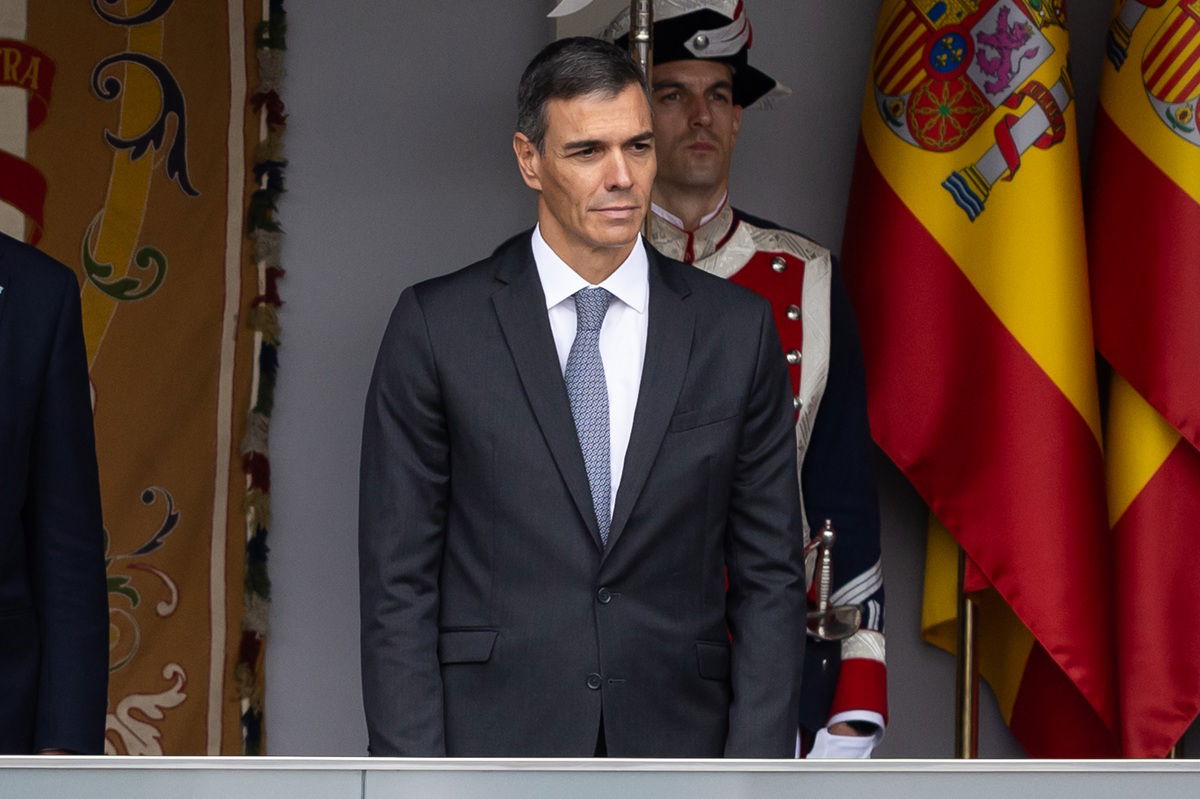
Spain’s Prime Minister Pedro Sánchez during a public event amid renewed debate over migration policy.
Credit : Marta Fernandez Jimenez, Shutterstock
A short reply on social media has turned into an international talking point – and it says a lot about how Spain sees immigration right now.
Spanish Prime Minister Pedro Sánchez found himself trading words with Elon Musk this week after the billionaire reacted to Spain’s decision to regularise hundreds of thousands of undocumented migrants. Musk’s contribution was minimal – a single ‘Wow’ – but Sánchez’s answer landed much harder: “Mars can wait. Humanity can’t.”
The comment, posted on X late on Thursday, quickly went viral and pushed a domestic policy debate far beyond Spain’s borders.
Most Read on Euro Weekly News
How a ‘Wow’ sparked a global debate
The exchange began when Musk shared a post criticising the Spanish government’s plan to grant legal status to around 500,000 undocumented migrants already living and working in the country. The original post claimed the move was designed to create a future voting bloc loyal to the left.
Sánchez did not address the accusation directly. Instead, he framed the issue as a moral and economic one, contrasting Musk’s well-known ambitions to send humans to Mars with what he described as a much more urgent priority: dealing with real people, in real jobs, already contributing to Spanish society.
Within hours, screenshots of the exchange were circulating widely, with supporters praising Sánchez’s bluntness and critics accusing him of dodging the substance of the criticism.
Why Spain is taking a different route
Spain’s approach stands out at a time when many European countries are tightening migration rules. Sánchez’s government argues that pretending undocumented workers do not exist is no longer realistic – especially given Spain’s demographic problems.
The country has one of Europe’s lowest birth rates and a rapidly ageing population. Entire sectors, from agriculture to hospitality and care work, already depend heavily on migrant labour. According to the government, bringing those workers out of the shadows is not about ideology, but about keeping the economy functioning.
Spain’s recent economic figures have helped strengthen that argument. Growth last year reached 2.8 per cent, more than double the eurozone average. Sánchez has repeatedly pointed to immigration as one of the factors behind that performance, particularly at a time when other economies are struggling.
Do newly regularised migrants get voting rights?
One of the loudest claims made by critics is that legalisation will automatically translate into votes. In practice, the situation is far more complicated.
Gaining legal residency in Spain does not give the right to vote in general elections. Spain’s next national election is due before the end of 2027, and newly regularised migrants will not be eligible to take part.
Voting in local elections is only possible for residents from countries that have specific agreements with Spain – and even then, electoral registers would not be updated until 2031.
As for citizenship, it is a separate and often lengthy process. While some nationalities can apply after two years of legal residence, applications frequently take much longer and come with additional requirements. Many migrants never apply at all, particularly because Spanish citizenship usually means giving up their original nationality.
Political backlash at home
Spain’s conservative opposition has reacted strongly. The People’s Party and Vox argue that the measure risks encouraging further irregular migration and sends the wrong message at a sensitive moment for Europe.
The government rejects that view, insisting the plan applies only to people already in Spain and is aimed at reducing exploitation, improving labour protections and increasing tax contributions.
More than just a soundbite
Sánchez’s comment to Musk may have been short, but it has put Spain’s migration strategy under an international spotlight. At its core, the debate reflects two very different ways of looking at the future: one focused on long-term technological ambition, the other on immediate social and economic realities.
For Sánchez, the message is simple. Before looking to other planets, governments still have unfinished business here on Earth – and, in Spain’s case, that means deciding how to deal with the people who are already part of everyday life, whether the law recognises them or not.
Stay tuned with Euro Weekly News for more news from Spain