
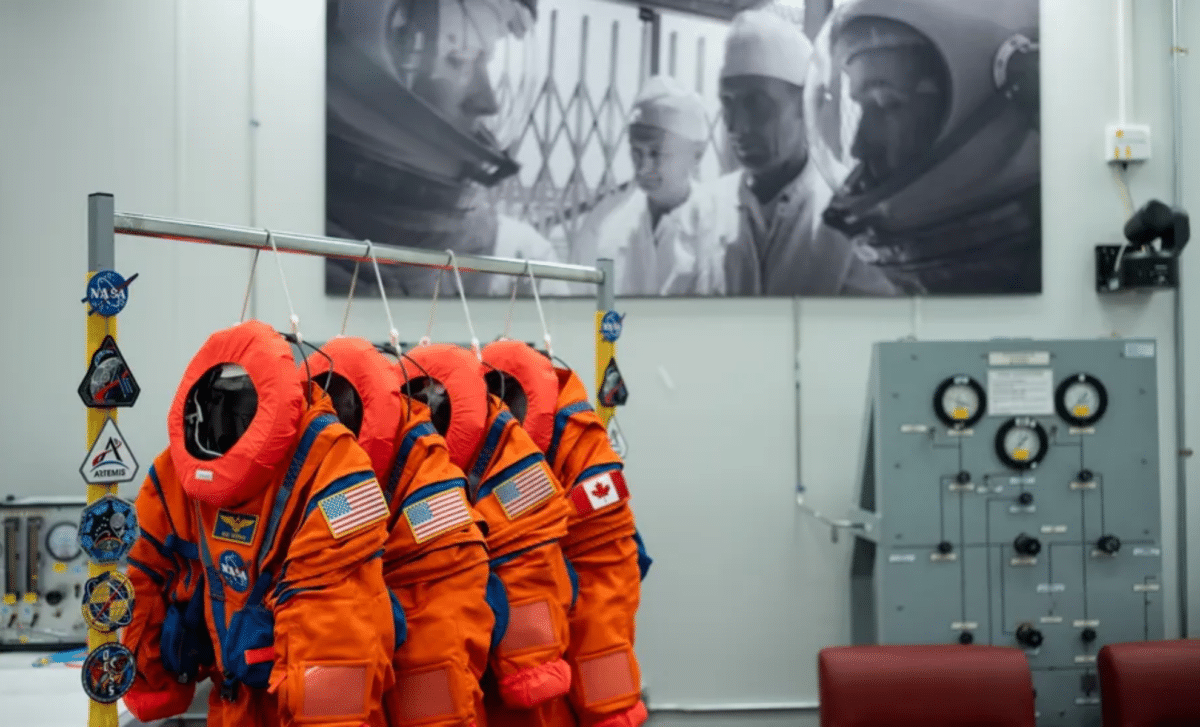
NASA’s Artemis program is preparing for an incredible journey that could reshape humanity’s presence on the Moon. As part of this groundbreaking mission, the Artemis 2 crew will wear specially designed spacesuits that will help protect them during their voyage around the Moon. These suits are not just pieces of clothing; they represent a key component in ensuring the success of the mission and the eventual return of humans to the lunar surface.
The Artemis 2 Mission: More Than Just a Flight Around the Moon
The Artemis 2 mission is an essential stepping stone for NASA’s goal of landing astronauts on the Moon and establishing a sustainable human presence there. Unlike Artemis 3 and 4, which are focused on landing, Artemis 2 will take four astronauts on a 10-day journey around the Moon to test the systems needed for future lunar missions. This will be the first crewed mission to the Moon since the Apollo program, marking a historic return to lunar exploration. The primary goal of Artemis 2 is to calibrate systems aboard the Orion spacecraft, ensuring that everything functions smoothly for subsequent missions that will involve landing on the Moon.
The Artemis 2 crew will not set foot on the Moon’s surface, but their mission will pave the way for future lunar explorers. NASA aims to establish a sustainable presence on the Moon, which will act as a training ground for more distant missions, such as those to Mars. This ambitious goal involves the creation of the Lunar Gateway, a space station that will orbit the Moon, and the development of lunar habitats to support long-term human activities. Artemis 2 is the first crucial test of these technologies and the systems required to live and work on the Moon in the future.
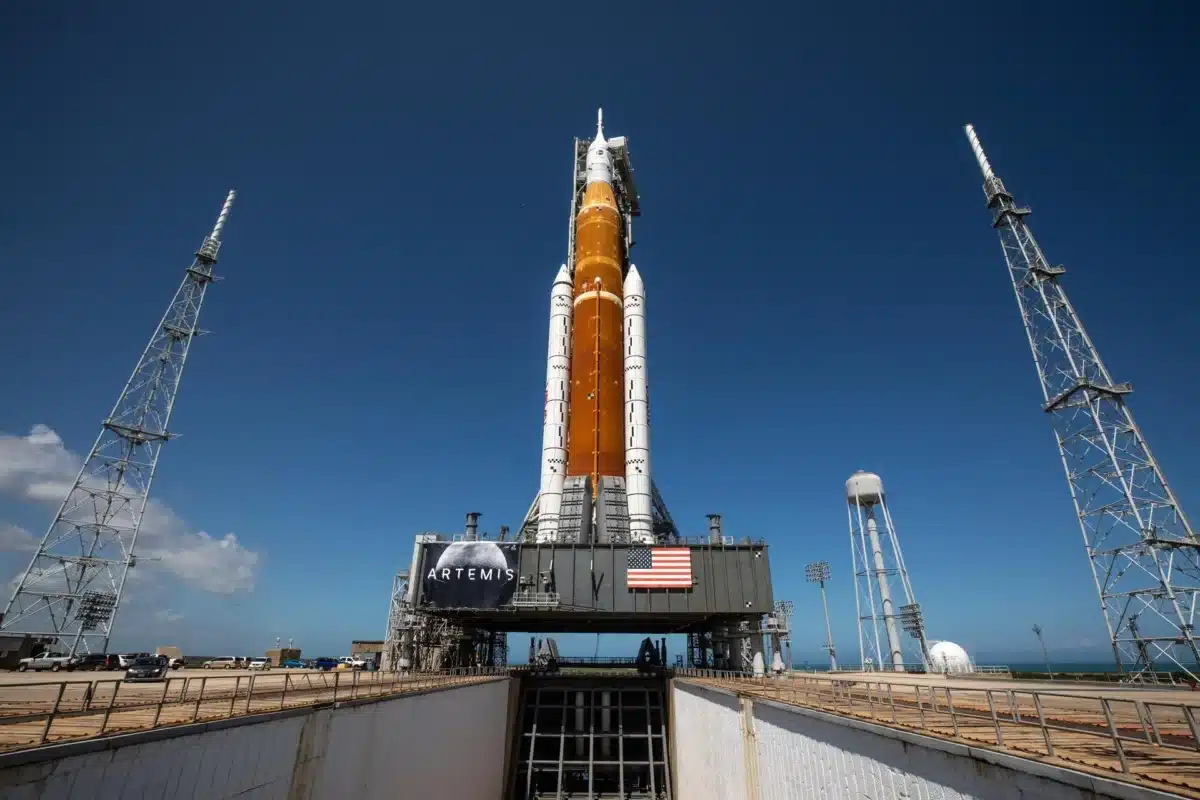 Nasa’s Sls Rocket And Orion Spacecraft Atop The Mobile Launcher At Launch Pad 39b
Credit: NASA
The Revolutionary Artemis 2 Spacesuits: Innovation in Every Stitch
As reported by Space.com, the spacesuits developed for Artemis 2 are designed specifically for the unique demands of the mission. Unlike traditional suits made for walking on the Moon, these suits will be used primarily within the Orion spacecraft, where astronauts will endure the challenging conditions of launch, ascent, and reentry. As a result, these suits are engineered to keep astronauts safe during periods of potential cabin pressure loss and other life-threatening emergencies that could arise during the mission.
Each suit is crafted to ensure the astronauts can move with ease while performing necessary tasks inside the spacecraft. The high-visibility orange color of the suits is not just for show, it helps ensure that astronauts can be easily identified in the event of an emergency, even in the vast emptiness of space. The suits are packed with advanced life-support systems that provide oxygen, regulate temperature, and ensure that the astronauts have everything they need to survive in the harsh conditions of space. These features make Artemis 2 a truly groundbreaking mission, as it marks the first time these new technologies will be tested in space.
The Role of the Suit-Up Room at Kennedy Space Center
Before the Artemis 2 mission begins, astronauts must undergo an extensive preparation process, and this begins in the suit-up room of the Neil A. Armstrong Operations and Checkout Building at NASA’s Kennedy Space Center in Florida. This is where astronauts don their spacesuits, step by step, with the help of technicians who ensure the fit, mobility, and functionality of every component.
The suit-up process is one of the most critical parts of mission preparation. Every suit must be checked for leaks, adjusted for the astronaut’s comfort, and tested to ensure that all life-support systems are functioning properly. The astronauts’ gloves, helmets, seals, and all other components are carefully secured to guarantee they will operate effectively during the mission. These meticulous tests ensure that nothing is overlooked before the crew embarks on their historic journey.
In the suit-up room, the astronauts are guided through a controlled sequence of actions to ensure their suits fit perfectly and that all systems are functioning. Communications are tested to guarantee clear communication between the crew and mission control. This attention to detail helps identify any potential problems before the mission, preventing small issues from becoming major problems during the flight.