
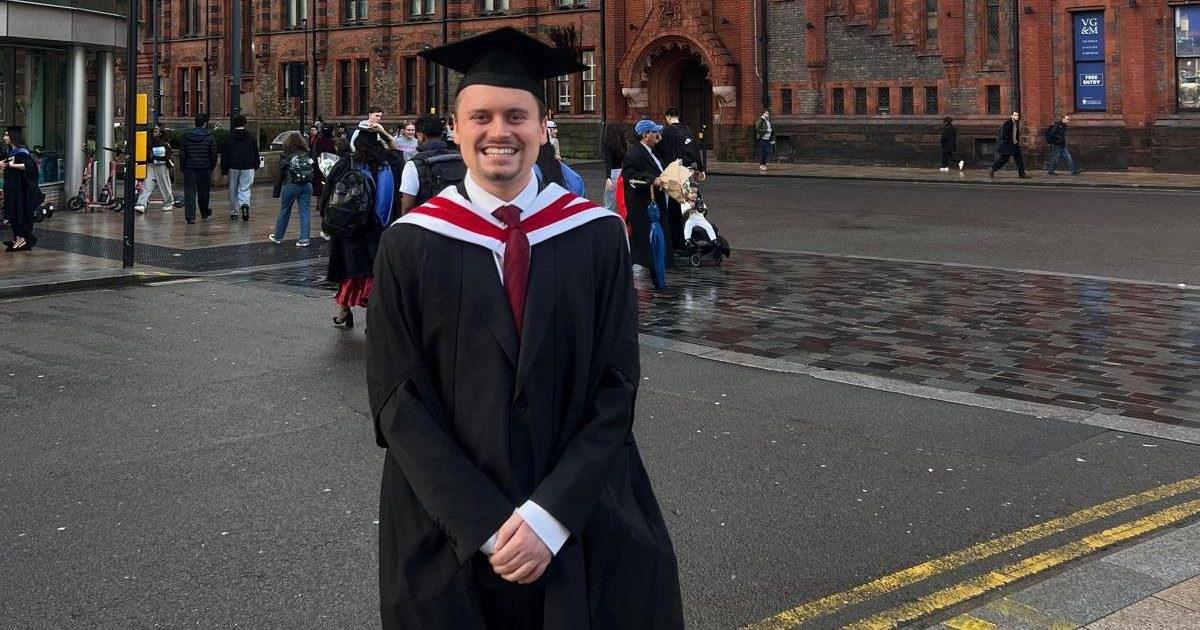
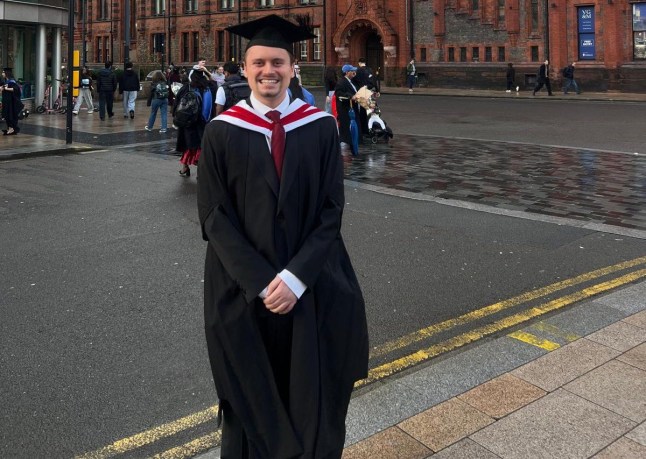
I was diagnosed with a cancerous brain tumour: an incredibly rare form of glioma (Picture: Alex Warwick)
I was standing in a takeaway restaurant in May 2025, chatting to an old friend on FaceTime, when I suddenly felt a wave of unbearable, overwhelming tiredness.
I’d been having episodes like this for years; doctors had brushed my symptoms off as stress or sleep related. This time, it was different. I wasn’t just sleepy, both my arms were weak and I couldn’t get any words out to my friend on the phone.
I had to lift one arm up with the other to put it on a table. After that, all I could do was put my head down, close my eyes and wait for it to pass.
After a couple of minutes, the feeling faded. My friend on the phone was very worried, but I reassured her that I felt better and it had passed. I went home and ate – but then, I got a piercing headache, which persisted, and started vomiting.
I rarely got headaches and the vomiting was also new, so I was really worried now. My friends – who, like me, are medical students – urged me to call 111. I was taken to A&E in an ambulance.
Within weeks, I’d been diagnosed with a cancerous brain tumour: specifically, an incredibly rare form of glioma (a tumour that starts in the supporting cells of the brain and the spinal cord).
It’s grade 4, which means it’s extremely aggressive. In fact, it’s being treated as a glioblastoma, which has an average prognosis of 12 to 18 months.
I’m 23 years old.
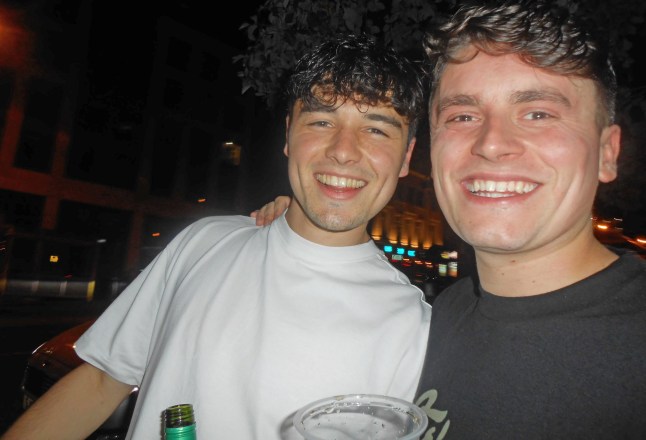
My tumour is being treated as a glioblastoma, which has an average prognosis of 12 to 18 months (Picture: Alex Warwick)
When I got my diagnosis, I was in my fourth year of studying medicine at Liverpool University, which I loved. I was enjoying my course and I felt as though the city had really taken me in. It was my second home.
But that night in the takeaway wasn’t the first time I’d experienced that overwhelming sleepy feeling. I’d been having episodes like that for years, albeit not as intensely.
Throughout my teens and early 20s, I’d have waves of exhaustion that came out of the blue. I’d have to fight extremely hard to stay awake and it felt as thought my whole body was shutting down.
Often I’d also get a strange weakness in my arms and legs, and if I tried to talk, my speech would be slurred.
At its worst, these episodes were happening a few times a day, lasting for anywhere between 20 seconds and a few minutes.
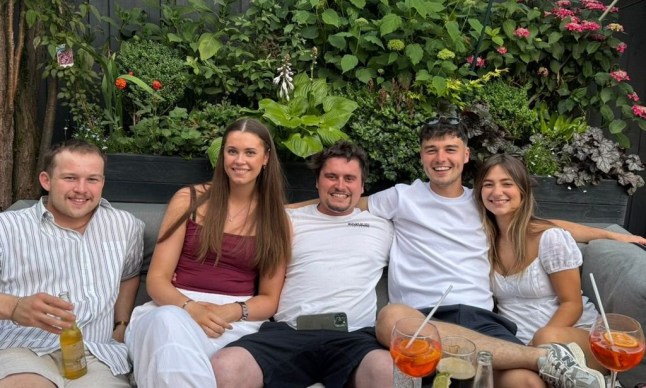
Throughout my teens and early 20s, I’d have waves of exhaustion that came out of the blue (Picture: Alex Warwick)
And, despite being told repeatedly by doctors that it was just health anxiety, I knew something wasn’t right.
I kept going back to the GP and to specialists, but nobody ever seemed alarmed, or correctly identified what was happening.
If anyone had ordered a CT or MRI scan, that would have shown my condition. But no one ever did.
I now know that, despite the fact that brain tumours are the biggest cancer killer in children and adults under 40, they only get one percent of cancer research funding.
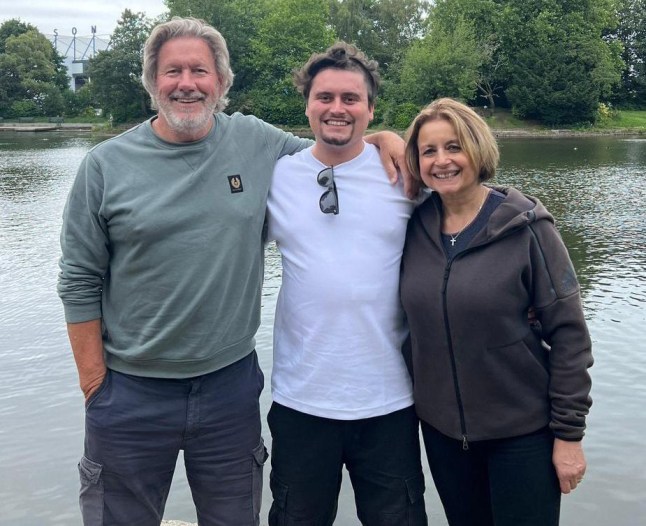
When I was taken to A&E, my parents drove all the way up to Liverpool from Weymouth (Picture: Alex Warwick)
From around January 2025, I was prescribed melatonin, a hormone that helps with sleep issues, by a neurologist. This helped me manage my sleep, and I started to feel better.
Unfortunately, that didn’t last, and in May, I had the episode in the takeaway restaurant.
I called my parents on the way to A&E, and they immediately got in the car to drive from Weymouth to Liverpool.
‘No, no, it’s not a big deal; don’t come up all the way from Dorset,’ I insisted. It was two days before my sister’s wedding and I didn’t want to make a fuss.
Of course, it soon became clear that that wedding would not be going ahead.
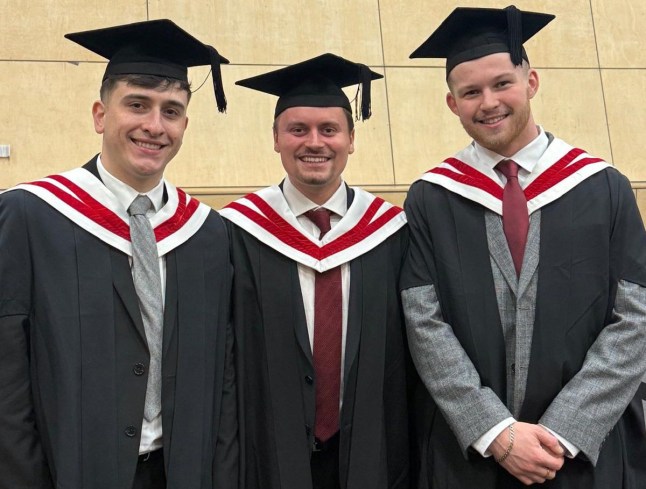
It was both shocking and devastating to hear that I had brain cancer (Picture: Alex Warwick)
In A&E, I was finally given a CT scan and I was put on a steroid due to the raised intracranial pressure.
At that point, doctors started taking me a lot more seriously.
My memory from that time is hazy – I was tired and overwhelmed – but I remember doctors saying that they could see a growth, and that there had been a bleed on my brain.
I was admitted to hospital immediately. In the space of just a few days, I’d had several MRI scans, an external ventricular drain fitted to the side of my head to take away some of the intracranial pressure, and brain surgery to remove as much of the tumour as they could – which ended up being about 70%.
The rest was too deep for the surgeon to reach and in areas that were too delicate to go near.
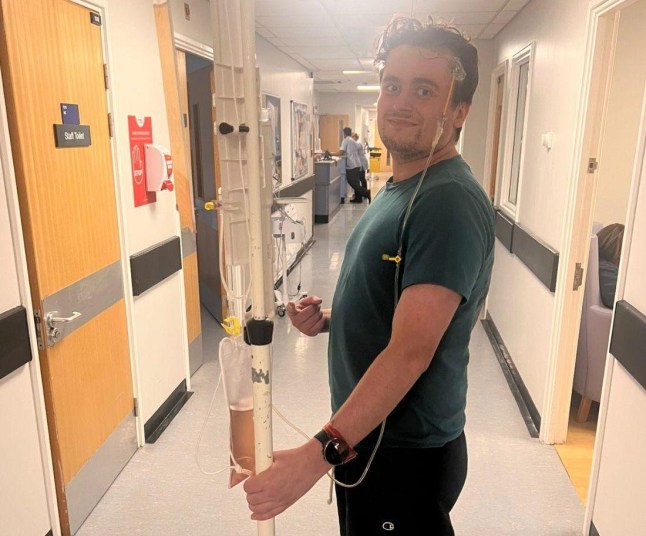
After a few more months of chemo, a scan showed the tumour had spread to some layers of my brain, as well as to my spinal cord (Picture: Alex Warwick)
Are you or your loved ones living with a brain tumour?
brainstrust is a charity dedicated to helping people live life with a brain tumour, offering support and information – as well as championing people-first brain tumour research.
Learn more or get involved here.
I had to wait a couple of weeks for the biopsy results, but when the surgeon gave me my official diagnosis, in a way, I was relieved. At last, I knew what was wrong and I was going to get the treatment I needed.
But it was both shocking and devastating to hear that I had brain cancer. I can vividly remember the surgeon saying I wouldn’t be able to drive for two years – a punch to the gut, because I love driving – and also that I would have to take a break from my medical course. A second punch; this time, to the heart.
Fortunately, six weeks of daily radiotherapy and oral chemotherapy reduced the size of the tumour significantly.
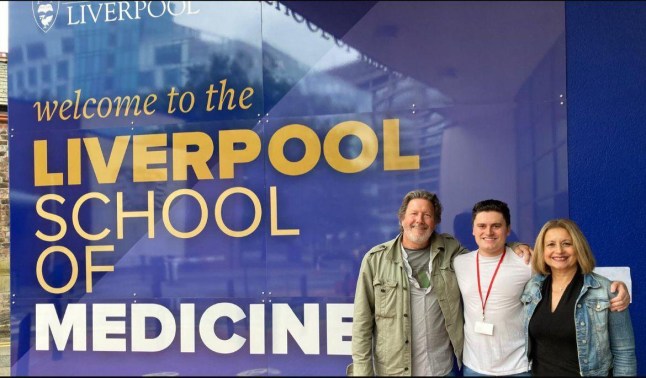
My only option is to go private – specifically, a cutting-edge immunotherapy treatment in Germany (Picture: Alex Warwick)
However, in December 2025, after a few more months of chemo, it felt like we’d hit a wall: a scan showed the tumour had spread to some layers of my brain, as well as to my spinal cord.
I switched chemo – and there are still other types available that I can try – but I can’t be sure any of it will be effective. Plus, the NHS standard of care for glioblastoma – which hasn’t changed for around 20 years – is chemo and radiotherapy for six weeks, and then chemo for up to six months. At this point, I’d only be eligible for another three months of chemo on the NHS; and the chemo I was on wasn’t working.
My only option was to go private.
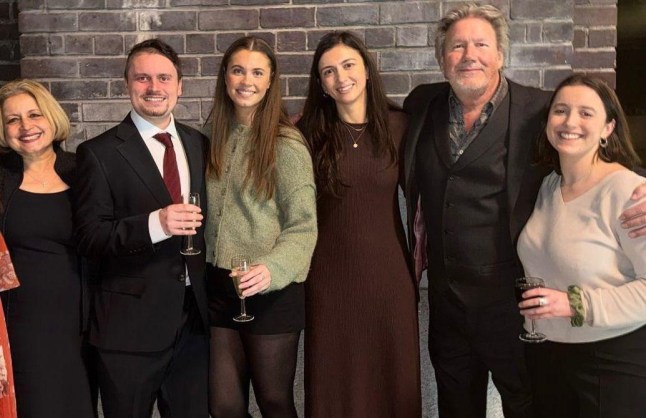
The total cost of the immunotherapy treatment is around £200,000; but my family refused to give up (Picture: Alex Warwick)
My family and I researched endlessly, and learned about a cutting-edge immunotherapy treatment. It’s not yet available on the NHS, but a clinic in Germany has had very promising results. My consultant gave me the green light for this, saying: ‘Whatever you’re going to do, do it now.’
There was just one problem: the total cost of this immunotherapy treatment will be around £200,000.
But my family refused to give up. Just after Christmas, my three older sisters started a fundraiser; and they’ve raised over £140,000 in the last month, with more than 3,500 people – including many I’ve never even met – donating.
Want to learn more?
You can read more about Alex’s story and support his fundraiser here.
Reading the messages attached to the donations has helped keep me positive – I look at the fundraiser website every night before I go to sleep. It’s incredibly humbling.
Thanks to this fundraiser, I’m now at the IOZK cancer treatment centre in Cologne, receiving immunotherapy treatment. I can’t begin to express how thankful I am to my sisters, my parents, and to every single person who has donated and engaged with my story.
Right now, I’m feeling hopeful and optimistic about what lies ahead – and throughout it all, I’ve never doubted that I am deeply loved. For that alone, I will be forever grateful.
As told to Izzie Price
Do you have a story you’d like to share? Get in touch by emailing Ross.Mccafferty@metro.co.uk.
Share your views in the comments below.
Arrow
MORE: I was trying for a baby at 40 – the emptiness was overwhelming
Arrow
MORE: My life inside the bizarre orgasm cult
Arrow
MORE: I wish I could say no to children’s birthday parties
Comments
Add Metro as a Preferred Source on Google
Add as preferred source
Degrees of Separation
Join us each week as hear from the people going through familial estrangement, for worse and for better.