
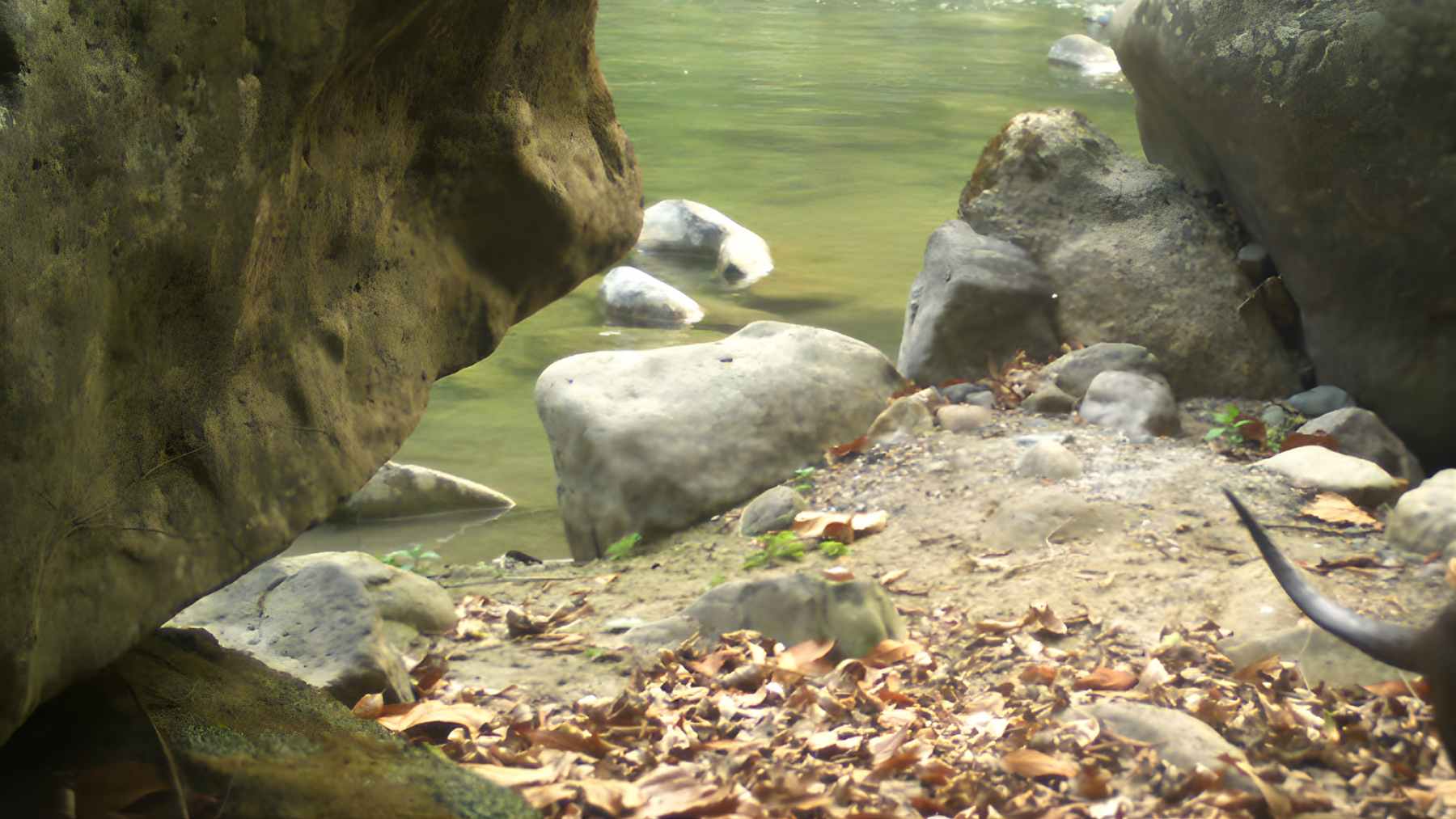
During a tiger survey in India, researchers caught a glimpse of an elusive predator. Trail cameras in Nandhaur Wildlife Sanctuary in Uttarakhand captured the first confirmed photos of smooth-coated otters there, revealing a vulnerable species quietly sharing space with the region’s big cats.
The images, recorded in May 2024 and described in a new study in the Journal of Threatened Taxa, show groups of otters moving along a stream and reveal that Nandhaur’s rivers still support an apex freshwater hunter that had never been officially recorded there before. So what did the cameras actually see?
A chance encounter in tiger country
The discovery started almost by accident. A team from the Wildlife Institute of India was installing camera traps in March 2024 to count tigers when they spotted a large otter slipping through the water that vanished before they could confirm its identity.
Curious, authors Nishant Bhardwaj and Hritik Nautiyal returned in May with five trail cameras and placed them along likely otter hangouts in Nandhaur’s streams. They chose spots where they found tracks or scat, small clues that suggested an animal most people in the region never get to see.
What the camera traps finally revealed
The cameras ran for ten days and delivered the proof the team hoped for. On May 16, two images showed four smooth-coated otters clustered at the water’s edge, heads up as if listening for danger or the splash of a fish.
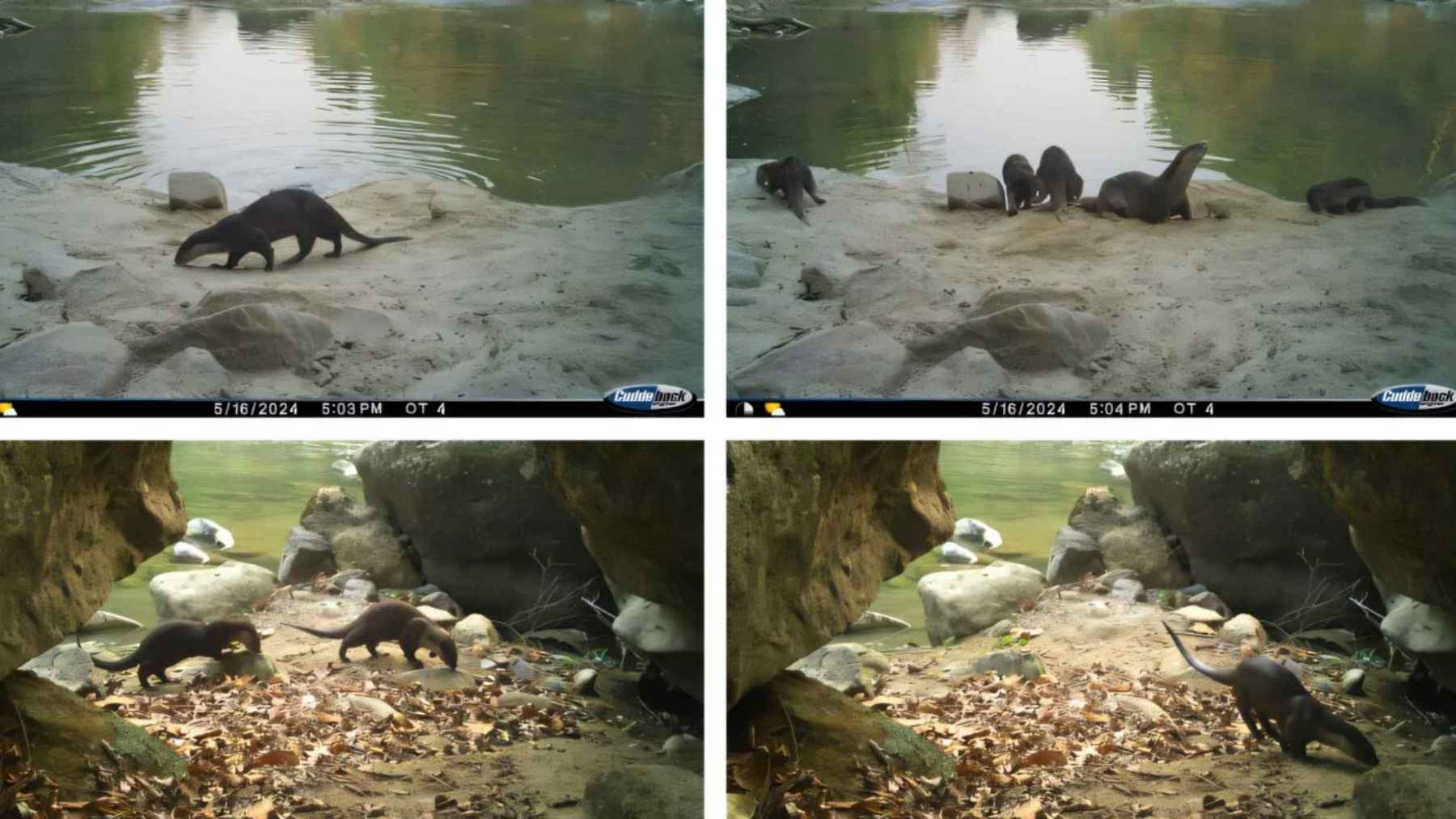 A camera-trap montage captures smooth-coated otters in Nandhaur Wildlife Sanctuary, marking the first confirmed record for the area.
Five days later, another sequence captured two otters weaving between boulders along the same stretch of stream. Together, the photos mark the first photographic record of smooth-coated otters in Nandhaur Wildlife Sanctuary and confirm that more than one individual is using this protected landscape.
Who are the smooth-coated otters
Smooth-coated otters are semi-aquatic mammals that can weigh about twenty four pounds and glide through rivers and wetlands, similar to playful otters that trend in social media clips, although these animals live away from city zoos. They get their name from their dense, sleek fur and belong to a small group of otter species in India that also includes the Eurasian otter and the Asian small clawed otter.
The species is listed as vulnerable on the IUCN Red List and enjoys the highest protection under Schedule I of the Wildlife Protection Act. According to the IUCN Otter Specialist Group, smooth-coated otters usually live in noisy family groups that hunt together for fish, shrimps, frogs, crabs, insects, and even water birds.
Threatened otters and the rivers they rely on
They face a long list of threats, including poaching, habitat loss, accidental trapping in fishing gear, pollution, and capture for the pet trade. These pressures have pushed populations into scattered pockets that survive mainly where clean water, fish, and safe riverbanks still exist.
Until now, most confirmed records of smooth-coated otters in Uttarakhand came from a handful of major rivers in the Himalayan foothills. A 2020 study on four Uttarakhand rivers mapped otter signs to guide conservation planning and noted that large carnivores like tigers often receive far more attention than smaller species that share the same waters.
By adding Nandhaur Wildlife Sanctuary to the map, the new photos show that the species is using smaller forest streams as well as big rivers. For people living downstream who depend on these rivers for fishing, irrigation, or turning on the tap, an otter at the top of the food chain is a keystone presence that hints the waterway is still functioning relatively well.
What researchers say should happen next
Coauthor Harish Guleria from the Zoological Society of London and senior scientist Bilal Habib emphasize that this first record is just a starting point. The team argues that otters need to be included in future management of Nandhaur, not treated as an accidental extra in tiger-focused surveys.
The study puts it plainly, stating that “it is imperative to conduct systematic surveys for otters in the Nandhaur landscape” so that their numbers and distribution can be understood and protected. In practical terms, that means more targeted camera work along streams, better protection for riverbanks, and closer checks on pollution or sand mining that could damage the habitat.
As Nandhaur’s cameras keep watching for stripes and paw prints, scientists say they may also keep picking up the sleek outlines of otters that until now slipped past unnoticed. Who knows what else is waiting outside the frame.
The study was published in the Journal of Threatened Taxa.