
(Credits: Far Out / Alamy)
Mon 2 February 2026 17:07, UK
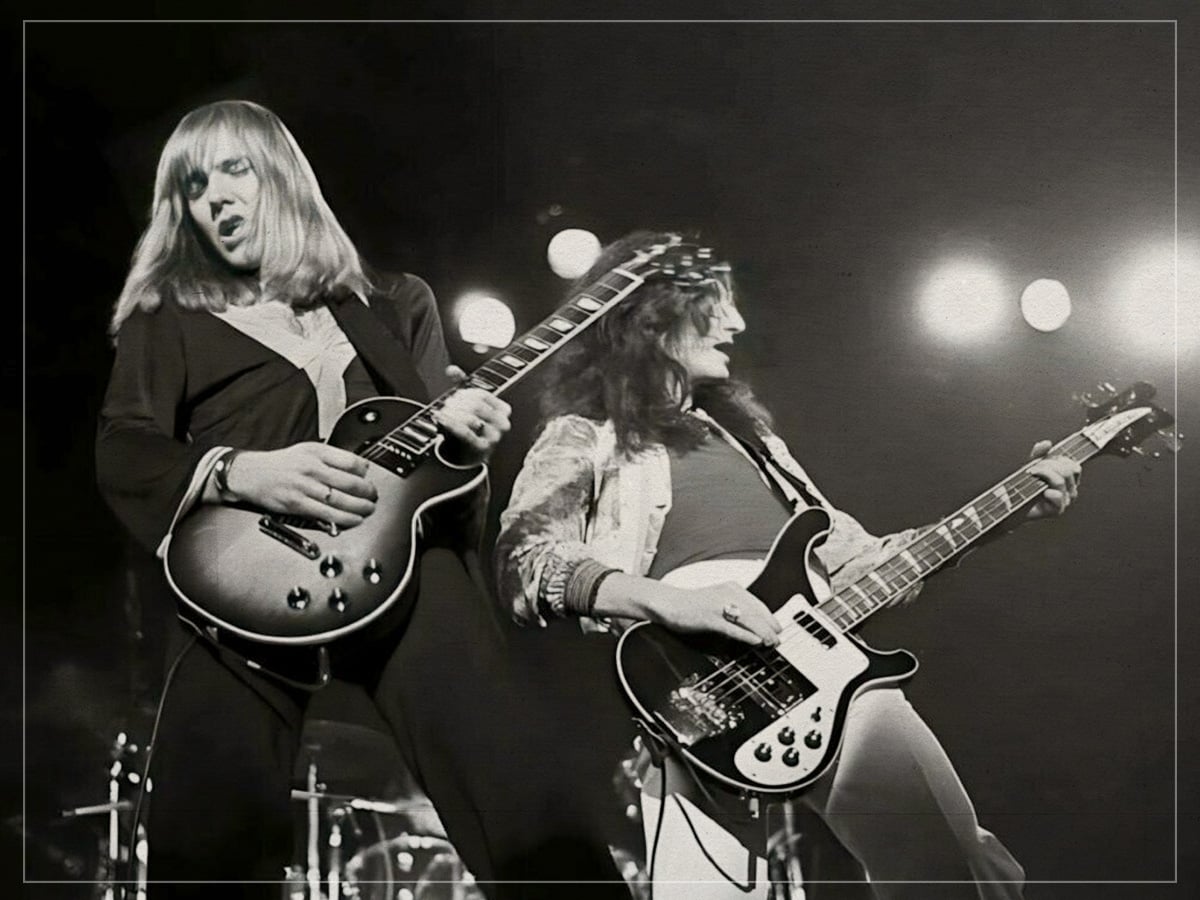
After receiving a guitar from his father as a Christmas gift, a young Alex Lifeson instantly fell in love with the instrument and knew it was his destiny to pursue a career in the arts. From this moment, Lifeson dedicated himself to absorbing as much music as possible, but there was always one figure he knew was impossible to replicate.
Coming of age in the 1960s was perfect timing for Lifeson. The rock ‘n’ roll scene was thriving, with the future Rush member lapping up the work of artists ranging from Pete Townshend and Jimmy Page, musicians who were reshaping the mould of what a guitarist could be. During this period, the guitar was the most exciting instrument in the world and caused people to feel emotions they never knew were possible.
Undoubtedly, the architect of the electric guitar revolution was Jimi Hendrix. Shortly after he arrived in London in 1966, the perspective of what was capable of the guitar changed, and suddenly, the vast possibilities on offer from the instrument were visible to all. However, Lifeson was always aware that replicating the magnificence of Hendrix was impossible.
Although he still greatly admires the work of the American musician, the two have always had dramatic differences from a stylistic perspective. Instead, it was Eric Clapton who represented a more attainable figure to attempt to emulate. While the Cream guitarist is a technician of the highest pedigree, Hendrix seemed like an alien who was incomparable with anyone else on the planet.
“Jimi Hendrix is another fantastic influence,” Lifeson explained to Sirius XM in 2012. “I don’t think I ever felt that I wanted to play like him. I think he was too beyond that and too unique. But certainly (he was) very, very influential on what he did with the guitar and how he opened it up. That first record was a mind-blowing experience”.
Speaking specifically about his love of Hendrix’s ‘Purple Haze’, Lifeson recalled: “I remember getting that, in fact the original drummer in Rush, John Rutsey, he had a couple of older brothers that were very into music and they got that album when it first came out. I remember going to his place and listening on his crappy $28 turntable.”
Meanwhile, in an interview with Guitar World, Lifeson claimed Hendrix’s cover of Bob Dylan’s ‘All Along The Watchtower’ epitomised his otherworldly gift. “It doesn’t slap you; it caresses you,” he remarked. “This song grabs your heart and sails away with it; it sounds unlike anything anyone has ever done. That was the magic of Hendrix: even if you copied what he recorded and tried to play like him, it could never be the same”.
Lifeson made the correct decision to resist trying to exhibit his inner Hendrix. Many have tried and failed to go down this route over the decades, but it’s inconceivable to imagine anybody succeeding.
That understanding ultimately became one of Lifeson’s greatest strengths as a guitarist. Rather than chasing an unattainable ideal, he carved out a sound that balanced ambition with identity, blending progressive complexity with melodic clarity. Where Hendrix bent reality, Lifeson focused on atmosphere, texture, and songcraft, allowing Rush’s music to expand without ever losing its emotional core.
In recognising Hendrix as out of his league, Lifeson also recognised something more important about himself. Great musicians are not defined by who they imitate, but by who they choose not to imitate. Hendrix represented a peak that could be admired without being scaled, and by respecting that boundary, Lifeson found the space to become a singular voice in his own right.
Related Topics