
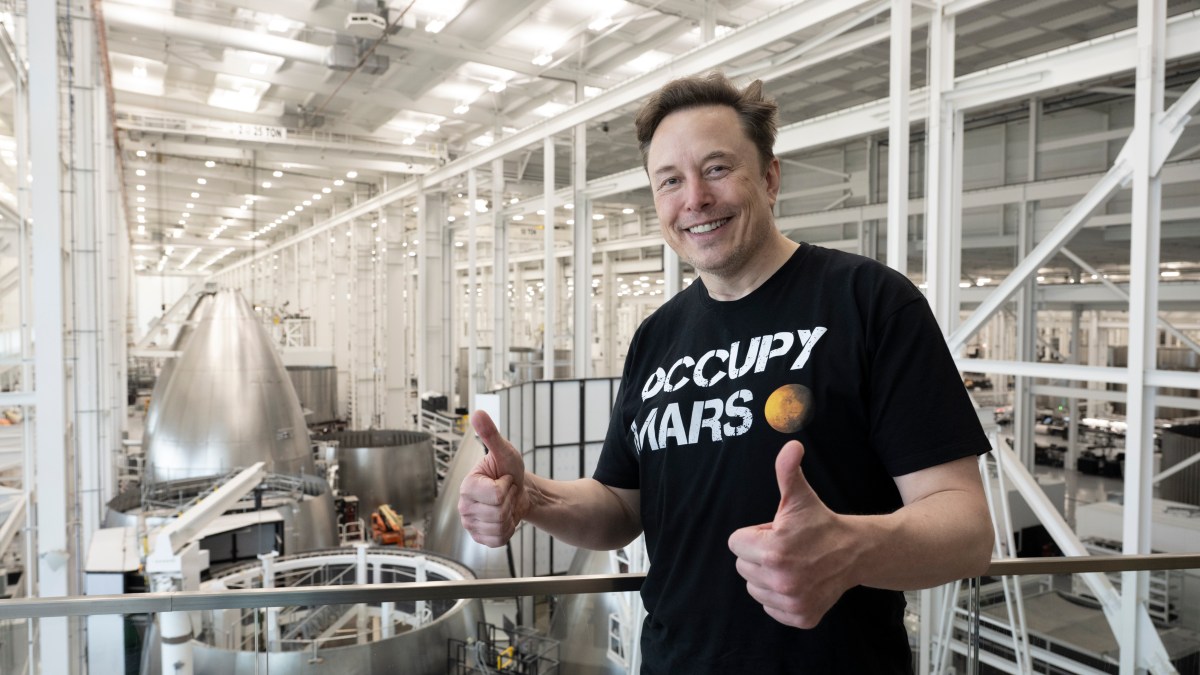
Elon Musk’s space firm SpaceX said on Monday that it had acquired xAI, his artificial intelligence startup, combining the rocket-and-satellite company with the maker of the Grok chatbot in a move aimed at unifying Musk’s AI and space ambitions.
A merger would represent one of the most high-profile corporate technology pairings, blending a space-and-defence contractor with a rapidly evolving AI developer whose costs are dominated by chips, data centres and energy.
In a memo to staff and posted on his social media platform X, Musk said: “SpaceX has acquired xAI to form the most ambitious, vertically-integrated innovation engine on (and off) Earth, with AI, rockets, space-based internet, direct-to-mobile device communications and the world’s foremost real-time information and free speech platform.”
• Elon Musk targets SpaceX float to coincide with rare planetary alignment
Last year Musk, who owns about 42 per cent of SpaceX, used xAI to acquire his social media platform, X, in a deal that The New York Times said valued the combined entity at $113 billion.
The merger illustrates Musk’s push to fuse his fast-growing AI efforts with his aerospace and satellite-internet empire, betting that shared computing, data and engineering talent can accelerate both AI development and potentially support longer-term ambitions around space-based data centres.
Musk said: Current advances in AI are dependent on large terrestrial data centres, which require immense amounts of power and cooling. Global electricity demand for AI simply cannot be met with terrestrial solutions, even in the near term . . . In the long term, space-based AI is obviously the only way to scale.”
The merger comes before a reported blockbuster initial public offering planned for later this year, bringing Musk’s rockets, Starlink satellites, the X social media platform and Grok AI chatbot under one roof.
The combined company is expected to price shares at about $527 each, and would have a valuation of $1.25 trillion, according to Bloomberg News.
SpaceX, which specialises in deploying reusable rockets and constructing the high-speed Starlink internet network, was forecast to have generated an annual revenue of $15.5 billion last year.
The rocketmaker is seeking to raise as much as $50 billion at a valuation of about $1.5 trillion, the Financial Times reported. That would eclipse the $29 billion raised by Saudi Aramco in its 2019 listing, the biggest to date.
Last week several high-profile banks were reported to be lined up for “lead roles” in the flotation, including Bank of America, Goldman Sachs, JPMorgan Chase and Morgan Stanley.