
For years, dark chocolate has had something of a love it or hate it reputation, as tastes err towards milkier, more sugary bars.
But its high cocoa content, from 35 per cent in the UK, along with the minimal processing and few ultra-processed ingredients of many bars, has garnered it a reputation as a health product, promising all kinds of benefits from boosting brain function, lowering cholesterol and reducing the risk of diabetes.
Before you tuck in, there is plenty of nuance to these claims. The British Heart Foundation (BHF), for example, explains that while dark chocolate is known to be high in flavanols, which are linked to reducing high blood pressure, you wouldn’t be able to get enough flavanols just from eating a few squares of chocolate. It’s also high in sugar and saturated fat.
New FeatureIn ShortQuick Stories. Same trusted journalism.
Some benefits we can be confident of, according to Professor Tim Spector’s ZOE organisation, include the high fibre content and nutrient count of dark chocolate. If you choose a bar that is at least 70 per cent cocoa, it will be high in iron, magnesium, copper and manganese, and contain calcium, potassium and zinc, with around 11g fibre per 100g bar.
Dark chocolate is also high in polyphenols, a health buzzword believed to fight ageing and inflammation and promote gut health among many other benefits.
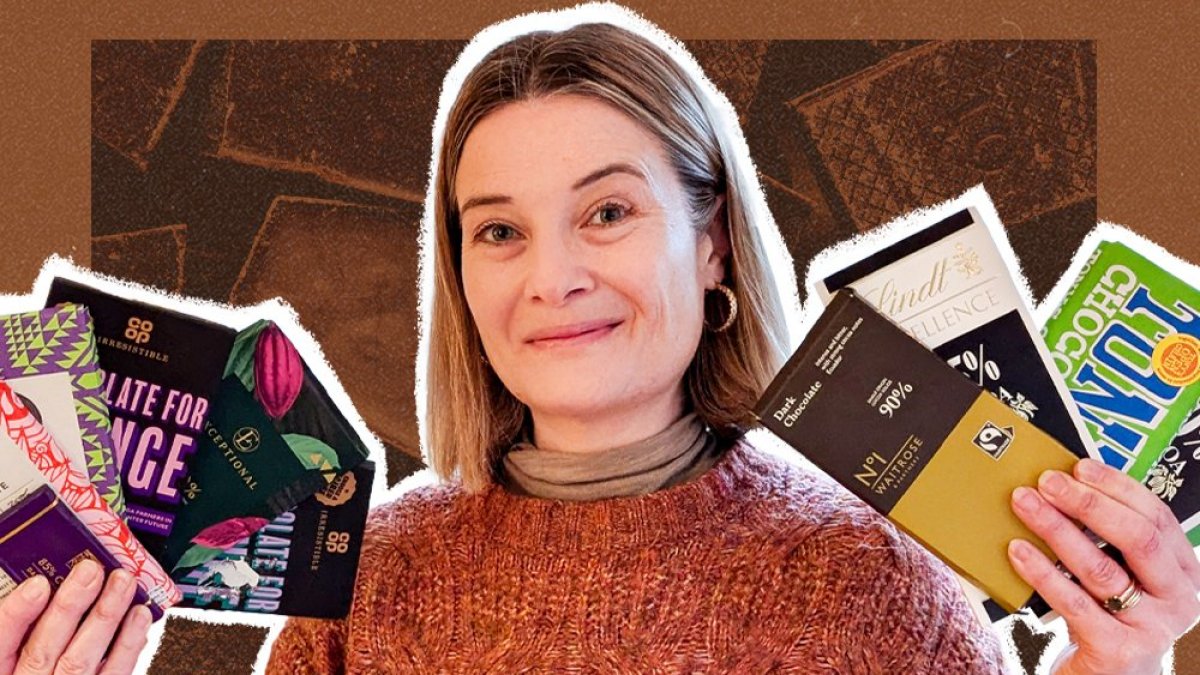
What about taste? We tried 18 supermarket bars costing from £6.50 to £69 per kilo – a vast difference in price, but almost incomparable in quality. I enlisted the help of chocolate expert Jennifer Earle, founder of Chocolate Ecstasy Tours and author of the Next Delicious Thing newsletter, who spends most of her time trying high quality craft chocolate made with beans that have been carefully harvested and processed (fermented and dried) to create great flavours.
“This means that they don’t need to be harshly roasted, alkalised or masked with vanilla to make them taste okay,” she says, adding that craft chocolate should cost from £69 per kg.
I ask her what should go into a decent bar of dark chocolate. “Only cocoa beans and sugar,” she says. “Cocoa butter is usually also listed in the ingredients. It’s part of the bean, but most bars have extra cocoa butter than you find in the natural ratio of the beans. It’s acceptable to have soy or sunflower lecithin in the ingredients of a high quality bar, but more common in chocolate for cooking than for bars that are meant for eating.
“If you see vanilla in the ingredients of a dark chocolate bar that doesn’t have vanilla in its title on the packaging – this is very unlikely to be a high quality chocolate bar.” (In France, however, craft chocolatiers do use vanilla.)
Chocolate prices have soared by as much as 17 per cent in the year to October 2025, but it is a slow food: it takes one tree two years to produce enough for 200g chocolate. Food giant Mondelez International has warned that shifting weather could leave 60 per cent of the cocoa-growing region across Ghana and the Ivory Coast unsuitable for cultivation within 30 years.
The chocolate industry is known for being rife with problems such as child labour and deforestation. Tony’s Chocolonely is one brand making a lot of noise about its Tony’s Open Chain sourcing initiative.
“Many supermarket brands use ‘fairtrade balance’, which is a halo effect where companies can put a fairtrade sticker on some chocolate and then purchase fairtrade for just that percentage of chocolate, but within their factory it can all get mixed up,” says Jennifer. “That feels slimy.”
Jennifer recommends splurging on craft chocolate, which would include Willie’s Cacao, and also Islands, which can be found in some supermarkets. “I know it’s a big price difference, but for anyone who has a daily coffee from a shop, you’d only have to forgo two to buy yourself a great bar of chocolate that will last longer than the coffees,” she explains.
How we tested: while we both tested each bar, Jennifer Earle provided flavour notes while the scores are mine.
£2.28/100g (£22.80/kg)
As an expert in high quality craft chocolate, Jennifer hasn’t tried all of the supermarket bars in a while and wonders if the quality has gone down given the high cost of cocoa, or whether she’s too used to high end bars. “Asda Peruvian 70 per cent was the closest to being enjoyable,” she says, “which I think is more about the Peruvian beans than it being Asda.”
4/5
£3.45/50g (£69/kg)
“I’ve liked his chocolate before,” says Jennifer. “This was fine, but didn’t have as many flavour notes as I’d have hoped, or have had, from his other chocolate origins or milk chocolate in the past.”
4/5
65p/100g (£6.50/kg)
“Very sweet and a slightly powdery finish, with 49 per cent cocoa solids, Rainforest Alliance Certified cocoa mass and cocoa butter, emulsifier, and for some reason, an unspecified flavouring. That said, the taste is not awful given the very low price. I would cook with this.”
1/5
£2.30/200g (£11.50/kg)
“Quite sweet with a rounded, earthy finish. I couldn’t eat much of this, though. It’s made with 55 per cent cocoa solids, Rainforest Alliance Certified cocoa mass and cocoa butter, emulsifier and an unspecified flavouring – just like Ms Molly’s, so at close to twice the price it feels like poor value. I’d cook with this rather than snack on.”
1/5
£2.35/180g (£18.10/kg)
“Waitrose has joined the Tony’s Open Chain initiative, which has decent sourcing principles – on paper at least. This bar contains cocoa mass, added sugar and emulsifiers, but no flavourings. Again, not sure I’d eat this out of choice. Would rather cook with it, or grate it onto porridge.”
2/5
£3/100g (£30/kg)
“Noticeably less sugary than cheaper bars – this is 90 per cent single origin cocoa, which means the beans are sourced from one country, in this case Ecuador. There’s some depth of flavour to the finish with earthy and toffee notes.”
3/5
£3/100g (£30/kg)
“While this wasn’t bad, it still wasn’t something I’d go to for pleasure,” says Jennifer. “It felt like quite a lot of the additional cocoa percentage came from cocoa butter, which made the melt quite oily and dumbed down the flavours of the cocoa.”
3/5
£2.95/100g (£29.50/kg)
Eighty-five per cent dark chocolate produced to the Co-Op’s Chocolate for Change initiative, which works with smallholder farmers in Peru to give them a fair deal. I like this one: there’s a burst of burnt toffee notes. While Jennifer wouldn’t expect to find a burnt taste in good quality, she says that some people do enjoy the taste of burnt cocoa and vanilla.
3/5
£2.40/100g (£24/kg)
Just three ingredients, cocoa, cocoa butter and sugar, with 90 per cent Rainforest Alliance Certified cocoa solids. I’m pleasantly surprised at the velvet mouthfeel of a bar with such high cocoa content and it comes in Jennifer’s top five.
4/5
Around £4/180g (£22/kg)
“Last year, Tony’s ran a bizarre publicity campaign about how hard their bars are to break into, announcing that 62 per cent of its own fans find the chunky bars, made without a uniform grid for easy breaking, hard to get into. I’ve not yet met anyone who enjoys breaking a nail while their chocolate flies around the room, staining sofas and sweaters. The chocolate equivalent of ‘you don’t have to be mad to work here’. Unfortunately, for me the flavour doesn’t redeem it, but I’m awarding a few points for effort.”
2/5
£2.39/125g (£19.10/kg)
“Though there are emulsifiers in these bars. They are really handy for school lunches and picnics, coming in at under 50p a bar, making them far cheaper and healthier than 99 per cent of packaged snacks. Too much of an easy win not to recommend these to everyone, even if the chocolate itself isn’t top notch.”
3/5
£2.74/90g, ASDA (£30.40/kg)
One of few certified organic bars, with added vanilla extract. G&B really changed the chocolate market in the UK when it was launched by Jo Fairley and Craig Sams in 1991. It was bought by Cadbury in 1995 and is now owned by food giant Mondelez International. I enjoy this bar. Not too sweet with a fiery peppery note at the end. Jennifer says it is “boring but not violently bitter or astringent the way many of the others are”.
3/5
Around £3.75/100g (£25/kg)
I try a range of Lindt bars with varying cocoa content: 70 per cent, 78 per cent, 85 per cent, 90 per cent and 99 per cent. I used to eat these a lot but several years ago went off them, finding them too sugary. Jennifer wonders if some of the bars we try have changed since she last tasted them. To my surprise, the 70 per cent is my least favourite. After a smooth opening, it turns a little bitter and has a burnt aftertaste.
The 78 per cent, 85 per cent and 90 per cent sit in a group for me. They all taste more earthy, less sugary, with some rounded berry notes; not hugely interesting but not offensive. The 99 per cent is sugar-free and tastes markedly different to all the others. It’s not an enjoyable eat.
2/5