
Steve Borthwick’s expecting a kick-fest at Twickenham, but Wales have been stung before at Twickenham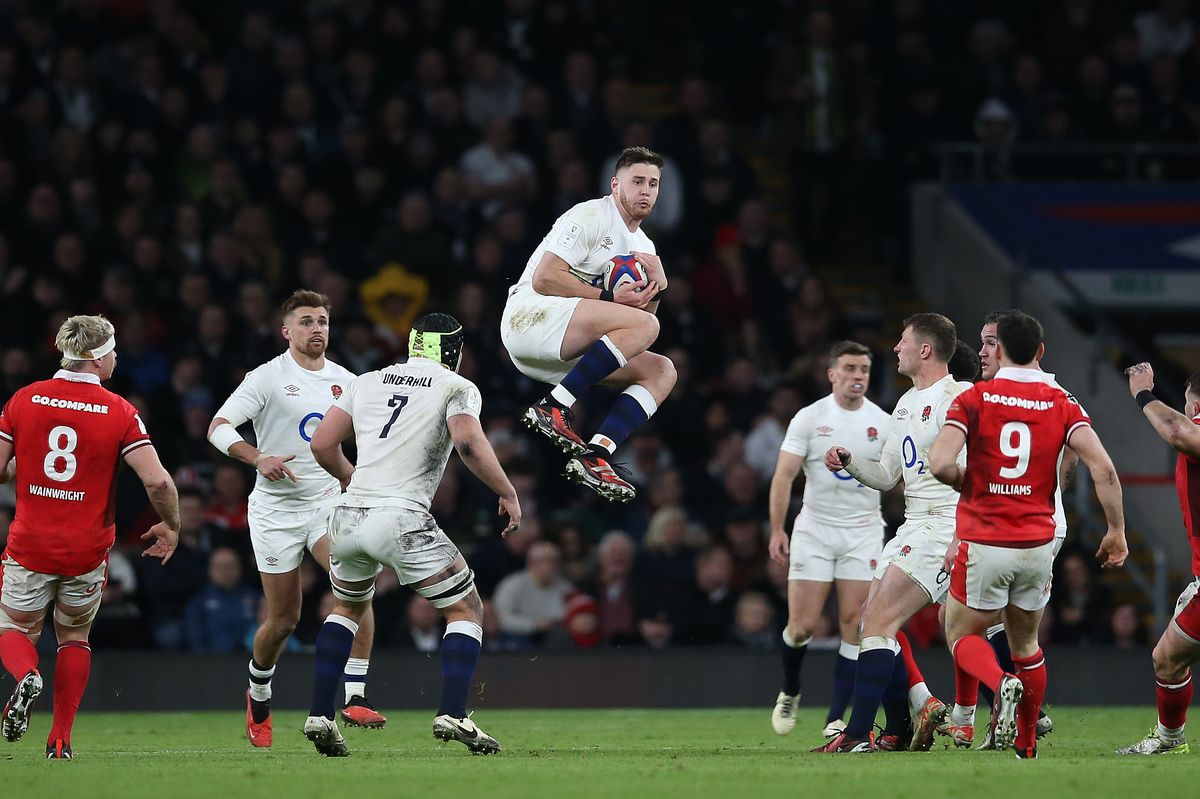
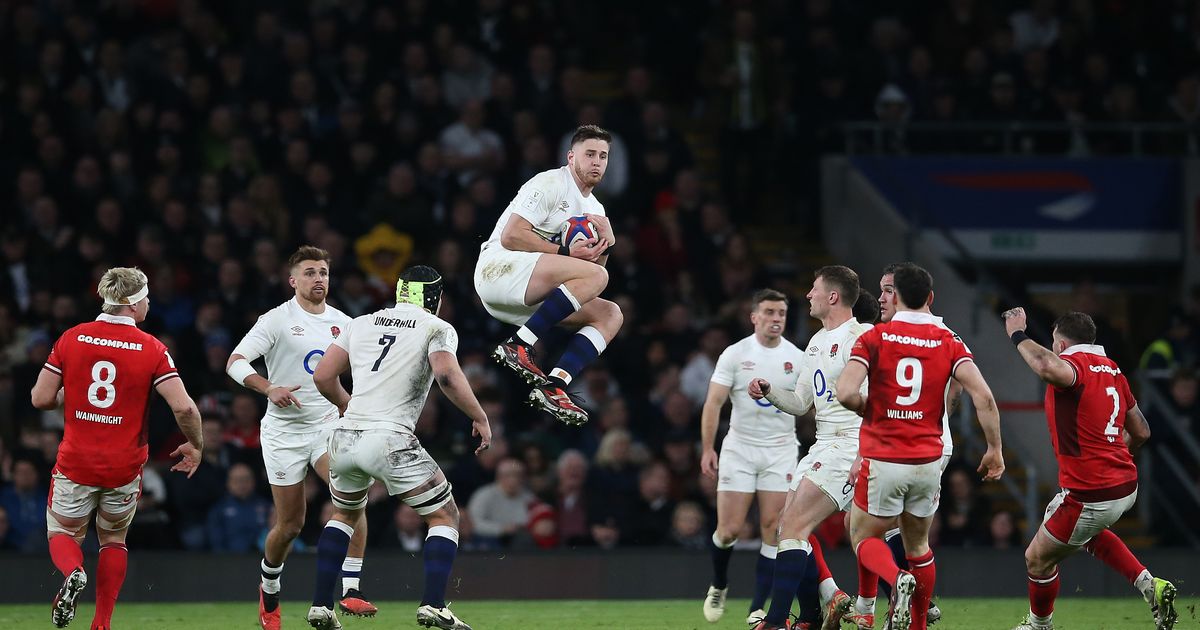
Freddie Steward claims a high ball against Wales in 2024(Image: Getty Images)
Two years ago, on their last visit to Twickenham, Wales found themselves leading 14-5 at half-time.
Were there to be a similar score this weekend, Welsh rugby likely wouldn’t know what to do with itself. No one is expecting Wales to get near England on Saturday.
And, as much as it pains me to say, that’s with good reason.
England are on an 11-game winning run at Test level. Wales have won just two in 23 Tests – both against Japan.
In the end, they would go on to lose that match in London – slipping to a 16-14 defeat. Across the 18-Test losing run between the end of 2023 and the summer of 2025, that was actually one of the closer ones.
In the end, it was a masterful performance by England full-back Freddie Steward that swung the game in England’s favour.
Ever since the Leicester Tigers man plucked the ball out of the air time and time again, Welsh rugby’s fortunes at international level have unravelled quite quickly.
Steward didn’t feature in the match in Cardiff last year, with Marcus Smith getting the nod in the 68-14 hammering. In fairness, Freddie Starr could have worn the 15 jersey that day and come through unscathed.
But, after Steve Borthwick named his team early for Saturday’s clash, Steward is back to likely haunt Wales once more.
Looking at the match on Saturday and working out how Wales can cause England problems can feel like window dressing at times. Deckchairs on the Titanic feels like an overused phrase in Welsh rugby circles, but it’s not far off the money here.
The long and the short of it is England should win and win comfortably on Saturday. Sir Clive Woodward says there isn’t a way he sees England losing this one.
As much as we’d like him to be, he’s probably not wrong.
This is a bridge too far for Wales given where they are right now, but there are undoubtedly ways they can get closer to England over 80 minutes.
Borthwick has already recognised one of these, stating he expects Wales to stick up 50 contestable kicks on Saturday.
For context, that figure might be an inflated one. Wales kicked no more than 31 times in any game in the autumn – that figure considers all kicks out of hands.
So suddenly shifting the dial to 50 ‘garryowens’ could be a stretch. But he’s right in principle – Wales are going to kick to compete and then look to play off the crumbs.
With the laws the way they are around the lack of blockers, they’d be daft not to. Tandy said last week that defending teams are only tending to claim one in four high balls cleanly.
Some stats from last autumn suggest that might be closer to one in five.
Even as one of the safest pair of hands in the air, Steward doesn’t love the law change.
“It’s probably more difficult than ever to come down clean with the ball with this new law,” said Steward this week, while confirming he would be “a big advocate” of a tweak to the existing laws. “A law change where they have to make a genuine attempt to catch the ball would be really positive.
“It’s too easy for wingers just to be a nuisance. It probably lacks a bit of skill just being able to throw your body in and flail an arm.
“I’ve struggled with it because I have that expectation of myself that you want to come down with absolutely everything. It’s very difficult to do that nowadays.
“Before I could probably go up with less speed and less height. Now you have to be at max speed and max height and get your knee in the right position if you want to come down with the ball.
“It’s so much more physical in the air now. It used to be quite a safe space. Now you have to be braver and almost expect a collision every time you go up. I used to turn my body a bit and almost lead with my hip. Now I’m trying to catch a lot squarer so my knee is a genuine battering ram.
“If a winger is trying to flap they often turn their back so it’s almost like: ‘Right, I’m going to try and knee you in the back as hard as I can.’ As hard as that is, that makes them think twice about coming and flapping again. It’s almost prioritising the physical bit rather than the ball which is a bit different. But that’s something I’ve had to do. You have to adapt if that’s the way the game goes.”
Part of the reason behind Steward’s selection is down to George Furbank’s fitness, while those in England see it as an opportunity for the full-back to show off his attacking game.
But Borthwick will also know that if Wales put 50 contestable kicks up on Steward, regardless of whether he likes the laws as they are now, then he’s likely to claim more than the average.
Wales have learned that lesson the hard way in the past. On Saturday, they can’t repeat the same mistake.
Kicking the ball down the throat of Steward aimlessly might produce the odd scrap, but don’t be surprised when he still claims a solid percentage.
Instead, Wales are going to have to vary their kicking game.
In the autumn, Wales had some success against New Zealand with the box-kicking of Tomos Williams. That will still be key, but they need to kick from wider out than just nine.
It’s a big game for whoever gets the nod at fly-half. Dan Edwards, as the incumbent, has looked to kick more tactically in recent weeks for the Ospreys – even dabbing through a territorial kick when the Ospreys were chasing a winning score away to Zebre in Europe.
That particular kick would have no doubt frustrated the young fly-half, but he seems to have the temperament to move past his mistakes.
On Saturday, he’ll likely be asked to kick diagonally onto Henry Arundell where he can. The England wing is making his first start since the 2023 World Cup – if anyone can be targeted in the air in England’s back-three, it’s him.
A high number of contestable kicks could lead to a high number of scrums, which could present Wales with an interesting decision to make on their front-row.
“Well, the running around the kicks might be a bit of an issue,” admitted Nicky Smith last week about the prospect of 50 kicks and as many scrums to follow, “but I suppose scrums might be better.”
England’s starting front-row and bench options are perhaps at different ends of the spectrum when it comes to experience.
Ellis Genge will cause whoever starts on the tighthead an issue, but it’s fair to believe Smith can give Leicester team-mate Joe Heyes a few headaches if he starts.
On the bench, Bevan Rodd and Trevor Davison could be targeted if Wales kept their best scrummagers back – as they occasionally did in the autumn.
It’s something for the Wales coaches to weigh up. There are other areas, like the maul and slight disconnects defensively in midfield that Wales might have picked up.
Of course, exploiting any of that is dependent on having a platform – something that could be hard to come by on the weekend.
The aerial game might just present one route to that, but it will count for nothing if Steward is allowed to dominate in the air once more.