
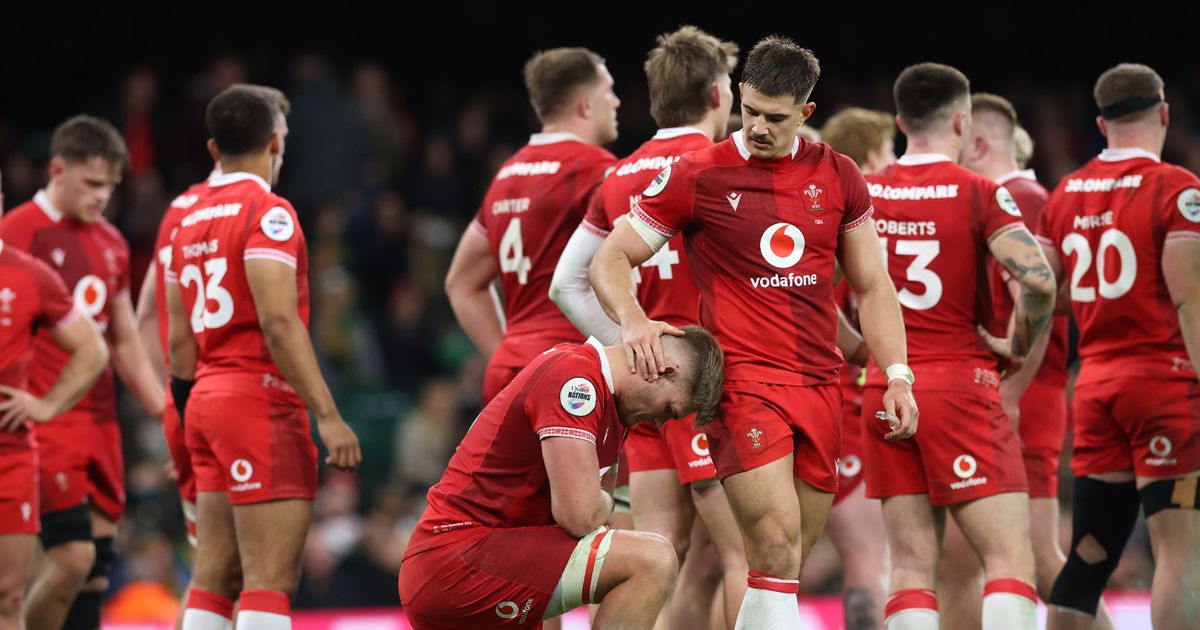
There have been repeated calls for promotion and relegation to be introduced to the championship in recent years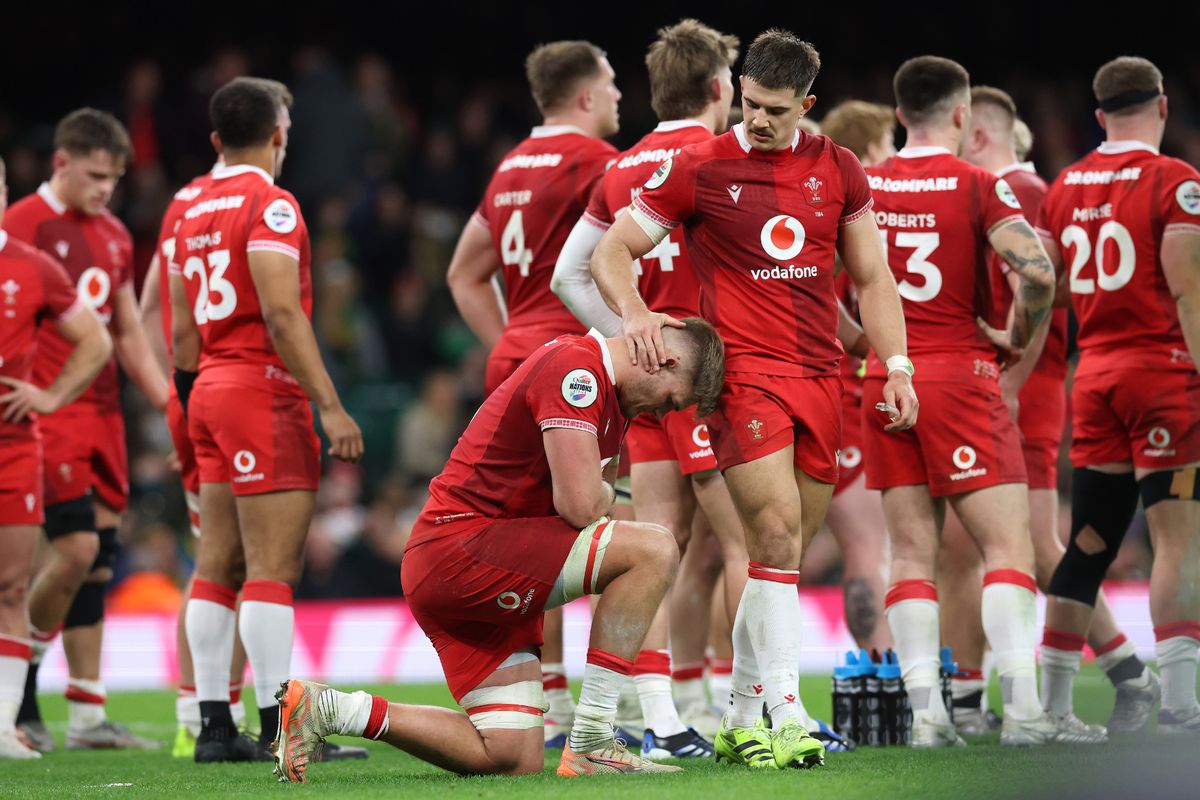
Wales have not won a Six Nations match since 2023(Image: Getty Images)
Six Nations CEO Tom Harrison has made his feelings clear on introducing promotion and relegation into the competition, dismissing repeated calls for Tier 2 nations like Georgia to be given a seat at international rugby’s top table.
Recent years have seen the Georgians dominate the Rugby European Championship, the tournament below the Six Nations, winning the title in 16 of the last 18 seasons. Having also toppled the likes of Wales and Italy in recent times, they believe they have earned the right to test themselves against the best teams in Europe on an annual basis.
Those calls have only intensfied with Wales’ dismal run of form over the last two years, with Steve Tandy’s side heading into this weekend looking for their first tournament win since March 2023, having picked up the wooden spoon at the last two championships.
JOIN OUR WALES RUGBY FACEBOOK PAGE Latest news, analysis and much more
Unsurprisingly, their winless run in the competition has seen them named as 10/11 favourites to finish bottom of the table again this year, according to OddsChecker.
The contrasting fortunes of Wales and Georgia has prompted much debate about the merits of the Six Nations introducing a promotion and relegation system, with the Lelos throwing down the gauntlet and challenging the Welsh to a play-off match to determine who deserves a tournament spot.
Sir Clive Woodward and Sam Warburton are among those to have called for promotion and relegation to be introduced in recent times, with the former Wales captain previously saying such a system should be implemented when it was Italy who were repeatedly finishing bottom of the pile.
However, Warburton has also admitted that the financial impact relegation would have on nations like Wales would be “a disaster,” and that point has now been echoed by Harrison.
Appearing on the Business of Sport podcast, the Six Nations chief made it clear that promotion and relegation will not be introduced “anytime soon”, as he argued that the prospect of one of the current sides being relegated was “tantamount to bankruptcy”.
Get the latest Wales Rugby merch at Fanatics
This article contains affiliate links, we will receive a commission on any sales we generate from it. Learn more
Various Price
Fanatics
The Six Nations is running from February 5 to March 14 and Wales Rugby fans can get the latest jerseys, hoodies and more at Fanatics.
Warning that programmes would be forced to shut down and jobs would be lost if such a system was introduced, Harrison said: “We’re not going to introduce promotion or relegation into the Six Nations anytime soon.
“I think promotion and relegation is something which, as a principle in European sport, we’re all really used to. But I don’t see an equivalent example where there is an international competition that has promotion and relegation, where relegation is tantamount to bankruptcy or the end of your organization.
“The benefits of promotion are well understood, not having a glass ceiling, the opportunity question, it’s super important and we need to think hard about that. But let’s not get that mixed up.”
“Imagine, in the insistence of introducing promotion and relegation, we lost a union that was generating really good young talent but had a bad couple results and managed to get relegated – and as a result, clubs had to close, programmes had to be shut down, people had to lose their jobs,” he added.

Georgia have dominated the second tier of European international rugby for years
“That is not the objective of the theme and theory behind promotion and relegation, which is all about opportunity development
“Before we start talking about the benefits of it, we need to talk about the the consequences for the team that is no longer part of that competition, for however long. There has to be a better answer other than ‘we don’t have one yet’.
“But no one’s against the principle of giving opportunity to second tier nations or developing nations. What we don’t want to do is create that opportunity at the cost of a major rugby power not being able to exist.”
A former professional cricketer, Harrison previously served as chief executive of the England and Wales Cricket Board and admitted that he had faced similar calls to provide more opportunities for smaller nations in that job. However, he highlighted the key difference between the two sports, with the demands of rugby’s calendar complicating matters greatly.
“Cricket had a little bit more flexibility in its calendar,” he explained. “So you could do things like introduce a wider tournament, a qualifying two or three-week period before a World Cup or a World T20, to give the Bahrains and the Omans and the Hong Kongs of the world an opportunity to break through into the main competition.
“Those opportunities are much more difficult to create in rugby because of the calendar, because of the pressure on clubs and the ownership of those weekends between club and international rugby.
“You play once a week and you can only play a certain number of weeks in a row and those are critical elements to us being able to put players in the right space from their health and welfare perspective.
“It’s also really important for presenting the right kind of level of competition on the field,” he added. “You want to know that players are at their best when they’re playing and they’re healthy and fit both mentally and physically. That’s when you get incredible things happening on a rugby field.”
Follow all of our channels to ensure you stay up to date with the latest Welsh rugby news. Sign up to our free daily newsletter here and our WhatsApp channel here for all the breaking news.