
“Lawlessness.” “Violence.” “Insurrection.”
In the wake of mass protests against federal immigration raids, politicians and pundits are using these kinds of words to discredit public dissent. In this view, protesters are framed not as engaged citizens exercising their rights but as threats to public safety and social order.
Terms like “Trump Derangement Syndrome” go even further by pathologizing dissent itself. Framing resistance as mental instability makes it easier to dismiss, delegitimize, and punish, rather than confront the real harms that sparked it.
But this impulse isn’t new. The reflex to recast resistance as disorder has long been embedded in medicine. Psychiatry, in particular, has a long and troubling history of treating dissent not as a demand for justice, but as a symptom of illness.
As a psychiatrist who has worked across emergency rooms, inpatient units, and community clinics, I’ve seen how our systems can punish people for suffering—especially when anger or resistance stems from trauma, racism, or state violence.
A Legacy of Pathologizing Protest
In the mid-19th century, Southern physician Samuel Cartwright coined the term drapetomania to describe what he saw as a mental illness afflicting enslaved people who tried to flee captivity. Rather than recognizing an attempted escape as a fight for freedom, psychiatry labeled it pathological. The proposed treatment? Whipping.
A century later, in the heat of the Civil Rights Movement, Black men protesting racial injustice were labeled as schizophrenic under the so-called diagnosis of protest psychosis. Once viewed as a docile disorder of white middle-class women—one primarily characterized by withdrawal, confusion, and guilt—schizophrenia was redefined, its symptoms rewritten to reflect aggression, hostility, and paranoia. What changed wasn’t the science but the patient; the shift from white women to Black men transformed the condition into something dangerous.
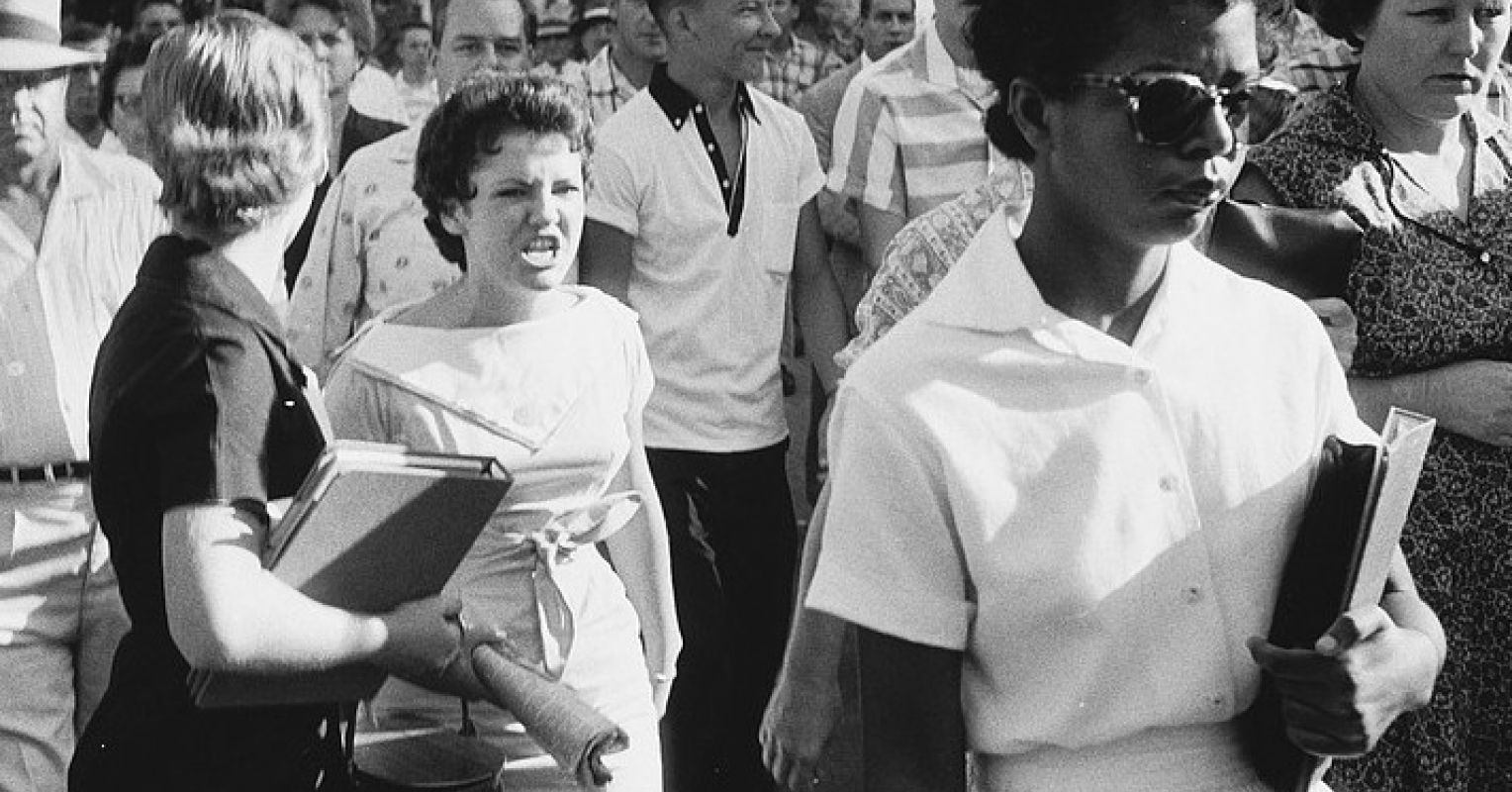
Just as disturbing as what psychiatry diagnosed is what it ignored. “Drapetomania” pathologized the enslaved, but not the enslavers who tore families apart and sanctioned physical and sexual violence. “Protest psychosis” pathologized civil rights activists, but had nothing to say about the mobs who tormented Black children at Little Rock Central High School, or the state brutality used to enforce segregation.
These weren’t fringe ideas. They were published in respected psychiatric journals, taught in medical schools, and used to justify the control, punishment, and institutionalization of people whose only “crime” was the desire to be free.
Modern Echoes: Diagnosing Defiance in Youth
One of the clearest modern descendants of this legacy may be oppositional defiant disorder (ODD), a diagnosis defined by symptoms like irritability, defiance, argumentativeness, and vindictiveness, especially toward authority figures. On paper, it seems like a neutral clinical category. In practice, it often functions as a tool for criminalizing resistance, particularly in Black, Hispanic, and Indigenous youth.
A child who talks back, refuses to comply, or expresses justified anger after experiencing racism or neglect is rarely seen as resilient or perceptive. Instead, they are more likely to be labeled “disordered.” Research confirms that ODD is overdiagnosed in racially minoritized children—particularly in group homes, foster care, and juvenile detention, where the label can be used to justify restraint, exclusion, and criminalization. A recent study found that ODD diagnoses are 35 percent more prevalent in Black people than in white people. Prevalence reaches half in juvenile detention and foster care.
I’ve seen this happen firsthand. A 16-year-old Black nonbinary teen who was a ward of the state arrived at the emergency room in full restraints. The group home had called 911, reporting “aggression,” “defiance,” and “danger to others.” But the child wasn’t violent—they were terrified. Their chart showed a history of being forcefully restrained, injected with sedatives, and discharged. “Please don’t give me a shot,” they begged me, clearly traumatized by their care.
Nowhere did the chart mention the trauma of being separated from their family, systemic neglect, or exclusionary disciplinary practices at school. No one had asked what they were surviving —only what they were resisting.
This is the legacy of pathologizing protest. Survival strategies become symptoms. Resistance against racism and other forms of oppression becomes proof of dysfunction. And it ensures that psychiatry, rather than addressing injustice, becomes an agent of control.
Psychiatry Essential Reads
Psychiatry and the Carceral State
Psychiatric emergencies—especially when framed as danger to self or others—are often met with a familiar set of instructions: call 911, dial 988, or go to the nearest emergency room. What patients and families aren’t always told is that these responses can trigger law enforcement involvement, surveillance, and the use of force.
In 2024, Yong Yang, a Korean American man experiencing a mental health crisis, was killed after his parents called a mobile crisis team. Minutes later, the team called the police, who shot Yang in front of his family. His story reflects a pattern where psychiatry defers to policing, sometimes with fatal consequences.
Mental health standards of care do not require disclosing these risks. Families are not routinely warned that calling 988 may result in armed officers arriving at their door, particularly when operators determine someone is an “imminent risk.” Because 988 crisis centers follow a disjointed set of regional policies, police involvement varies significantly by location—up to 17 percent according to independent data, though the 988 organization claims less than 2 percent. There is no transparent data from 988 regarding which crisis centers are more likely to involve the police. Furthermore, there’s no formal obligation to warn patients about the disproportionate use of restraint, seclusion, or involuntary hospitalization on racially minoritized people.
Reckoning and Reimagining Psychiatric Care
During the country’s 2020 racial reckoning, mental health organizations—including the American Psychiatric Association— issued public apologies for their roles in perpetuating racism. But apologies are only the beginning. A true reckoning demands structural change—starting with how we train, diagnose, document, and respond to people in distress.
Right now, psychiatry has no formal obligation to disclose the risks of police involvement in mental health crises, no protections against the weaponization of diagnoses like ODD, no expectation to account for racism, poverty, or state violence when interpreting behavior—and no accountability when coercive interventions inflict trauma.
I argue that psychiatry cannot continue to claim neutrality while aligning—implicitly or explicitly—with carceral systems. Nor can it ignore how its frameworks have been used to punish people for expressing pain in ways that don’t conform to white middle-class norms.
To move forward, the field must stop pathologizing protest and start treating it as what it often is: a form of truth-telling, a demand for recognition, a strategy for survival. It must replace diagnostic condemnation with protective care, rooted in justice, context, and consent. Because what we’re witnessing—on the streets, in classrooms, in clinics—is not disorder. It’s the voice of people refusing to be broken.