
Reading about the 2.5million people now using fat jabs in the UK, Fran McElwaine wondered, not for the first time, why more aren’t taking the same free – from both cost and drugs – approach that she did.
After all, she lost more than two stone in just three months – and, she says, it couldn’t have been easier.
What’s more, unlike the majority of those on weight-loss injections – according to a recent study, most jab users regain all the lost weight once they ditch Mounjaro and Ozempic – Fran has managed to keep most of it (20lb) off in the decade since.
It was a challenge from her eldest son that led to her radical body, and mind, overhaul. Her son Tom had claimed his mother ‘couldn’t possibly live without bread’ for 40 days. Fran, 56 at the time, then went one step further by cutting out all food containing gluten – pastries, cakes and pasta.
By the end of the first month, she had lost an astonishing 10lb. Feeling considerably healthier, she was spurred on to also ditch sugar and cut back on alcohol – restrictions which led to her losing a further 20lb over the following two months.
At 5ft 6in and 10st 7lb, down from 13st, Fran had a BMI of 23.7, firmly in the healthy range.
‘These are the sorts of losses that people using weight-loss jabs boast about,’ says Fran, now 67 and remarkably fresh-faced for a woman in her seventh decade. ‘Yet I did it without having to spend an extra penny – in fact I saved money – or put chemicals into my body.
‘This sort of weight loss is exhilarating – I’ll never forget the joy of ditching my size 18 clothes and kitting myself out in a whole new size 10 wardrobe from the White Company.

Fran’s son Tom had claimed his mother ‘couldn’t possibly live without bread’ for 40 days. She went one step further by cutting out all food containing gluten – pastries, cakes and pasta
‘Better still, I had none of the nasty side-effects that come with the jabs, mine were all positive – fewer headaches, more energy, better sleep and the lifting of a depression that had dogged me for years.’
These added benefits are in stark contrast to the myriad issues many jabbers complain of – from nausea, constipation and diarrhoea to dizziness and headaches and even, in extreme cases, pancreatitis and gallstones.
If that were difficult enough to stomach, last month a major Oxford review of 37 studies showed jabbers regain a pound a month after quitting, with many projected to have put on much or all the weight lost, after 17 to 20 months.
Weight-loss jabs, including Mounjaro, Ozempic and Wegovy, work by mimicking the hormone GLP-1 (glucagon-like peptide-1), which helps regulate appetite, blood sugar and feelings of fullness.
In simple terms, they shut off the ‘food noise’ that so many are plagued with and tell the brain: ‘You’ve had enough, stop eating.’
Writing in the British Medical Journal, Professor Susan Jebb, co-author of the study and adviser to ministers and the NHS on obesity, said: ‘Obesity is a chronic relapsing condition, and I think one would expect that these treatments need to be continued for life, just in the same way as blood pressure medication.’
Only those with a BMI of 40-plus with co-morbidities, such as diabetes, heart disease and high blood pressure, qualify for these drugs on the NHS. The rest pay for them privately, at a cost of up to £250 a month; a lifetime supply would be quite the commitment.
One that Fran feels is entirely unnecessary. Particularly as she says there are a variety of foods which act as ‘nature’s own Ozempic’. It was only after cutting out gluten and sugar that she discovered them.
‘There are lots of foods which stimulate the gut’s own “natural” GLP-1 release, helping regulate appetite, blood sugar and satiety, without the need for jabs,’ says Fran, who lives in Dorset with her husband, Peter, 69, a retired CEO for an imports and exports company.
These include blood sugar stabilising proteins – eggs, fish and unprocessed meats – as well as beans and vegetables, such as asparagus, artichokes, chicory, onion and garlic, which slow down digestion, increasing feelings of fullness.
Healthy fats, including olive oil, nuts and seeds, are also staples as they send satiety signals from the gut to the brain.
Before her son’s Lenten challenge, Fran weighed 13 stone, which gave her a BMI of 29.4, inching dangerously close to obese.
Having been diagnosed as pre-diabetic, she was also concerned about developing full-blown type 2 diabetes, as well as the increased risk this brings of cardiovascular disease.
However, within a year of beginning her natural GLP-1 stimulant plan, Fran’s pre-diabetes had been reversed, and her blood sugars have remained in the healthy zone ever since.
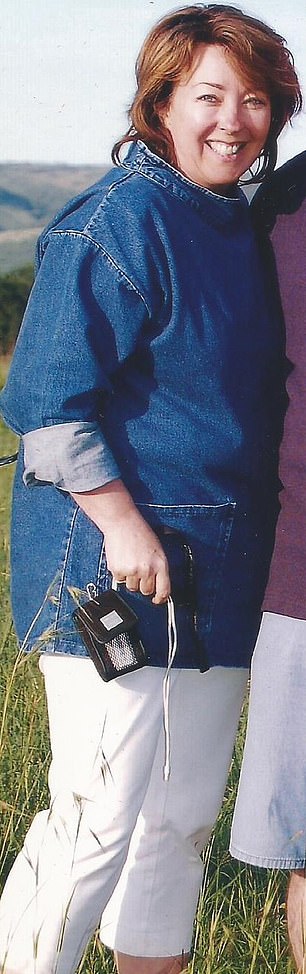
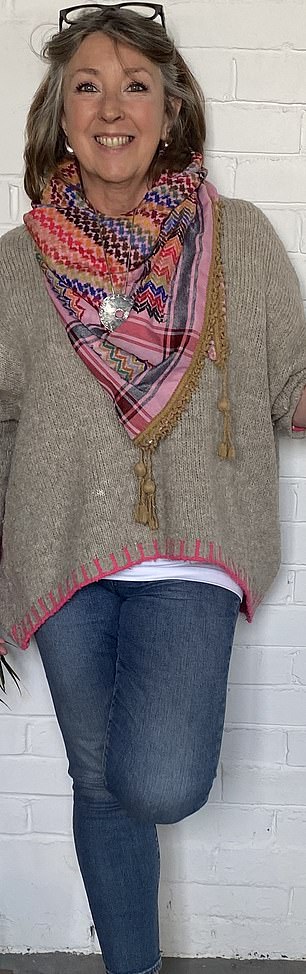
Before her son’s challenge, Fran weighed 13st, which gave her a BMI of 29.4, dangerously close to obese. After, at 5ft 6in and 10st 7lb, Fran had a BMI of 23.7, firmly in the healthy range
So thrilled was she with her slim physique, renewed energy and far happier outlook, Fran gave up her corporate career.
The irony is not lost on her that she had spent three decades working in marketing and communication for companies, including Mars and Pepsi, peddling products often blamed for the obesity crisis. With this whole new mindset, however, she trained as a functional health consultant and behavioural scientist.
She now advises others on losing weight, without resorting to skinny jabs, simply by stimulating nature’s own Ozempic.
‘Having seen how such small dietary changes could garner such big results, it piqued my interest in the impact of different foods on the body and I wanted to learn everything I could,’ says Fran. ‘I’ve seen so many clients benefit hugely from making these changes since.’
It’s all a far cry from her years spent in meetings with scientists who helped create the ultra-processed foods she both marketed, and indulged in, without ever thinking about the implications.
‘We would talk about achieving something called the “bliss point”, the exact ratio of sweet, salt and fat in a product, sweet chilli-flavoured crisps are a prime example,’ says Fran. ‘These foods lead the brain to release neurotransmitters, including dopamine, which override signals that tell us when we’re full, meaning we keep reaching for more of them. We’ve all been there.’
Given what she has learnt about the metabolic havoc they cause, how does she feel about her long-held role promoting these products?
‘In all honesty, I never felt guilty about the work I did because I didn’t understand the impact these foods had, back then,’ says Fran. ‘I thought we were just giving people choice. They were probably going to eat biscuits anyway, why not eat our biscuits?
‘However, knowing what I do now, I couldn’t possibly in good conscience do that work.’
Through her studies, she discovered that the problem wasn’t how much she ate but what she ate. The mistake was consuming foods high in refined carbohydrates – white bread, rice and pasta, pastries, cakes and sugary cereals – which convert to sugar, or glucose, in the body, causing a spike in her insulin levels.
‘Insulin’s job is to clear sugar out of the blood, by escorting it into the cells, where, ideally, it can make energy,’ she says. ‘However, if there’s too much sugar for the body’s energy requirement, as was the case for me, insulin’s second job is to convert that sugar into fat.’
A typical day for Fran used to begin with granola for breakfast, a sandwich, or pizza for lunch, a ‘pick-me-up’ chocolate bar from the office vending machine mid-afternoon, followed by a pasta dish and a couple of glasses of wine in the evening.
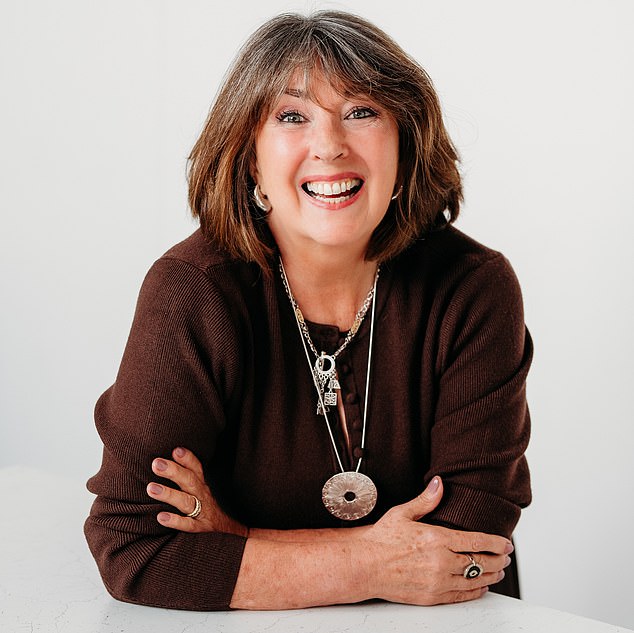
Through her studies, Fran discovered that the problem wasn’t how much she ate but what she ate. The mistake was consuming foods high in refined carbohydrates, like white bread

About a fortnight into the no-gluten challenge, Fran realised she felt better than she had in decades: ‘My depression just lifted, like walking from night into day’
Juggling three children and three stepchildren from her husband’s previous marriage with a demanding career, Fran admits that she treated food as fuel, something to give her energy to get through the day, rather than nourishment – and her body paid the price.
Having been a svelte size 10 to 12 throughout her 20s and 30s, it was only once she got into her 40s that the weight piled on.
‘I struggled with depression, though I was never assessed or diagnosed and didn’t want to take medication,’ says Fran. ‘Instead, like so many people, I comfort-ate, not realising that the foods I thought were helping me were actually exacerbating my issues.’
Refined carbohydrates are high-glycaemic foods – meaning they are rapidly digested, leading to sudden spikes in blood sugar and insulin – which cause inflammation in the brain, as well as the body.
Chronic inflammation is associated with mood disorders, including depression and anxiety, as well as heart disease, diabetes, cancer, autoimmune disorders and even Alzheimer’s.
‘I realised that the reason I had lost weight and felt better was that I’d cut out the foods that had been creating metabolic havoc and inflammation in my body,’ says Fran. ‘Gluten is massively addictive, it triggers all the opioid pathways in the brain, so my first couple of weeks without it were hellish.
‘I had terrible headaches and was in a foul temper, irritated by everyone and everything until, about a fortnight in, when I remember putting the kettle on one morning and realising I didn’t have a headache and actually felt great, much better than I had in decades. My depression just lifted, like walking from night into day.’
Fran has since seen hundreds of clients in her practice experience similar results and, while the average weight loss among them is 8lb within the first month, some lose as much as a stone.
While many are seeking support for fatigue, food intolerances and immune system issues, diet-induced chronic inflammation is often the root of the problem.
‘Those who seek my help with weight loss like the idea of being able to do it naturally, and sustainably, without exposing themselves to the chemicals in the jabs,’ she says. ‘These GLP1-agonists are lifesavers for many people, so I’m not knocking them. However, all medication comes with risks and side-effects. We have so much power – including choosing foods that generate GLP-1 naturally – to be slim and healthy without them.’
Fran is also concerned by reports of people completely losing their appetites while on the jabs, meaning that their bodies are not getting essential healthy proteins, vegetables and fats, nor are they developing new, healthy eating habits.
‘There’s a very real risk of sarcopenia, which is muscle wastage, with rapid weight loss, if it’s not combined with strength training – losing weight is different from losing fat,’ she says.
On a typical day now, Fran has omelette with kale for breakfast, avocado and bacon on a thin slice of rye bread – which is less processed than other types – and salad for lunch, followed by beef stew with celery, roasted pumpkin and asparagus for dinner.
Mindful of the need to build and maintain strength, especially as we age, Fran also exercises daily.
As well as bouncing on a mini trampoline in her office between meetings, she cycles and does regular squats.
Her weight of 11st 4lb has been stable for the past seven years and, although this gives her a BMI of 25.5, slightly outside the ‘healthy’ range, Fran believes that for a woman her late 60s it’s ideal.
‘I’m not, nor would I ever want to be, supermodel slim,’ she says. ‘A recent Swedish study showed that women, aged over 65, with a slightly elevated BMI are at lower risk of all-cause morbidity than those who are underweight.
‘Our bodies feel safe with a little bit of fat on board, as that’s how our ancestors survived famine, but I think it’s also to do with the importance of muscle mass as we get older, as it supports balance, preventing falls and bone health.’
Fran is well aware that, without a lifestyle overhaul, she would now very likely have type 2 diabetes and, like so many in later life, be taking pills to reduce blood pressure and statins to lower cholesterol.
Her husband follows a similar diet and is also in peak health. Meanwhile her children, aged from 35 to 43, including Tom, who first set her on this path with his challenge to cut out bread, are very proud of her achievements.
‘I have a photograph, taken at my husband’s 50th birthday party, when I was 48, which I look at periodically,’ she says. ‘Despite the smile, I was unhappy: overweight, frumpy and very middle-aged looking.
‘That’s almost two decades ago but, thanks to a diet based on nature’s Ozempic, I don’t feel, or look, as old now as I did then.’
realhealthandwellness.com