
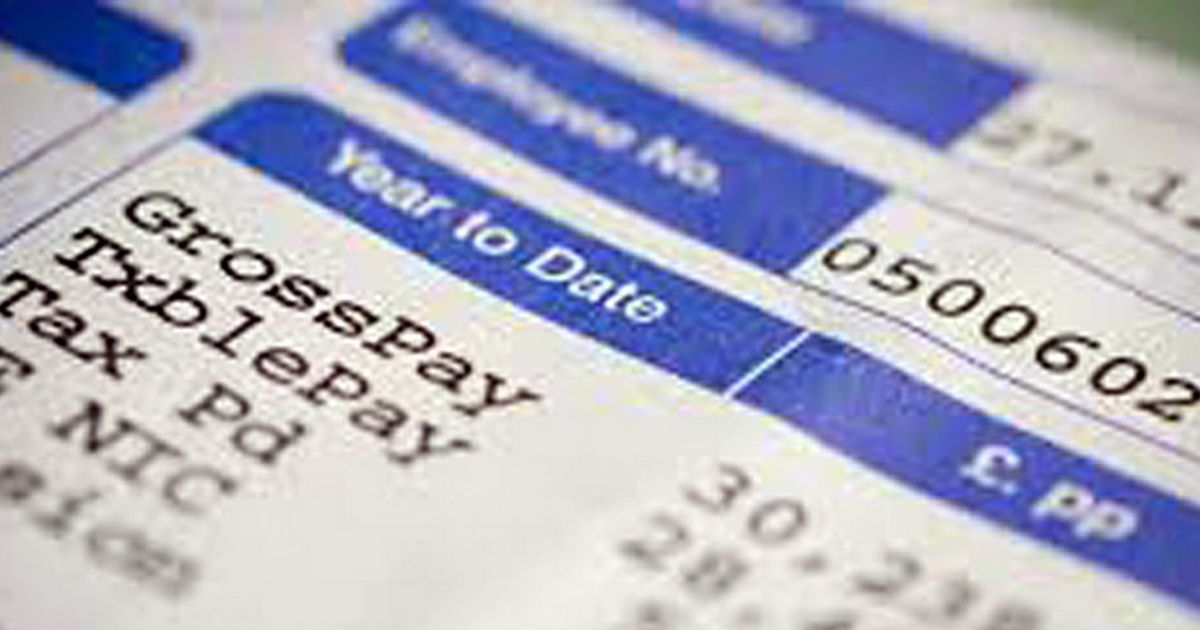
Changes to the National Insurance threshold are set to come into effect in April 2029. Nick Lester, Press Association Chief Lords Reporter and Linda Howard Money and Consumer Writer
08:45, 05 Feb 2026
Mansion tax and private jet levy to be introduced in Scotland
Salary sacrifice pension changes have been branded at Westminster a stealth tax on working people as the UK confronts a growing retirement savings gap. The criticism came as peers debated the UK Government’s National Insurance Contributions (Employer Pensions Contributions) Bill, which has already been through the Commons.
The legislation gives effect to the announcement at the November budget which will mean salary-sacrificed pension contributions above an annual £2,000 threshold will no longer be exempt from National Insurance (NI) from April 2029.
Guidance published in December by HM Revenue and Customs (HMRC) about the changes said an estimated 7.7 million employees currently use salary sacrifice to make pension contributions. Of these, 3.3m sacrifice more than £2,000 of salary or bonuses.
READ MORE: People urged to prepare for HMRC income tax change due to start in AprilREAD MORE: People taking money out of pension pots could be due tax refund of around £3,500
Employers may offer salary sacrifice as part of their pension scheme as a tax-efficient way to help workers boost their retirement saving pots. The schemes enable people to maintain their take-home pay, as people end up paying lower NI contributions.
The move has been criticised by the pensions industry, but ministers argue the costs of pension salary sacrifice has “ballooned” and Conservatives had indicated support for a similar policy while in office.
The Treasury has estimated the reforms in the Bill would generate revenue of £4.8bn in 2029/30, but this would fall to £2.6bn the following year thanks to behavioural changes.
Tory shadow Treasury minister Baroness Neville-Rolfe said: “The Bill risks achieving the worst of all worlds – reducing trust in the pension system, a cap that disincentivises pension saving by responsible individuals, an increase on future dependency on the state and a failure to deliver the long-term fiscal benefits the Government wants.”
Accusing the UK Government of seeking to raise money by “stealth”, Conservative peer Lord Leigh of Hurley said: “This Bill simply punishes people who are trying to do the right thing. We were told by Labour that they would not seek to raise taxes on working people.”
He added: “This Bill hits the regular taxpayer very hard.”
Tory former pensions minister Baroness Altmann accused the Government of “making pensions less attractive and more expensive”.
She said: “It will certainly reduce the take home pay of a vast number of workers. It is effectively a tax on working people, and a rise in the cost of pension provision imposed on employers, almost exclusively in the private sector.”
Conservative peer Lord Ashcombe said: “It raises serious questions about the coherence of the Government’s approach to pension adequacy at a time when a nation can ill afford missteps.
“Salary sacrifice has long been a legitimate and widely used mechanism enabling employees to exchange part of their salary for pension contributions, benefiting from both tax and national insurance relief.
“It’s not a loophole, it’s not an avoidance scheme. It is a deliberate feature of assistance, one that encourages people to save more for their retirement.
“By imposing this cap, the Government is restricting, restricting one of the few tools that has demonstrably helped individuals boost their pension savings in a tax efficient manner.
“This decision comes at a time when the UK is confronting a substantial and widening retirement savings gap.”
Introducing the Bill, Treasury minister Lord Livermore said: “The Government spends over £500 billion each year on various reliefs within the tax system.
“That’s more than double the entire annual NHS budget and nearly five times the annual budget for education.
“The size of the spend means the Government must always keep the effectiveness and value for money of tax reliefs under review.
“This Bill addresses just one of these reliefs, pension salary sacrifice, the cost of which was set to treble to £8 billion a year by the end of this decade.
“That increase has been driven most by higher earners, with additional rate taxpayers tripling their salary sacrifice contributions since 2017.
“This includes individuals sacrificing their bonuses without paying any income tax and national insurance contributions on them.
“While those on the highest salaries are most likely to take part in salary sacrifice, others are completely excluded. For example, the majority of employers do not offer salary sacrifice, including many small businesses.”
He added: “The status quo is neither fair nor is it fiscally sustainable.
“We cannot afford to allow the cost of pension salary sacrifice to balloon, benefiting predominantly higher earners.”
 Get the latest Record Money news
Join the conversation on our Money Saving Scotland Facebook group for money-saving tips, the latest State Pension and benefits news, energy bill advice and cost of living updates.
Sign up to our Record Money newsletter and get the top stories sent to your inbox daily from Monday to Friday with a special cost of living edition every Thursday – sign up here.
You can also follow us on X (formerly Twitter) @Recordmoney_ for regular updates throughout the day or get money news alerts on your phone by joining our Daily Record Money WhatsApp community.