
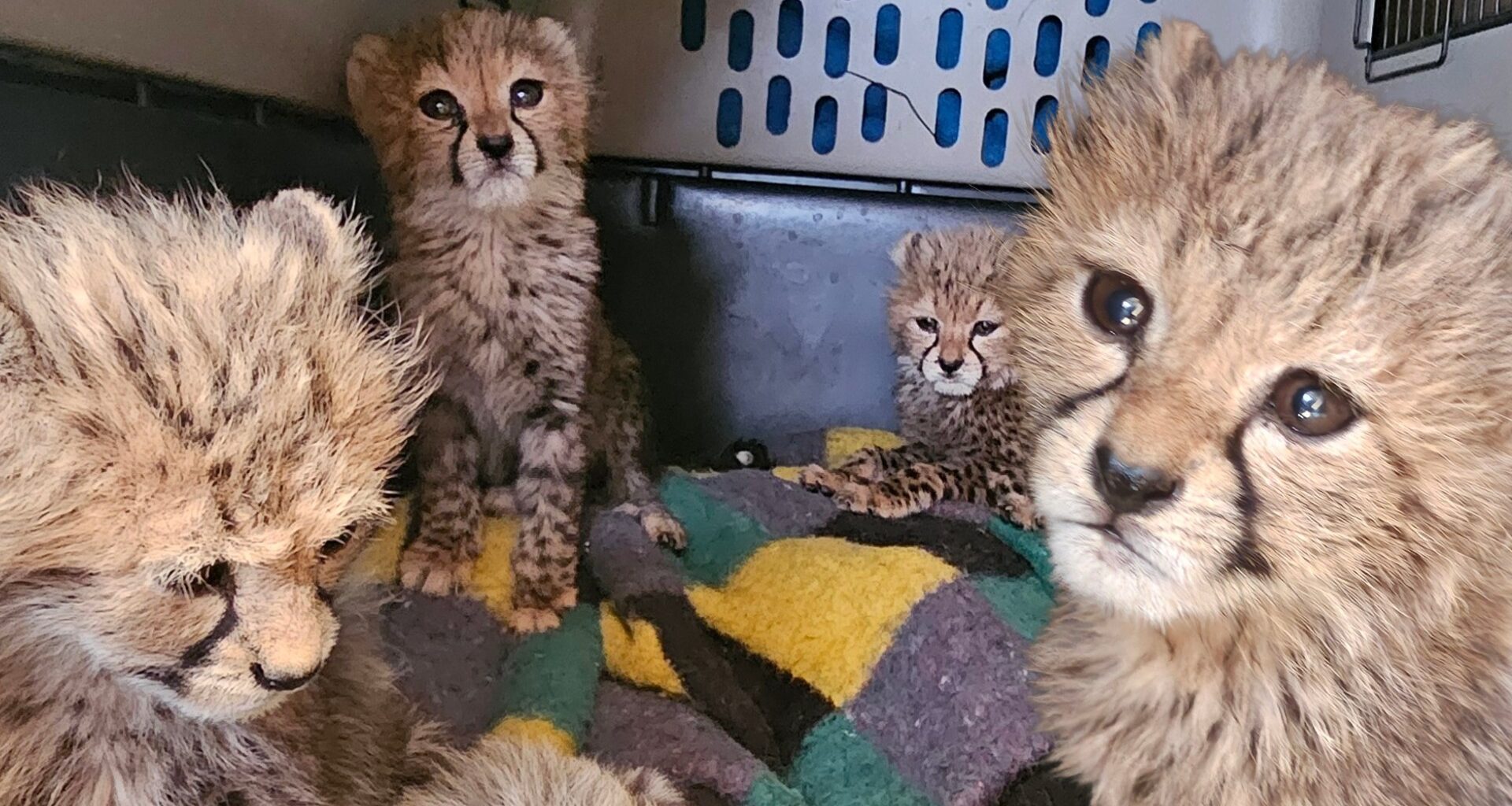
Our remarkable team in Ethiopia has rescued four extremely young cheetahs in Ethiopia. Saved in the nick of time from the illegal pet trade, sadly heartbreak was to follow.
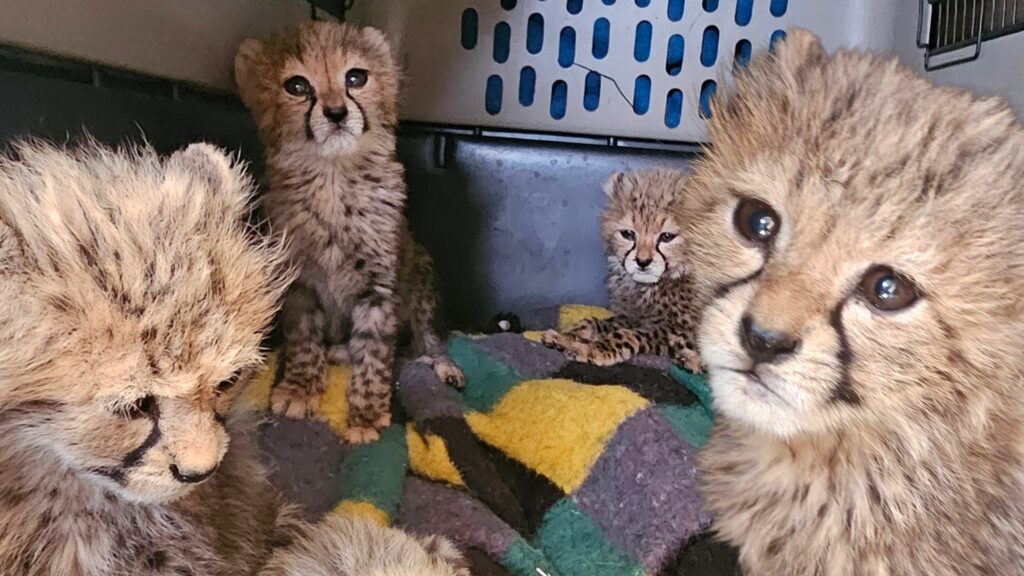
Thanks to the extraordinary efforts of our dedicated colleagues in Ethiopia, three vulnerable cheetah cubs – all girls – are safe at our Ensessa Kotteh rescue centre. Victims of the cruel illegal pet trade, the infants had been confiscated by our long-term partners at the Ethiopian Conservation Wildlife Authority (EWCA).
Tragically, despite our best possible efforts, a fourth cub, a little boy, did not survive. Our team did everything they could, but he died following health complications, due to his traumatic experiences before the rescue.
“We are all devastated to lose one precious youngster,” said Born Free’s Country Director Bereket Girma who, with the EWCA, masterminded the complex logistics needed to rescue the cubs. “But we are now working day and night to do everything we can to care for the remaining three.
“The cubs are in a dedicated quarantine room, and Soboka Alemu, our expert Cheetah Animal Carer, is responsible for all feeding and health monitoring, under the supervision of our Centre Vet Technician, Hailu Dagmachew, and our Consultant Vet, Dr Sisay.
The dramatic rescue
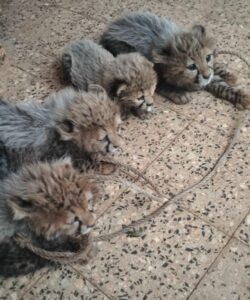
The cubs when they arrived at Babile (c) Babile Elephant Sanctuary
The Ensessa Kotteh rescue team had to travel over 700 miles, in a dramatic three-day round-trip, to collect the little cubs and bring them to Ensessa Kotteh. Soboka and Dr Sisay were driven by Melese Workinehm, across often treacherous roads, to the headquarters of Babile Elephant Sanctuary – a huge wildlife reserve in eastern Ethiopia, where the cubs were being held after they were confiscated.
Weighing between 1.4kg and 2kg, the cheetahs were from two separate litters, with three cubs aged less than three months old, and the fourth – noticeably smaller – under two months when rescued. When our team arrived in Babile, they quickly got to work, removing the ropes used as collars from around the cheetahs’ necks, then Dr Sisay conducted an initial health assessment.
Although the cubs were scared and fragile, thankfully, they had no external signs of injury, and seemed alert. After a feed, they were gently put into a carry crate to undertake the 350-mile journey to our rescue centre, with frequent stops along the way to check on their progress.
Where did the cubs come from?
The three older cubs, including the little male who died, had been reportedly taken from the wild in Dendema Woreda, in the Somali Region of east Ethiopia, ‘while their mother was hunting’. It seems they were at risk of being smuggled toward Somaliland for the exotic pet trade, with the people involved reportedly requesting 100,000 Ethiopian Birr (£477) for the cubs.
The fourth infant had been confiscated in Jijiga, the capital of Somali Region and 40 miles east of Babile. She was transferred by police to join the other cubs.
“We are heartbroken to lose one cub,” said Born Free’s Head of Rescue & Care Maggie Balaskas. “But we will never forget him, and his sad story will forever inspire our work to rescue cheetahs and end the monstrous trade in wild animals for pets. I’m so glad the remaining three cubs are in the best possible hands with the Ensessa Kotteh team.”
Specialised care
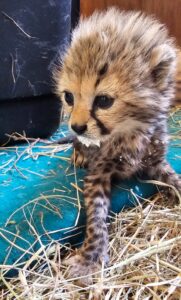
One of the cubs soon after arriving at Ensessa Kotteh
Thankfully, despite a lot of challenges, the three surviving cubs are gradually gaining weight, but remain extremely fragile, not least having been removed from their mothers at such a young age. “Prior to our rescue, they were fed a combination of cow, camel, and goat milk,” Maggie explains. “Whilst well intended and the only viable option in such a remote location, this milk is not suitable for cheetah cubs.
“An inappropriate diet can lead to nutritional deficiencies, affecting growth and development, as well as other health concerns such as severe gastrointestinal problems, including diarrhoea. In young cubs, diarrhoea is particularly dangerous and can be life-threatening. We are therefore implementing a carefully controlled transition to a more suitable milk replacement formula, with tailored supplementation, to support healthy growth.
“Incredible Soboka carefully gives the cubs regular morning, midday, and evening feeds, with short periods outside each day. They walk and play on the grass, in the health-giving fresh air and sunshine. He keeps a watchful eye to reduce the risk of them accidently injuring themselves while they play and explore. Their incorrect diet before rescue may lead to bone density issues, but we’ll find out more when they have grown stronger and can undergo x-rays, as well as further veterinary checks to provide a more complete picture of their health.”
We will report back soon on the progress of the three surviving cubs. But rest assured, we will work round the clock and do everything we can to look after them and give them the best possible chance. Meanwhile, our vital work continues to end the cruel trade in cheetahs, and all wild animals, as pets.