
Unlock the Editor’s Digest for free
Roula Khalaf, Editor of the FT, selects her favourite stories in this weekly newsletter.
The UK is scrapping more than £250mn of planned funding for four big physics infrastructure projects, including an upgrade of the Cern particle accelerator led since last month by a senior British scientist.
The cuts, among them finance for a transatlantic partnership to build an electron-ion collider near New York City, are part of a wider research shake-up to control costs and invest more in government priority areas such as AI and life sciences.
Separate plans to slash budgets for physics and moves to temporarily pause grants in other research areas have caused alarm among scientists, but officials insist the UK remains committed both to advanced infrastructure and international collaborations.
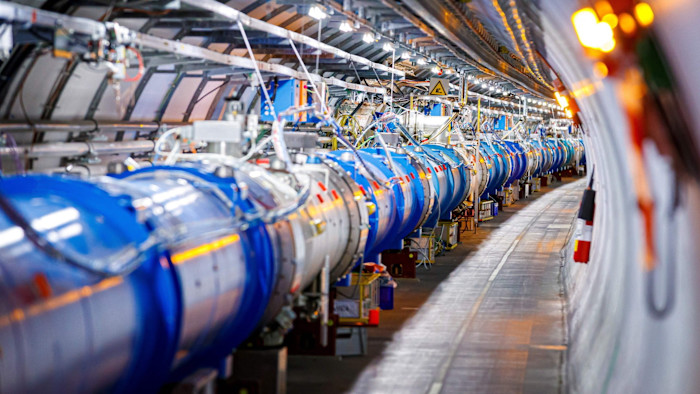
However, Sir Ian Chapman — chief executive of UK Research and Innovation, the umbrella research funding body — said on Thursday that the UK did not “have the bandwidth” for a planned £49mn contribution to improving the Large Hadron Collider run near Geneva by Cern, which is funded by 25 countries.
 Cern director-general Mark Thomson is said to be ‘disappointed’ by the funding decision © Fabrice Coffrini/AFP via Getty Images
British physicist Mark Thomson was appointed Cern’s director-general after a campaign by the previous Conservative government for his candidacy. Thomson was “disappointed” by the funding decision but understood the “financial constraints that we’re operating under”, said Michele Dougherty, executive chair of the Science and Technology Facilities Council (STFC), which is part of UKRI.
“There’s no change in our relationship with Cern here,” Chapman told reporters. “We remain the second largest contributor to Cern. We’re completely supportive of what’s happening at the LHC and the upgrades.”
The other cuts from projects backed by UKRI’s dedicated infrastructure fund are £59mn planned for the electron-ion collider at Brookhaven National Laboratory in the US and two separate UK projects totalling £174mn for advanced materials analysis methods.
“It was not questioning the science return that we would get from those investments — but we simply don’t have the money to do everything,” Dougherty said.
The Cern project decision was “more terrible news for physics, for the UK and for global scientific progress”, said Paul Howarth, president-elect of the UK’s Institute of Physics. “The withdrawal of funding in this abrupt way is incredibly damaging to our international reputation as a science superpower and could cause long-term damage to the UK economy,” Howarth added.
About £5mn of the £49mn Cern upgrade money has already been used, UK officials said. The cut was first reported by Research Professional News.
Dougherty’s STFC, which supports research in astronomy, physics, computational science and space science, has a separate plan to cut about 30 per cent of costs from its 2024-25 UKRI budget allocation of £575mn.
UK officials say the various proposed science funding changes will make research more sustainable and improve commercialisation prospects for innovations. The government has said it will increase UKRI’s total annual budget from £8.87bn in 2024-25 to almost £10bn by 2029-30.
Cern and Thomson have been approached for comment.