
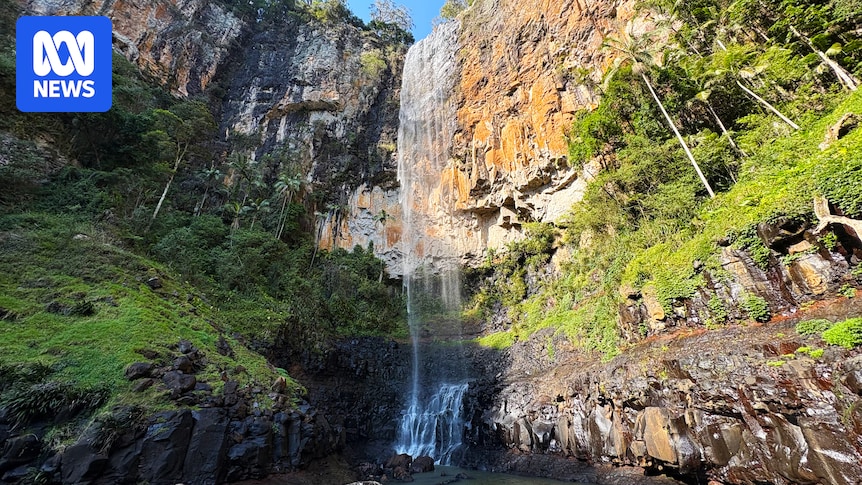
Strict limits should be imposed on the volume of groundwater bottled water companies can take from the World Heritage-listed Gold Coast hinterland, a study has found.
The Queensland University of Technology (QUT) investigation found that the extraction of water from underground aquifers could threaten the region’s ancient Gondwana rainforests, with regulation “urgently required”.
The City of Gold Coast commissioned the study in 2020 in response to community concerns that “unmonitored and unregulated” commercial extraction or “water mining” at Springbrook National Park was having a “virtually unknown” impact on the sensitive ecosystem.
It has now been found that the sustainability of groundwater extraction is “uncertain”, particularly with extended dry periods, a more variable climate in the future, and a lack of comprehensive monitoring.
“Any extractions from these aquifers pose a potential risk to these hydrologically sensitive, internationally recognised ecosystems,” the study stated.
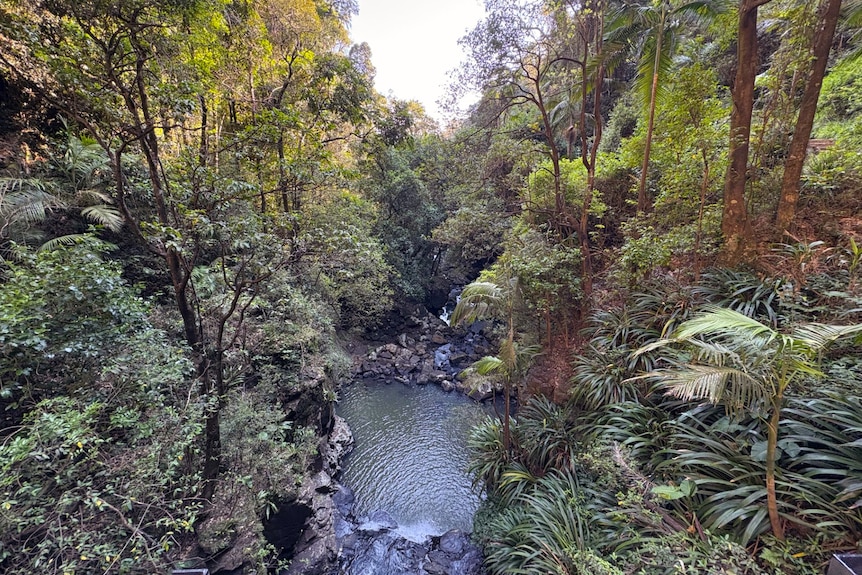
Springbrook National Park is home to “hydrologically sensitive” ecosystems. (ABC Gold Coast: Dominic Cansdale)
The $1.1 million study has also called for establishing a long-term outdoor laboratory – known as a “critical zone observatory” – at Springbrook.
This would provide ongoing monitoring of the rainforest “from the tree-tops down the bedrock”, according to QUT groundwater researcher Lucy Reading.
It would also deliver annual environmental “report cards” on Springbrook’s health to the public.
A City of Gold Coast environment committee voted unanimously on Thursday to lobby the Queensland and federal governments, as well as philanthropic organisations, for funding to develop this proposed observatory.
Councillor Glenn Tozer said, until now, commercial water extractors had collected most of the groundwater data in the Springbrook area.
“[Now] we can reconcile what the commercial water extraction companies are saying they’re doing against the data we’ve collected,” he said.
“That can give certainty to residents about what the impact is here.”
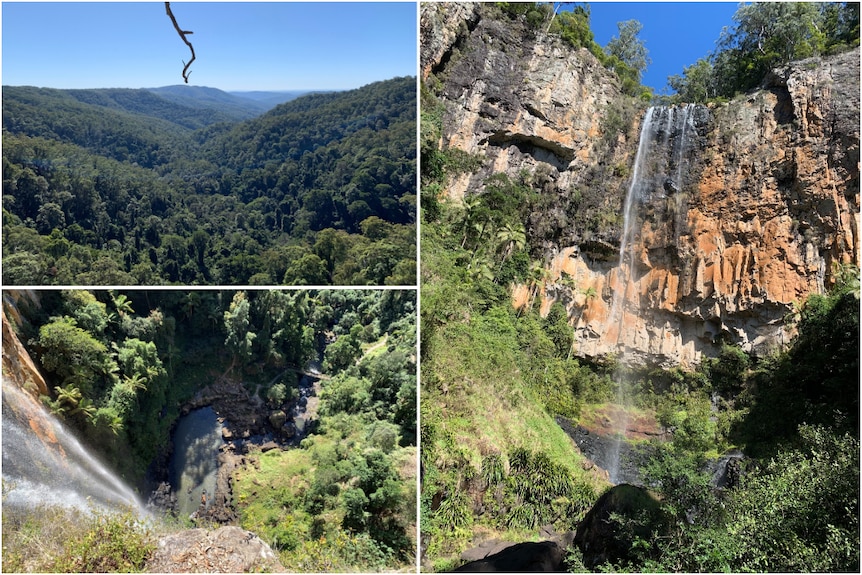
Springbrook National Park is at the heart of a world-heritage listed rainforest. (ABC Gold Coast: Dominic Cansdale)
What’s so significant about Springbrook?
Springbrook is at the heart of a World Heritage-listed Gondwana rainforest, which stretches from the Gold Coast hinterland into northern New South Wales.
The rainforest dates back 50 million years and is linked to fossil flora that once grew in Patagonia and Antarctica.
It is also a habitat for 46 animal species listed as vulnerable to critically endangered.
“It’s a very special place,” Dr Reading said.
“And it’s very much reliant on the water resources on the mountain.”
But UNESCO has listed the Gondwana Rainforest as being of “significant concern”, while the federal government has rated it as having a “high vulnerability” to climate change.
Dr Reading said the rainforest’s groundwater sustained many deep-rooted trees along with several native species, including crayfish, which rely on springs fed by underground aquifers.
“If too much water is extracted, there won’t be enough water available for specific species,” she said.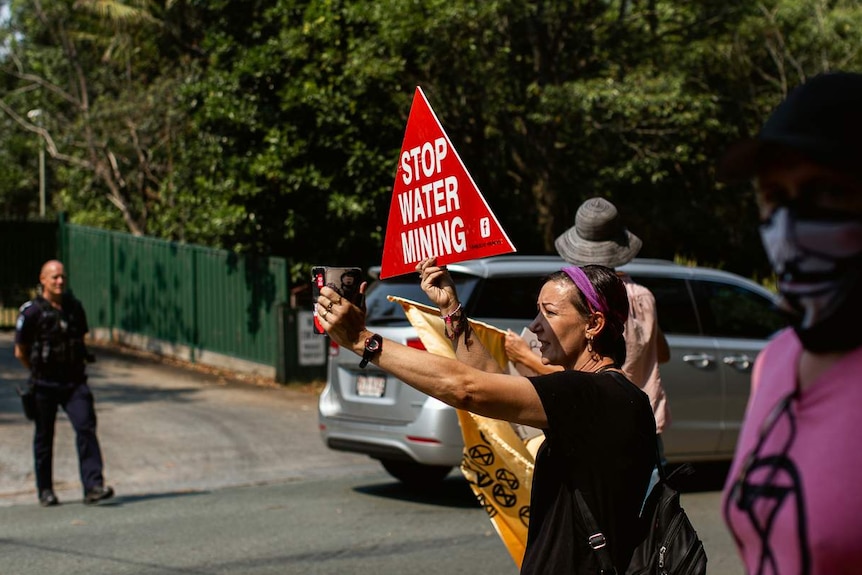
Some Tamborine Mountain locals protested commercial water extraction in 2020. (Supplied: Sabine Bannard)
The study did not specify the extraction limit, but Dr Reading said her team wanted to examine additional bores to determine it.
“If we have better data on how much is being extracted, and we’ve got monitoring in the right places, we can start to move towards assessing those impacts,” she said.
Vocal community opposition remains
Several commercial bores extract groundwater from the area, including one that was the focus of a long-running court battle.
In 2019, the City of Gold Coast rejected water-boring company Hoffman Drilling’s application to extract 16 million litres of groundwater from a property near Springbrook National Park.
A legal challenge from Hoffman Drilling was settled in 2023, allowing the company to extract 8 million litres per year.
But vocal community opposition remained.
The Queensland Government placed a moratorium on new commercial water extraction operations at Springbrook in 2020, but that is due to expire in March.
The government has been contacted for comment.
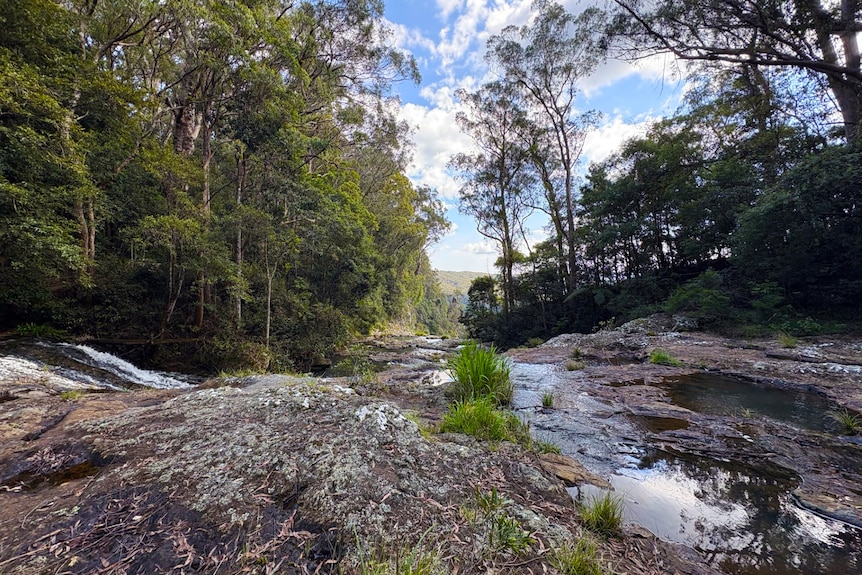
The QUT study says further investigation of Springbrook’s groundwater is needed. (ABC Gold Coast: Dominic Cansdale)
More questions to answer
Conducted over four years, the QUT study found Springbrook’s groundwater was “exceptionally clean” due to, in part, the area’s high average annual rainfall.
But it also found that further research was needed to assess how the ecosystem would respond when groundwater levels fell below a defined threshold.
“We still can’t assess how much impact extractions will have because we’ve only been monitoring under wet conditions,” Dr Reading said.
The Australian Beverages Council said independent data showed bottled water typically accounted for “less than one per cent” of the total groundwater used.
“In Springbrook, member companies fully comply with all existing regulatory settings, including licensing requirements, abstraction limits and the current moratorium,” the council said in a statement.