
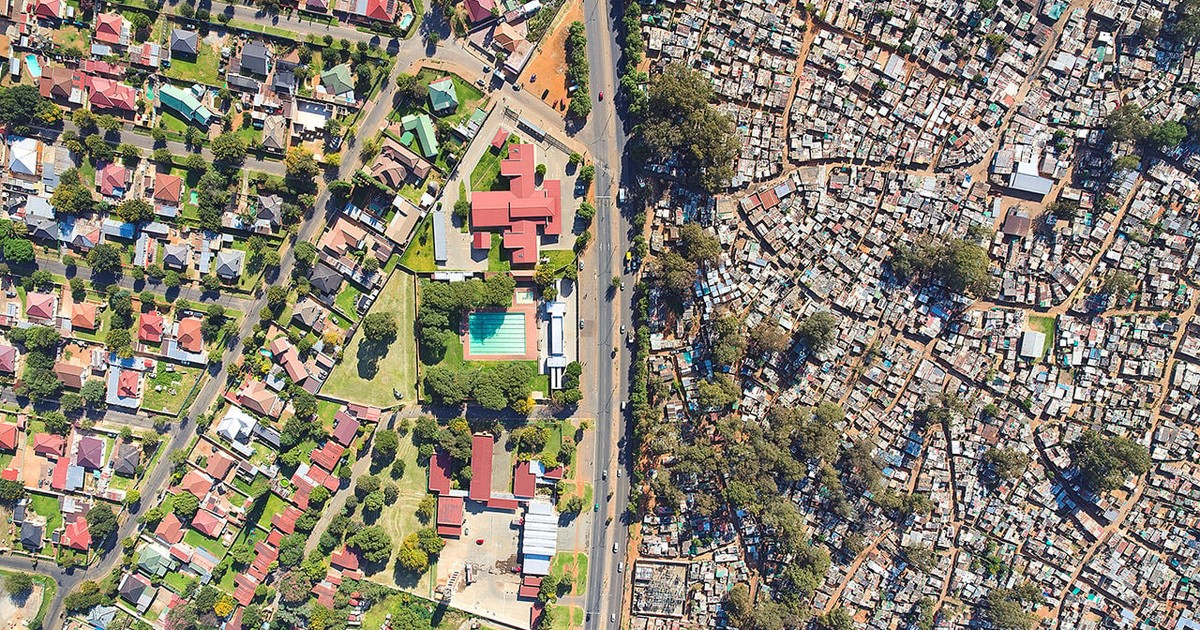
South Africa, Africa’s richest country by GDP and home to the continent’s largest number of high-net-worth individuals, faces severe income inequality.
According to Statista’s 2025 GDP comparison, South Africa’s economy is estimated at $410 billion, the largest on the continent. Henley & Partners’ Africa Wealth Report notes that the country is home to around 41,100 millionaires with a net worth of $1 million or more, and eight billionaires, the highest concentration in Africa.
Despite this wealth, the 2026 World Inequality Report shows stark disparities: the top 10 per cent of South Africans earn 66 per cent of total income, while the bottom half receives just 6 per cent.
Other African countries on the global inequality list include Algeria, where the top 10 per cent earn 49 per cent of total income; Egypt, at 48 per cent; and Niger, where the top 10 per cent receive 44 per cent.
Inequality varies sharply worldwide. A person’s birthplace remains a major determinant of income and wealth. Regional averages, however, mask differences between richer and poorer countries within the same areas.

Global wealth disparities
Globally, in 2025, the wealthiest 10 per cent of the population controlled 75 per cent of global wealth, while the middle 40 per cent held 23 per cent, and the bottom half just 2 per cent.
Since the 1990s, the wealth of billionaires and centi-millionaires has grown by roughly 8 per cent annually, almost double the rate of the bottom half of the population.
The wealthiest 0.001 per cent—fewer than 60,000 individuals—now own three times more than the bottom 50 per cent of humanity, with their share rising from nearly 4 per cent in 1995 to over 6 per cent today.
While the poorest have made minor gains, they are vastly outpaced by the rapid accumulation at the top, creating a world where a tiny minority holds extraordinary financial power while billions struggle for basic economic security.
In terms of income in 2025, the richest 10 per cent earned 53 per cent of global income, the middle 40 per cent took 38 per cent, and the bottom 50 per cent earned just 8 per cent.