
Only 42 per cent of people have a clear idea of how to plan their retirement, new research reveals.
When you stop work, you will need to turn your pension funds into an income that can replace your salary in old age.
But there are a number of different ways you can do this. What suits you best will depend on the type of pensions you have, what you have saved up so far, and whether you are prepared to shoulder investment risk in your old age.
Even over-55s are in the dark, with just 45 per cent having an understanding of their retirement options, according to a survey by Hargreaves Lansdown.
‘This leaves people at risk of making decisions they can’t unwind, potentially running out of money or incurring unnecessary tax bills,’ says Helen Morrissey, the firm’s head of retirement analysis.
‘Deciding how to take an income in retirement will be one of the most important financial decisions that you will make.’
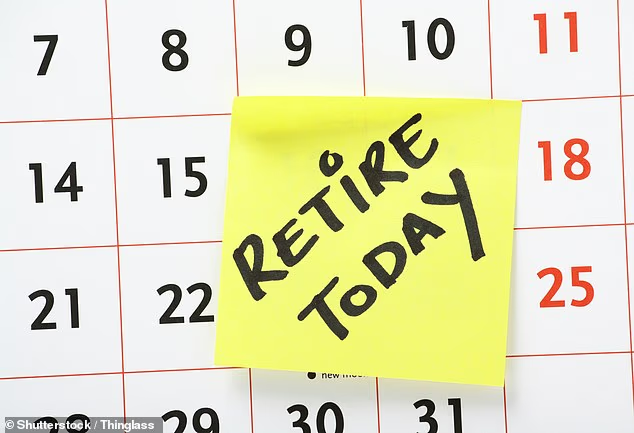
Retirement day: When you stop work you will need to turn your pension funds into an income that can replace your salary
Morrissey says potential pitfalls include buying an annuity which is not right for you, because this decision cannot be reversed, or drawing down too much income too early in retirement, which can leave you short later or prompt a big tax bill.
An annuity takes a pension lump sum, and turns it into a guaranteed income for a certain period.
She says the good news is the Government is planning to introduce reforms from April which mean people will start getting ‘targeted support’ at retirement regarding their options.
In the meantime you can pay for financial advice, or get free guidance from the government-backed Pension Wise service.
Below is a rundown of the vital information you should find out when you are making plans to stop work, plus read our guides to turning your pension into an income, and the free help your work pension scheme will provide at retirement.
Get help sorting your finances at retirement
When you reach retirement, you’re faced with a decision – how are you going to access the money in your workplace or self-invested personal pensions?
You have several options, including taking a tax-free lump sum, taking multiple one-off lump sums, drawing from your pension while remaining invested, or buying an annuity.
But it’s a huge financial decision, which means it pays to get the right expertise. This is Money’s recommended partners can help you make the right choices with your pension and retirement.
Learn more in our guide: How to turn your pension into retirement income
Plus read our reviews: The best Sipps to invest and build your pension
<!- – ad: https://mads.dailymail.co.uk/v8/us/money/moneypensions/article/other/mpu_factbox.html?id=mpu_factbox_1 – ->
What questions should you ask at retirement?
Helen Morrissey of Hargreaves Lansdown explains what you need to know.
1. How much guaranteed income will I get?
This is important when it comes to covering day to day expenses throughout your retirement, she explains.
The state pension will offer a level of guaranteed income which rises every year, as will a final salary pension if you have one of those.
The other option is to buy an annuity with some, or all, of your pension.
Annuity incomes have been riding high in recent years off the back of soaring gilt yields, so have proved popular.

Helen Morrissey of Hargreaves Lansdown
However, once bought, they can’t be unwound so you need to search the market to make sure you’ve got the right type for you.
> Check your state pension forecast
2. Can I manage pension investments?
For some people, the flexibility of income drawdown will be appealing.
This enables you to remain invested in the market for longer and draw an income that meets your needs. However, you need to be comfortable with investment volatility and make sure that your withdrawal rate remains sustainable over the long term, otherwise you risk running out of money.
It’s also worth saying you don’t have to settle for an either/or approach with annuities.
You can combine both options to give you a level of guaranteed income as well as a degree of flexibility through drawdown. You can then annuitise in stages throughout retirement as your needs change.
> How to live on your investments in retirement
3. Can I provide for my family if I die?
Do you have a spouse or partner that you want to make provision for after you’ve gone, or do you want to leave something to your children?
This will affect the options you choose. For instance, a single life annuity means your partner could be left with nothing if you die before them, while opting for drawdown gives you more flexibility when it comes to passing money down to loved ones.
> Will your loved ones be liable for inheritance tax on your estate
4. Will my pension income rise in line with inflation?
You could be retired for 20 years or more and so you need to consider the impact of inflation on your retirement income over time.
If you opt for a level annuity, then the income will not increase, and you may find over time you start to struggle on that income.
You can get inflation linked annuities, but the starting income is lower, and it can take years for it to catch up.
Income drawdown will give you the opportunity for investment growth, which can preserve your purchasing power over time, but you will need to be comfortable with investment risk.
Again, a mix and match approach can be taken that will evolve over time and you can seek financial advice to help put a strategy in place and maintain it.
> What sticky inflation means for you
5. How do I protect myself from overpaying tax?
You can put yourself at risk of incurring large unnecessary tax bills as you enter retirement.
For instance, if you make a large withdrawal from income drawdown, or cash in a pension, you might find yourself clobbered with a tax bill.
Recent data from HMRC also highlighted the ongoing saga of people having to claim back tax refunds as they were overtaxed when they accessed their pension for the first time.’
> How to defend your pension from the taxman
SIPPS: INVEST TO BUILD YOUR PENSION

AJ Bell
AJ Bell
0.25% account fee. Full range of investments
Hargreaves Lansdown
Hargreaves Lansdown
Free fund dealing, 40% off account fees

Interactive Investor
Interactive Investor
From £5.99 per month, £100 of free trades

InvestEngine
InvestEngine
Fee-free ETF investing, £100 welcome bonus
.JPG
)
Prosper
Prosper
No account fee and 30 ETF fees refunded
Affiliate links: If you take out a product This is Money may earn a commission. These deals are chosen by our editorial team, as we think they are worth highlighting. This does not affect our editorial independence.