

Though he supports the flexibility of the Lords system, Neuberger said the behavior of peers over assisted dying could be a catalyst for reform of the unelected upper chamber.
“If it’s felt, and I think with some justification it’s felt, that the present system has been shown to be unsatisfactory, then it must be right, at least, to have a serious debate about how things could and should be changed,” he said.
Blocking vs scrutiny
Opponents to assisted dying in the Lords argue they are undertaking necessary scrutiny to expose holes in the safeguards. These include the role artificial intelligence plays in the process, how the bill applies to someone who is pregnant, in prison or homeless, and whether assessments for eligibility must be face-to-face.
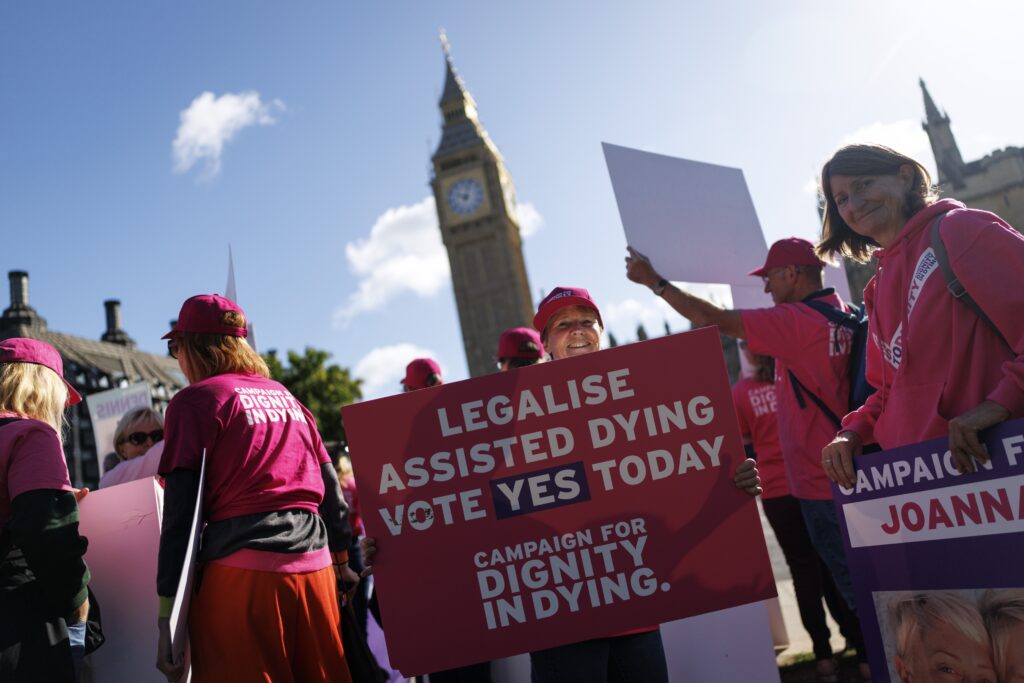 The bill to legalize assisted dying for terminally ill adults with fewer than six months to live was introduced by Labour MP Kim Leadbeater and completed its House of Commons stages last June. | Tolga Akmen/EPA
Neuberger said it would be “a failure of the system” if the Lords doesn’t reach a decision by the spring. “In the end, there has to be a decision one way or the other,” he said, while also acknowledging “the way you get there is, inevitably, quite often messy.”
Private members’ bills are only scrutinized on Fridays. The government, which as a whole remains neutral on the sensitive matter of conscience, despite Starmer’s personal support, has refused to divert government time to the legislation.
The bill needs to complete its Lords committee and report stages, pass a third reading, and the Commons must consider peers’ amendments before it can become law.