
Bosses behind an urgent home care service say they are keeping thousands of patients out of overstretched accident and emergency departments.
The scheme, provided by the Kent Community Health NHS Foundation Trust, sees medical staff visit and treat patients, preventing them from having to go to A&E.
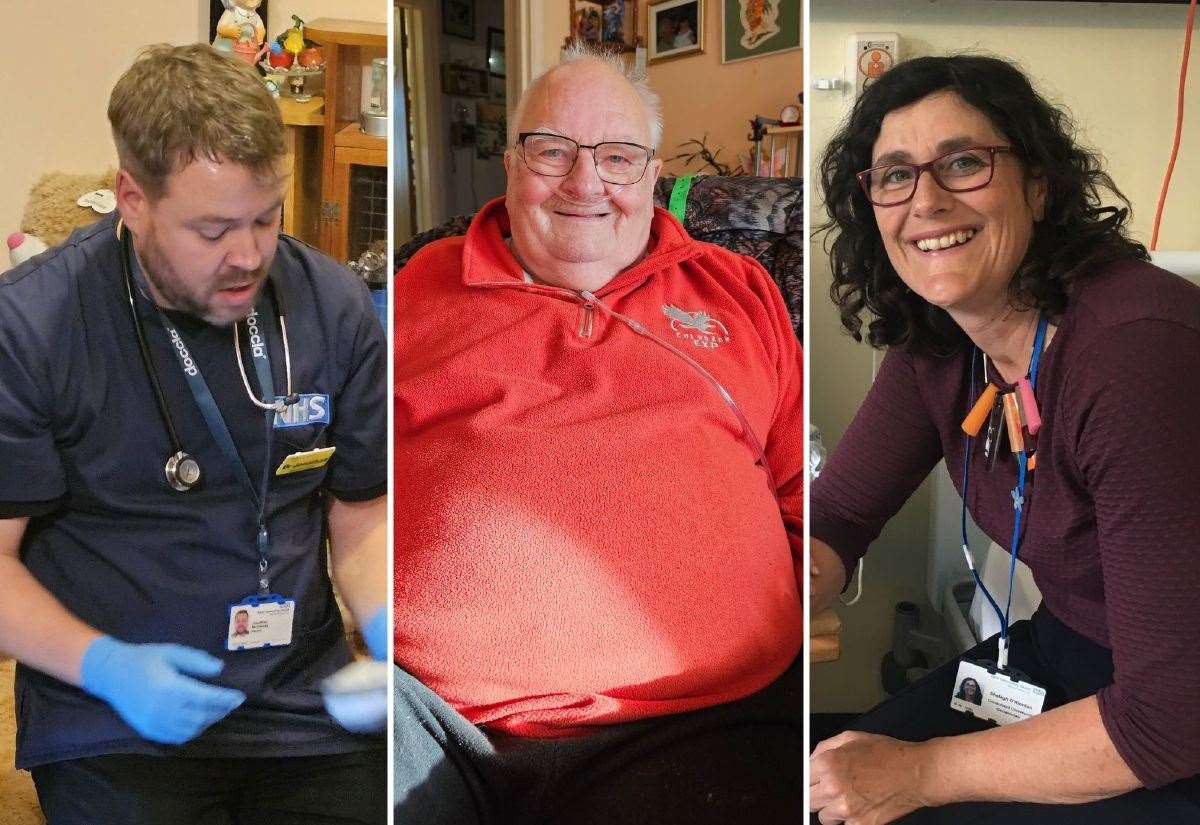
 ‘Hospital at home’ team members Shibin Mohanan, Kit Tang, Sharel Cole
During 2025, it kept almost 600 people a month in east Kent out of hospital as they were cared for at home instead.
Yet, despite the help, emergency departments remain under huge pressure.
The East Kent Hospitals Trust declared a “critical incident” at the William Harvey Hospital in Ashford this week. The trust warned people with non-life-threatening conditions and illnesses of very long delays in getting treatment because of “exceptionally high demand” and a shortage of beds.
A similar critical incident due to overwhelming demand was previously declared at the QEQM Hospital in Margate in January.
The latest available figures reveal that a total of 14,000 people attended the emergency departments at the William Harvey and QEQM in December. The situation would be even worse were it not for the urgent home care service.
Consultant Geriatrician Dr Shelagh O’Riordan
“Everyone sees the ambulance queues and overstretched hospitals on the news and assumes that’s all that is happening,” says consultant geriatrician Dr Shelagh O’Riordan.
“But no one knows about this service until they need us. We’re the best-kept secret in Kent.
“There are 40,000 people aged over 80 in east Kent, one of the highest percentages of elderly people per head of population in the whole of the southeast, but we actually have the lowest rate of admission to the emergency department for this cohort.”
Henry Kingman, from Herne Bay, who has chronic obstructive pulmonary disease (COPD) and heart failure, is one of many to benefit.
“One morning, I was really struggling to breathe and there was a horrible tightness in my chest,“ the 82-year-old said.
Henry Kingman preferred being treated at home
“I called the GP, who said I needed to go to hospital and they called an emergency ambulance to take me.”
But while he was waiting, Henry got a call from Dr O’Riordan, who explained they could see him at home instead.
Within a few hours, Dr Jonathan McGarvey, a specialist doctor, visited Henry, carried out several tests to rule out an infection and diagnosed fluid retention around his heart and lungs, which was stopping him from breathing normally.
“We’ve got a huge range of tests we can carry out in people’s homes now, which means we can rapidly work out what’s wrong with them and decide if they can be treated safely at home,“ says Dr McGarvey.
“In Henry’s case, I was able to do some blood tests and had the results back in five minutes, which ruled out an infection.
“I was then able to do an ultrasound of his lungs, which showed the build-up of fluid. Henry was given intravenous diuretics to help him expel the excess fluid and oxygen to help with his breathing.”
Dr Jonathan McGarvey treating Henry Kingman at home
Henry says he was glad not to have to go to hospital and grateful to be seen and treated at home.
“I still get daily visits and calls, but I’ve been able to get up and showered here,” he said.
“My wife takes my blood pressure, temperature and oxygen levels every day, and we phone the results through to the office, so they can keep an eye on me.”
Henry’s case is typical of the thousands of patients who have been treated at home since the service was launched in 2019, which has seen the rate of hospital admissions among people aged 80 and over in East Kent fall by 24%, while the national rate for England has risen by 2%.
Patients who are referred to the urgent care service by their GPs, health professionals or ambulance service are typically seen within two hours and receive a comprehensive assessment and diagnostics in their own home, before a clinical decision is made about whether hospital admission is necessary.
“Patients and carers often say they are ‘blown away’ by the range of treatments we can offer them at home,” says Dr O’Riordan.
“We are adding to the list all the time, so we can keep more and more people out of hospital.
“Patients often prefer to stay at home if they can and evidence shows they often recover faster in their own environment.
“We also work with more than 300 residential care homes in east Kent and our care colleagues to avoid hospital admissions for their residents too, if possible.
“Hospital stays can be distressing and debilitating for patients and they can rapidly deteriorate. They’re also at increased risk of infection.
“If we can keep people at home and give them hospital-level care, it’s better all round.”