
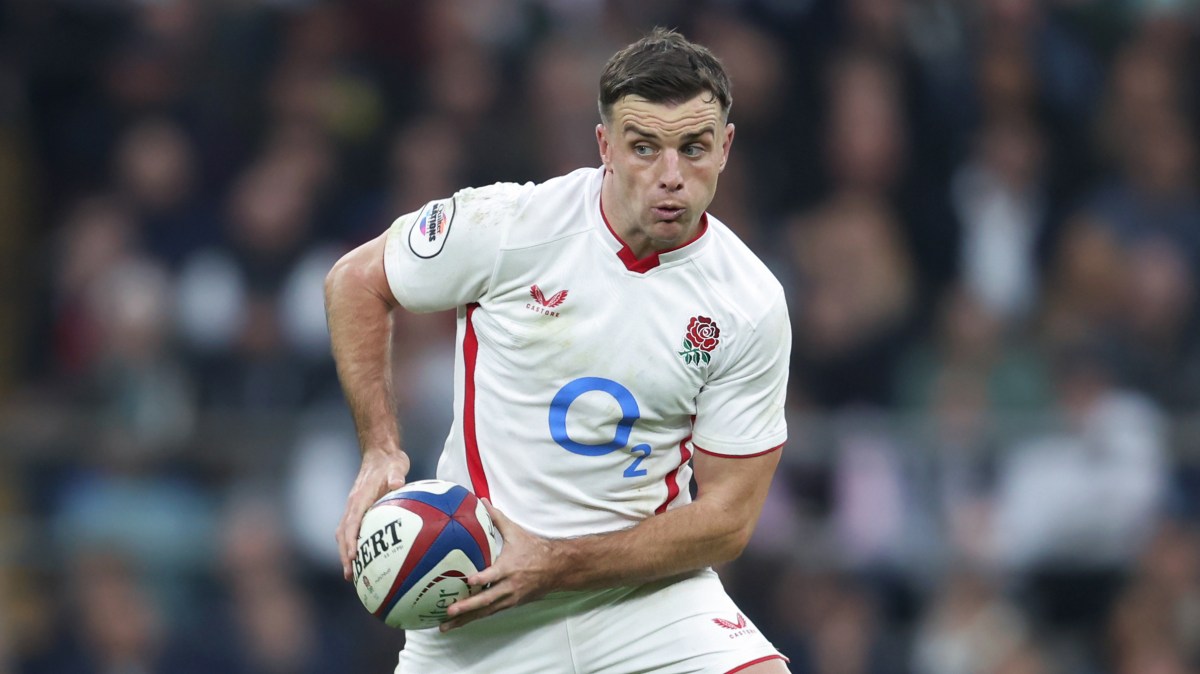
George Ford casts his mind back a decade to the whirlwind arrival of Eddie Jones into English rugby and the glory of winning a grand slam. Ford was the England fly half in 2016. Now 32 years old and a Test centurion, he has adapted to style changes in the game, overcome selection setbacks, seen off competition from two young thrusters and still holds the No10 jersey in 2026.
England’s triumph in 2016 was followed by championship titles in 2017 and 2020, both achieved with Ford in the team, but it stands alone as their only grand slam since 2003, the year that England won the World Cup in Australia with Jonny Wilkinson at fly half. Wales, Ireland and France have all enjoyed greater Six Nations success in the intervening years.
This England team is out to change the record, albeit that task looks even harder after France’s evisceration of Ireland on Thursday night. England have enjoyed a renaissance over the past 12 months, and they head into the Six Nations on the back of 11 consecutive victories, from nail-biters against France and Scotland to more comfortable autumn wins against Australia and New Zealand.
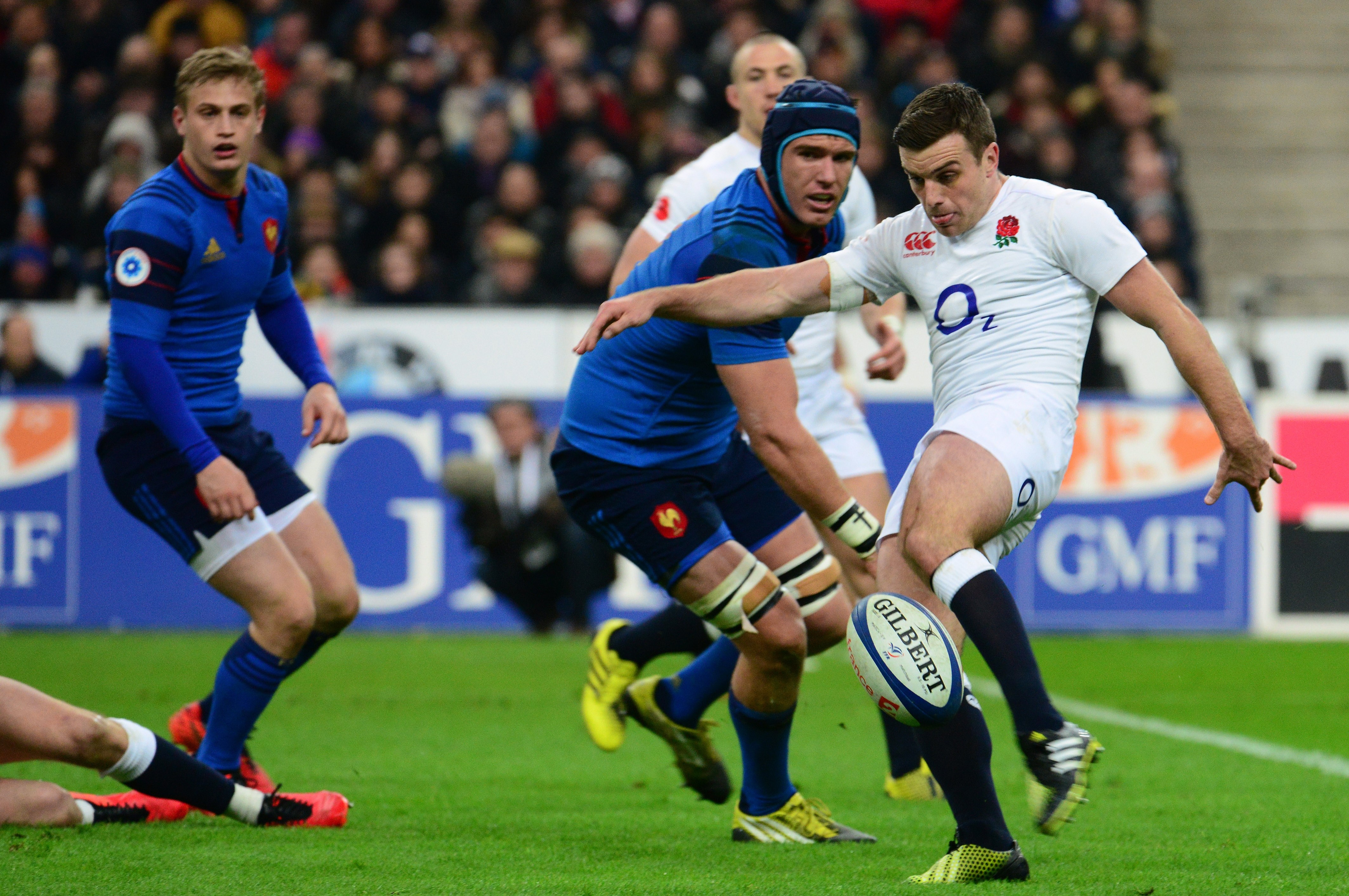
Ford was central to England’s grand-slam winning campaign in 2016, when they needed to complete the clean sweep in Paris
FREDERIC STEVENS/GETTY
Internal expectations have shifted to the point at which Steve Borthwick, the head coach, is challenging England to reach Paris on the final weekend with a chance of winning a grand slam. It was at the Stade de France that England sealed the deal in 2016. Ford is not interested in the symbolism. He knows the road is never straightforward.
The Six Nations is unique. Like a collection of short stories, each game is its own entity, with its own history of friendship and enmity, all wrapped up in the grandest of annual championships. To navigate five such games without slipping up is intensely difficult, arguably more so now that there is only one fallow week.
“It does feel a long time ago, 2016,” Ford says, his knee bleeding from a nick suffered in training. “Results never lie in our game. We haven’t deserved to go through the Six Nations unbeaten since then. When people ask you what’s the biggest rivalry in the Six Nations, it just seems to be every team we come up against.
“The best way to win it — and I can clearly remember this in 2016 — is just to take each job as it comes. We’ve got Wales at home first. Let’s do that, and then we’ll focus on whatever is next. If you do that, you stay grounded and you can give yourself a shot.”
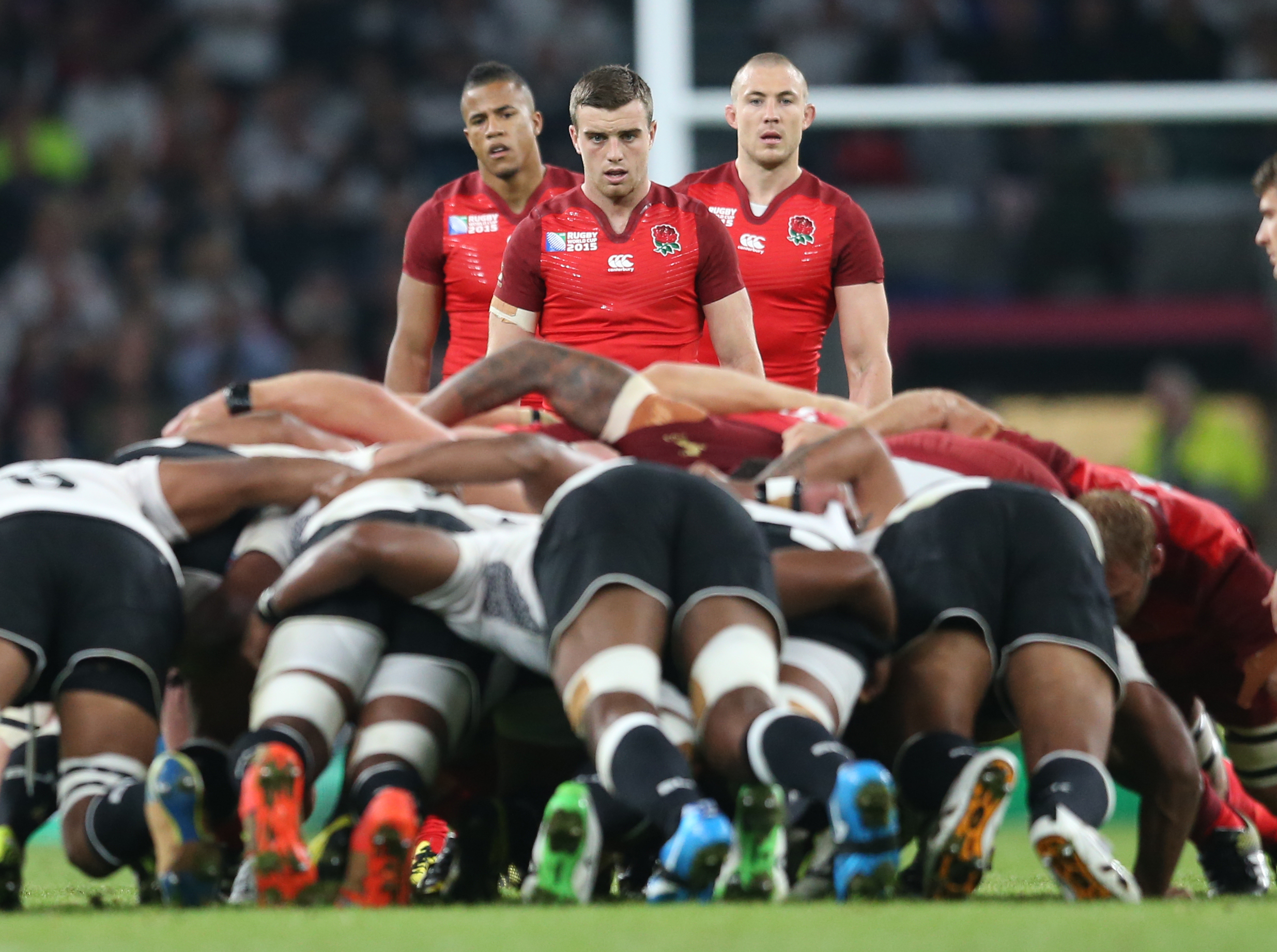
Ford was relatively fresh on the scene at the 2015 World Cup, but has now racked up 105 Test caps for England
TIMES PHOTOGRAPHER MARC ASPLAND
Ford may be wearing the same white No10 jersey, but the demands of his job as England’s fly half are markedly different now from what they were in 2016. He has always been a curious student, examining rugby league and football to be at the vanguard of tactical developments in rugby union. It is a never-ending quest to gain a strategical edge.
Ford came through as a triple-threat playmaker and at Bath he was in charge of a dynamic, running attack. But he slowly felt himself being “shoehorned” into a game-manager role, with his running threat locked away. For England in the 2020s, he saw the ball as “a ticking time bomb” because of how the breakdown was refereed, and in the 2021-22 title-winning Leicester Tigers team, his job was to implement a game plan. That meant standing deep and kicking.
“You want to do your job for the team, but it was taking away from my running game,” he says. “I thought: I know I need to be better than this. In the game now, you’ve got to have a great passing game. You’ve got to have the ability to put people in space, but you’ve got to go and take space yourself as well. You’ve got to play close to the fire, you’ve got to have the ability to run, pass and kick.”
Ford has displayed a fourth dimension to his game this season. As defenders fly up to shut down his space and passing lanes, Ford has used their pressure against them. He will hover in position and invite defenders on to him, waiting for the fire to lick around his heels. As they hunt him down, a window of opportunity will open elsewhere and Ford has already planned how to take advantage, with an attacking kick or an incisive pass. It requires patience and vision, which is where football comes in.
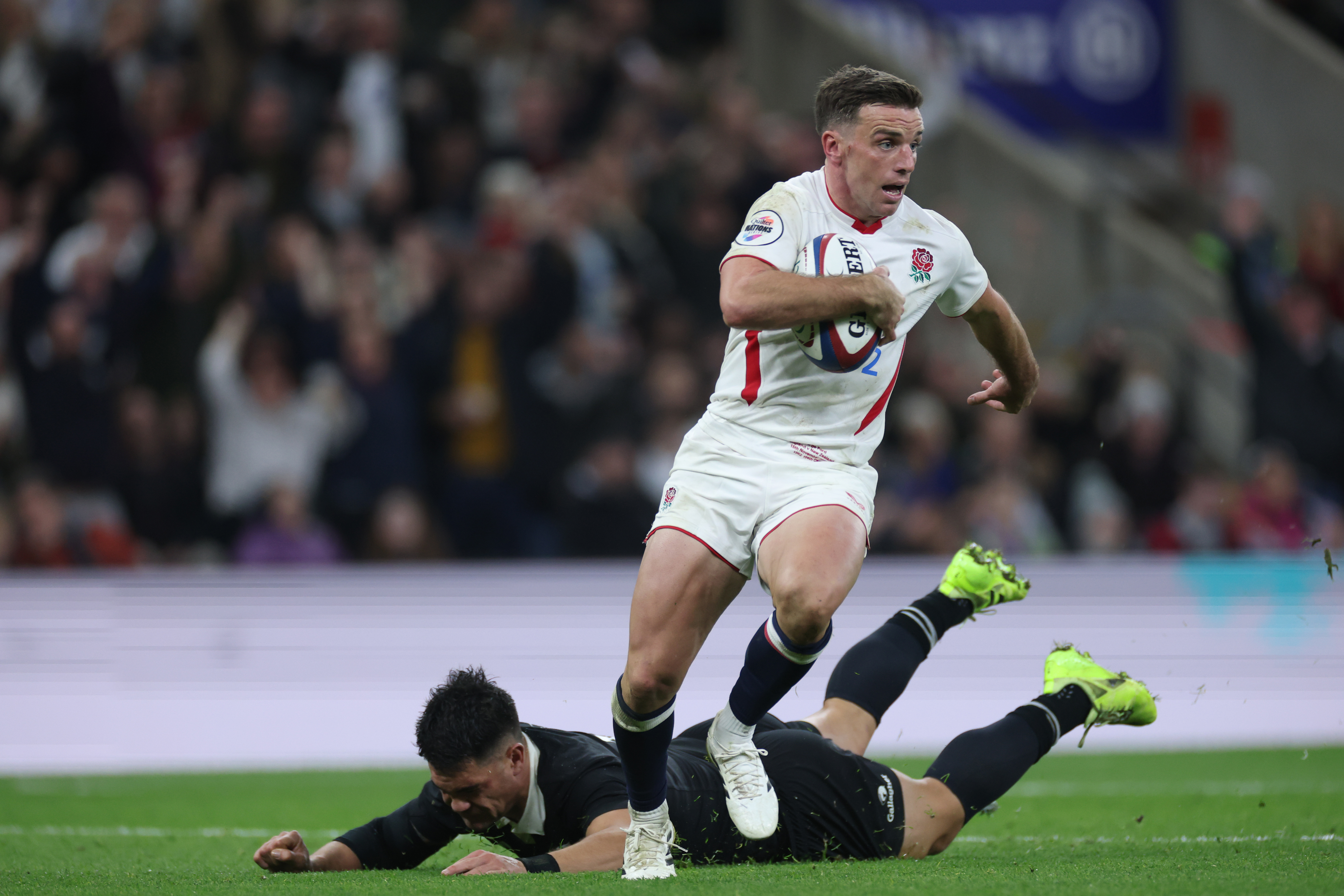
Ford has learnt to invite pressure and use it to his advantage
TIMES PHOTOGRAPHER MARC ASPLAND
When Ford goes to matches at Old Trafford, his eyes will follow Bruno Fernandes, the Manchester United midfielder, around the pitch, watching how he is constantly scanning, thinking ahead to work out his next pass or his next movement. Ford has been fascinated by Adam Wharton’s around-the-corner passing for Crystal Palace. He has spoken to the Arsenal coaches about Declan Rice and Martin Odegaard. A Chelsea fan, Ford has spoken with Frank Lampard, who would scan the field, on average, 0.62 times every second; more than 3,000 times a match.
As a fly half, Ford has always thought about phases ahead, but the pressure to do so has become more acute over the past ten years. “You watch the game back in 2016 and you watch it now, and it’s completely different,” he says. “The speed of it, the time, the space, the skill. Back-rowers now seem to look like backs. Backs seem to look like forwards. It’s just changed so much.
“There’s probably been two or three times over the past ten years when you have felt the game changing. You look back then, ten years ago, the odd team had a line-speed defence. Now it seems like everybody’s filling the front line, line speed, and trying to slow you down.

Ford during England’s win over Wales at Twickenham in 2000
GETTY
“What teams in defence have become really good at is, if they’re in a bit of trouble defensively, they can solve it by coming up and spooking you. I’ve been thinking about that lately. I know a lot of it is spoken about in football, but the way you scan and scheme and look and pick people’s body language up.
“Most teams, when they analyse their opponents, they’ll say, ‘Let’s go and put the No10 under pressure, let’s go and take his options away from him.’ You’ve got to be even better to keep being effective.
“Deception’s a big thing. You don’t want to become predictable. You don’t want to give away too early what you’re potentially going to do. It’s about timing, like you said. It’s about knowing where you need to run, but how can you show something different first?
“The time’s getting shorter but you’ve got to have more patience to pick the right option. A lot of it is feel, where you just know that someone’s going to come at you, so you need to kill your foot speed a little bit. You don’t need to go at them.
“You’ve got the best chance of doing it if you have a good idea of what you’re going to do before you even get the ball in your hands. That’s why I love watching sports so much. The best midfielders in the world never seem to lose the ball. They come out with these decisive passes. It’s like they’re three seconds ahead.
“Where’s the opportunity? Let’s go and find the opportunity. That is enormously transferable to rugby. Wharton is ahead of the game but he has players on the same page. You need people in and around you understanding what we want, what we need. Having inside options, having outside options, having people to kick to.
“You see it with your eyes, you feel it through momentum and speed of ball. You put all that into the pot and you hopefully make the right decision. I love that part of the game.”
Ford has a kindred spirit in Lee Blackett, who is heading into his third campaign as England’s attack coach and is renowned for his attention to detail.
“We are very fortunate here to have some brilliant coaches, who are always endeavouring to be one step ahead of the game,” Ford says. “Don’t become a team that just sets up all the time and becomes predictable. Play off whatever the situation is in front of you. As soon as you’ve got speed and momentum, let’s go, let’s not lose it.”

Borthwick will be expecting Ford to manipulate unstructured moments with kicks in behind the opposition’s defence
TIMES PHOTOGRAPHER MARC ASPLAND
The game now is increasingly about transition attack, whether winning a turnover on the floor, taking a quick lineout or regaining possession from a contestable kick. France dropped their leading tryscorer, Damian Penaud, to select a high-ball specialist against Ireland, and it worked. From claiming a succession of tap-backs, France stung Ireland with their ruthless precision in transition.
England will take to the skies frequently against Wales in search of unstructured moments. Ford is expecting a shift towards more kicks coming from the fly half than scrum half. The data shows that there is a higher probability of winning back the ball if it is launched towards space, rather than down a heavily congested channel.
In turn, England have been goading Wales to kick to them. Borthwick is daring them for two reasons: he is confident that Tom Roebuck and Freddie Steward can win those aerial contests, and that Henry Arundell and Tommy Freeman have the gas to strike on the counterattack. Should Wales refuse to take the bait and attempt to play the phases, England have a back row of Guy Pepper, Ben Earl and Sam Underhill, primed to dominate them in defence.
This time last year Ford was playing a support role for England, behind Fin Smith and Marcus Smith, but enjoyed a cameo appearance in a record win against Wales in the final round of the championship. Having secured the No10 jersey on the summer tour, it is against Wales that Ford will launch his 12th Six Nations campaign (having been injured in 2023), playing the best rugby of his career and armed with a determination for England to fulfil their potential.
“Bloody hell. Twelve? You make me feel old,” he says. “The campaigns you remember are the ones you were successful in. So you do remember 2016. It’s just natural. We’d like a few more of them.”
England v Wales
Twickenham
Saturday, 4.40pm
TV ITV
The Ruck Podcast: LiveDon’t miss tough tacklers Courtney Lawes and Serge Betsen on March 9 as they compare notes on France v England and the biggest moments of this year’s Six Nations at Twickenham Stoop. Book tickets here