
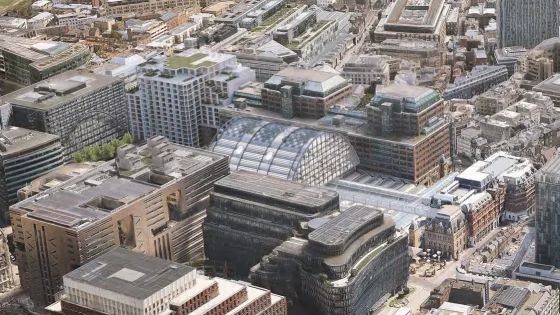
Next week the City of London’s planning committee is expected to give the green light to Network Rail and ACME’s controversial proposals to overhaul the transport hub, despite more than 2,600 objections and criticism from heritage groups which fear the scheme will result in ‘hugely damaging’ internal and external changes to the listed station.
A report drafted by the City of London planning officers ahead of the committee meeting on Tuesday (10 February) recommends approving the £1.5 billion project, which features an 18-storey office tower over the terminus and the phased demolition of various elements of the station.
Now SAVE and McAslan have lodged a listed building consent application for their counter proposals – a design billed as ‘an innovative and sympathetic design approach’ that could achieve the same station upgrades at ‘half the cost and without years of passenger disruption’.
McAslan claims his concept, unlike the ACME proposal, would require almost no demolition of the Grade II-listed 1990s station concourse.
He envisages a nine-storey development, inspired by the station’s Victorian railway architecture, hung from a lightweight steel arched frame and featuring cross-laminated timber floors to float above the existing trainshed and platforms.
McAslan has previously claimed the low-carbon design would ‘take up two-thirds of the area [of the ACME scheme] and take half the time to be delivered’, thanks to its anti-demolition and lightweight construction approach.
SAVE director Henrietta Billings said: ‘We have supported the principle of the McAslan “light touch” and creative approach from the outset.
‘This is a signal of our intent and our belief in this alternative vision’
‘By formally submitting the plans, we want the City and Network Rail to give due consideration to this alternative proposal – to ensure that the landmark station and everyone who uses it gets the highest quality and best value upgrades on offer. This is a signal of our intent and our belief in this alternative vision.’
John McAslan + Partners director Colin Bennie said: ‘Our alternative proposal matches the transformational station capacity and accessibility upgrades [of the ACME scheme], and retains the wonderful, light-filled concourse and station fabric.
‘Constructed within the ownership of Network Rail land, it avoids the demolition, enabling and on-costs of the [ACME] scheme, as well the disruption and harm it would cause.’
McAslan’s scheme has not been submitted as a full planning application – the pre-application fees alone for a major development in the City would cost more than £11,000.
At a public meeting last month, practice founder John McAslan said ACME’s brief from Network Rail for the giant scheme ‘was completely wrong’ and that the practice had not ‘been able to challenge it’.
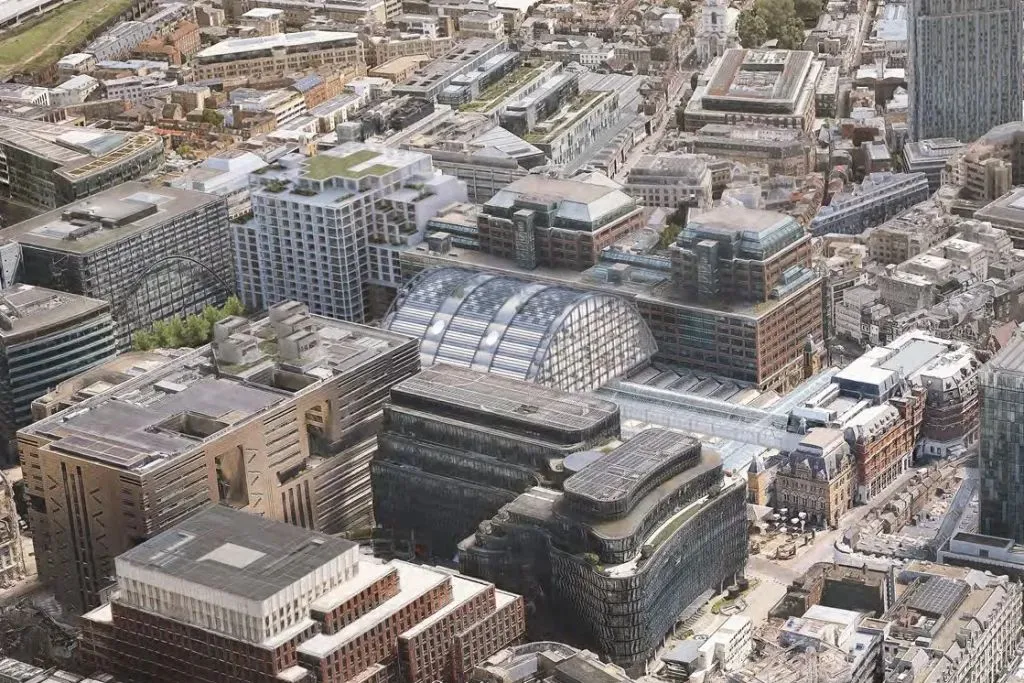
SAVE’s alternative Liverpool Street scheme (John McAslan + Partners)
But this prompted a robust defence of his scheme from ACME’s founder Friedrich Ludewig.
He said the idea of building over the trainshed – in a similar fashion to McAslan’s concept – had also been his preferred option but, after extensive examination, the concept was found to be unviable. He said others, including BIG and Herzog & de Meuron, had previously considered this approach too and not progressed their schemes either.
Ludewig told the AJ that after spending considerable time trying to make a similar proposal work, the ACME team eventually ruled out the over-platform approach, blaming its ‘engineering complexity, its impact on the operation of the train services and its limited potential for a viable office entrance’. It was also deemed not to generate enough money to pay back any development partner while delivering the changes needed throughout the station.
Ludewig said he had talked to McAslan, who oversaw the revamp of King’s Cross Station and Sydney Central, about ACME’s efforts to get a building over the trainshed to stack up commercially. In the end, he said, the pair had disagreed about whether such a scheme was viable.
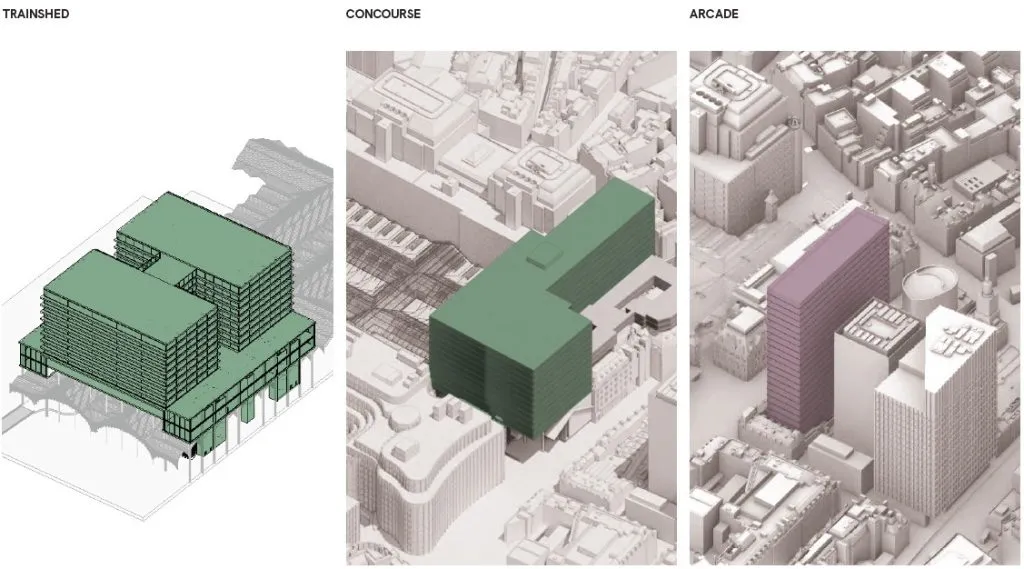
ACME’s optioneering for Liverpool Street – building over the concourse is the option submitted
The architect told the AJ: ‘[Our] trainshed proposal and John McAslan’s concept are nearly identical. The principles are 95 per cent the same.
‘I’ve invested a year of my life trying to get a building over the trainshed to work; it was an obvious idea. We spent significant resources investigating the technical constraints – with a lot more commitment than previous attempts – to either prove or disprove the practicality and viability of this option.
‘For a long time this was our preferred option and we included significant detail on it in our planning submission to explain why we ultimately had to adopt a different approach.’
Ludewig said that ACME had interrogated a range of engineering options, including incorporating a supportive arch-like structure similar to the nearby 1990s SOM-designed Exchange House – a building which John McAslan’s scheme references.
He added: ‘Even if it is technically possible … if it doesn’t make any money, nobody would build it. Ultimately, the trainshed options died the death of being unviable.’
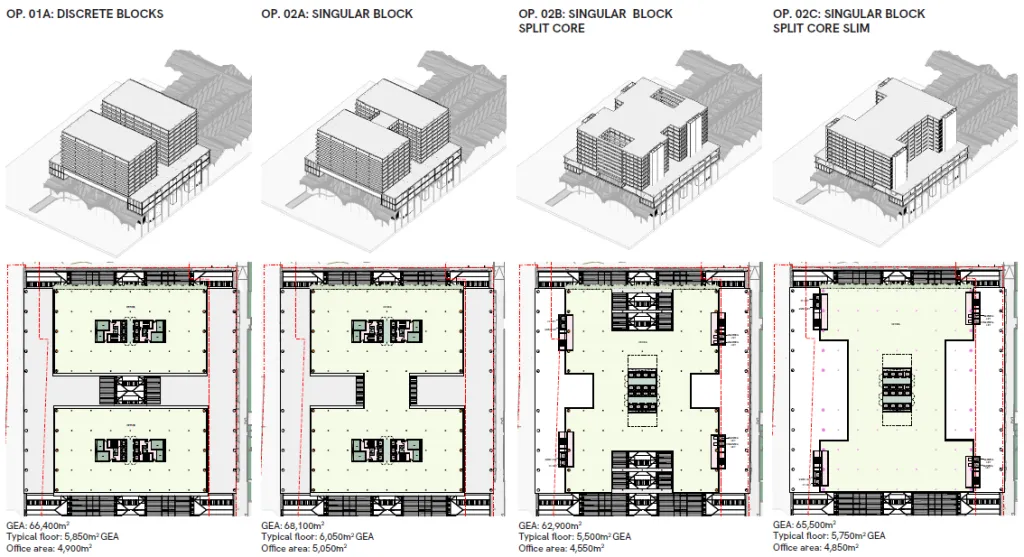
ACME’s floor plan options for building over the trainshed/platforms
Network Rail added that they had carried out several independent reviews of McAslan’s plans and had also concluded that the alternative trainshed scheme was unviable.
ACME’s scheme, like the earlier one by Herzog & de Meuron, has faced criticism on environmental, heritage and viability grounds. It features staggered garden terraces sitting above the station, and would involve remodelling the concourse, accessibility improvements and vaulted brick arches at two entrances.
Network Rail’s proposal has received around 1,100 letters of support. The railway operator and its team have held more than 100 meetings with both statutory and special interest groups and say they have worked with officers from the City, Historic England and the GLA to ‘evolve the design over many iterations’.
Network Rail says that Historic England and the GLA have both ‘identified less than substantial harm’ to heritage and are not objecting to the proposals.
Network Rail’s Eastern Region managing director Ellie Burrows said: ‘The City’s recommendation for approval has recognised the clear need to transform Britain’s busiest station. With passenger numbers forecast to reach 158 million by 2041, it is time to act.
‘Our proposals improve accessibility, capacity and the everyday experience for those who rely on Liverpool Street. This is a transformation for passengers, and for the City of London to support its growth ambitions. It will create a future-ready station that delivers for the long-term and becomes a destination in its own right.’
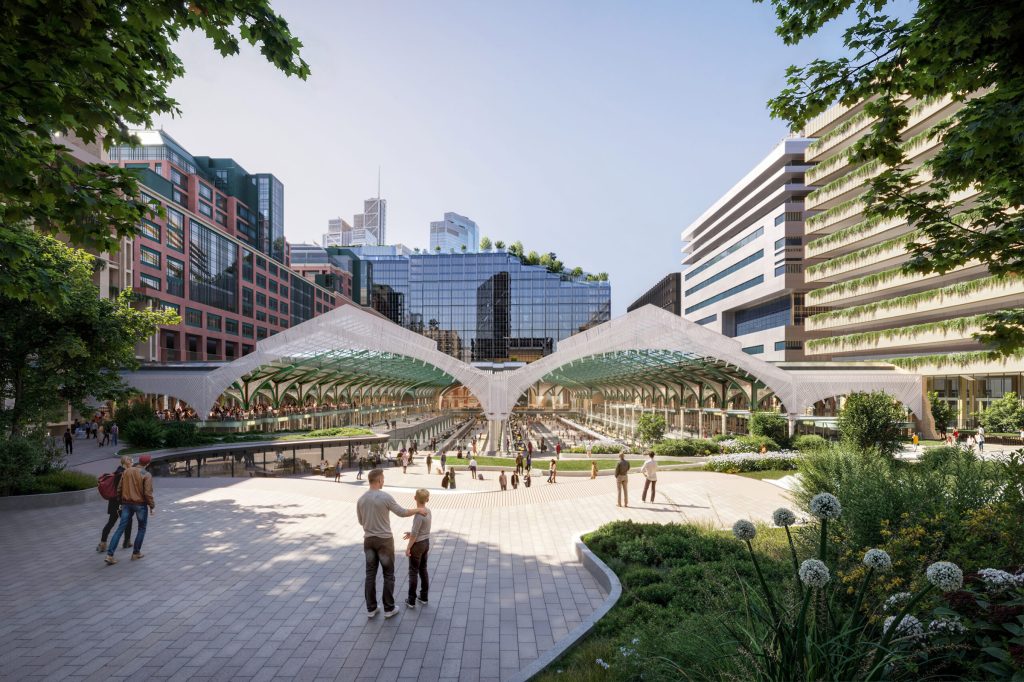
ACME’s proposal, which looks set to be approved next week: new pedestrian routes to Exchange Square