
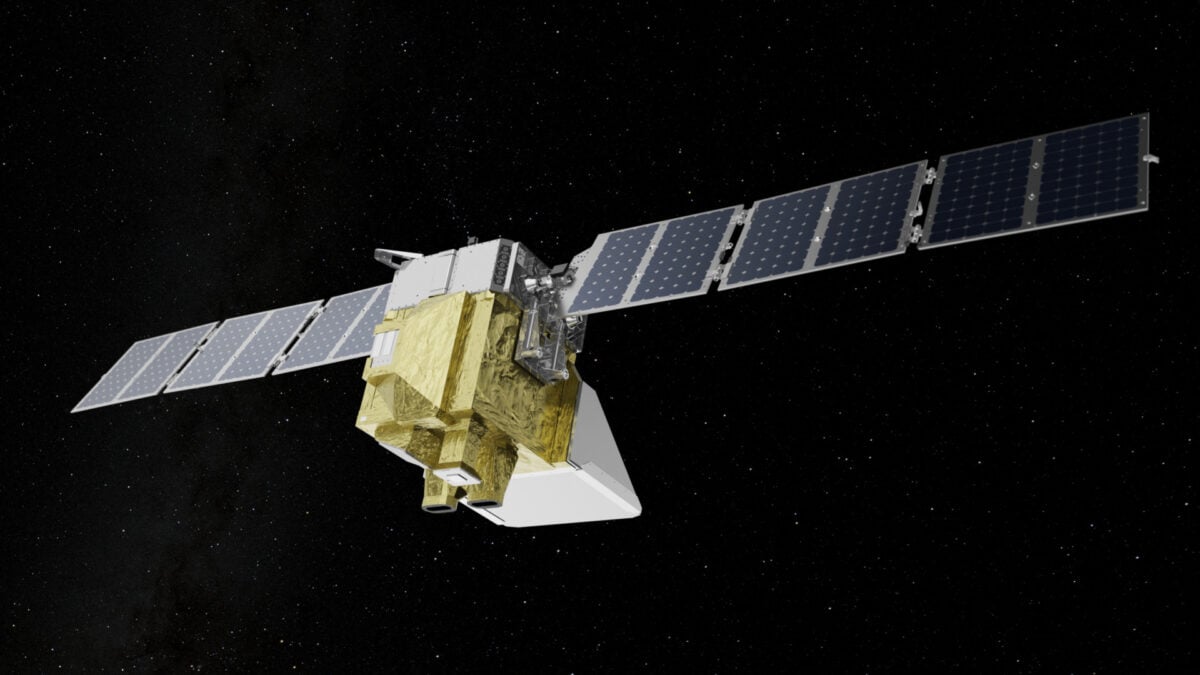
MethaneSat, an $88 million satellite designed to track methane emissions at an unprecedented scale and resolution, suddenly went dark in July. It only survived about 15 months of its planned five years in orbit, but even within that short time, MethaneSat managed to expose widespread emissions that have gone vastly underreported by the oil and gas industry.
That’s according to an initial assessment of the satellite’s observations, published Monday by the Environmental Defense Fund (EDF)—the nonprofit that owns the MethaneSat project. According to the analysis, global data gathered during the satellite’s year of operation show that emissions from the oil and gas industry consistently and significantly exceed figures reported in widely cited inventories.
Even oil and gas producing basins with the lowest emission intensity are falling short of the industry’s own emissions goals, the EDF report states. This points to an urgent need to ramp up industry- and government-led efforts to reduce emissions.
Gone but still a game-changer
Methane is an incredibly potent greenhouse gas that’s about 28 times more effective than carbon dioxide at trapping heat in the atmosphere, according to the Environmental Protection Agency. Fossil fuel extraction and processing is a key source of methane pollution. In the U.S., the oil and gas sector is the largest industrial source of the nation’s methane emissions.
MethaneSat was designed to pinpoint sources of global emissions—primarily those produced by the fossil fuel industry. The satellite’s state-of-the-art spectrometers could pick up subtle traces of emissions across entire oil and gas fields and zero in on hot spots with unmatched precision, producing high-resolution snapshots of methane leaks.
During its brief time in orbit, MethaneSat gathered data that shows more than 221 scenes across 45 oil and gas producing regions, covering half the world’s onshore fossil fuel production. EDF analysts used this data to compare and rank oil and gas basins around the world based on their total emissions and methane intensity—the ratio of a basin’s methane emissions to the amount of oil and gas it produces.
Emissions underreporting exposed
The analysis revealed some startling trends. Overall, oil and gas methane emissions were 50% higher than reported in the commonly cited Emissions Database for Global Atmospheric Research and the EPA’s Greenhouse Gas Inventory, according to MethaneSat’s observations.
Methane intensity was generally lower in gas-focused basins than oil-focused ones, but in basins where gas accounts for at least 20% of fuel production, emissions were three times higher than reported in global inventories. MethaneSat’s data also suggests that low-producing oil and gas wells disproportionately drive methane pollution, accounting for 40% of emissions in areas responsible for less than 7% of fossil fuel production.
The findings weren’t all bad, however. Methane pollution from oil-focused basins was actually 30% lower than inventory records, highlighting the need for more accurate monitoring to track emissions reductions.
Although MethaneSat’s operational lifespan was cut short, this Earth observer still proved to be a gamechanger for tracking planet-warming emissions. Researchers will continue analyzing its data to bring the landscape of methane leaks into sharper focus and bolster regulations that hold polluters to account. Based on these early findings, it’s clear there is a lot of work to do.