
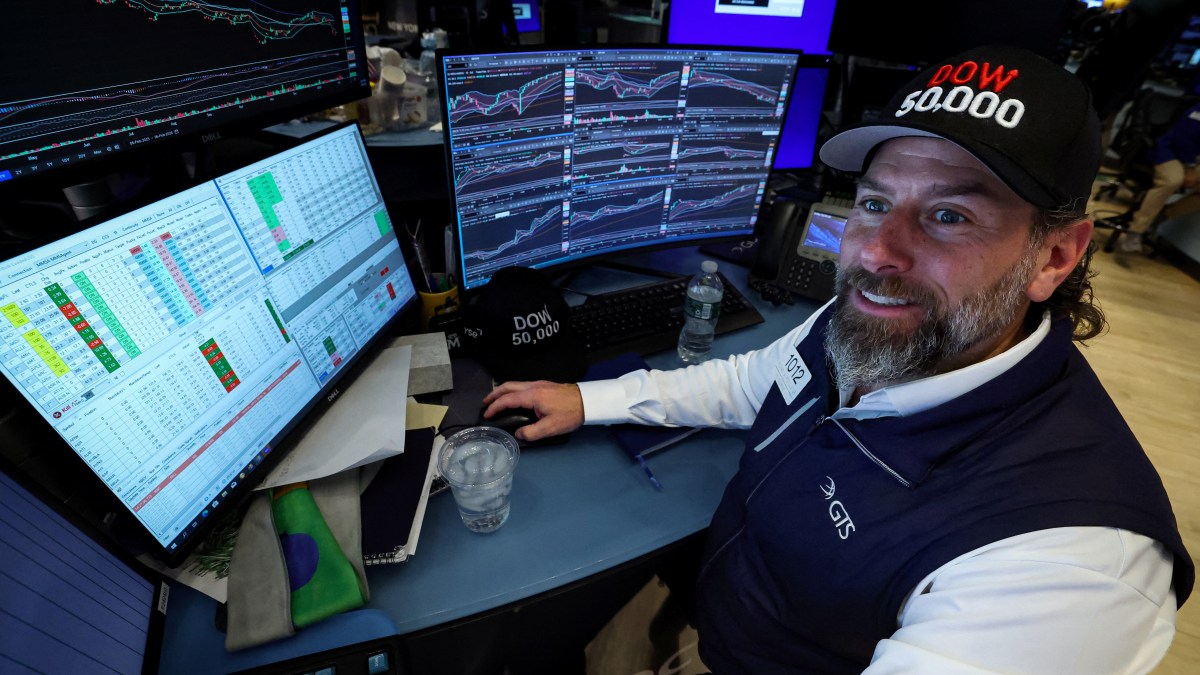
The Dow Jones industrial average hit 50,000 for the first time on Friday.
America’s oldest continuing equity index broke through the milestone in the middle of the afternoon in New York and by the close of normal trading it was 1,206.95 points, or 2.5 per cent, higher at 50,115.67, its best one-day points gain since April 9 last year. It was the fifth record high of the year so far.
During the financial crisis and subsequent recession between 2007 and 2009 the Dow Jones was below 6,000. It has been only 22 trading days since its last 1,000-point milestone
• Who are the biggest losers from this week’s tech sell-off?
The Dow’s final push above 50,000 came unexpectedly and followed sharp falls across Wall Street this week as fears over the ballooning cost of investment in artificial intelligence by big tech companies spilt into the wider stock market.
However, the 30 companies that make up the Dow, a mix of established companies from manufacturing to media, did not catch the full force of the sell-off.
Since the index hit 25,000 in early 2018, mainstays including Goldman Sachs, Apple and Caterpillar have driven an outsize portion of gains, according to The Wall Street Journal.
Boeing, 3M and UnitedHealth Group lagged behind the pack. Nvidia replaced Intel, in a sign of how AI is redrawing the global financial map.
Shares of Nvidia gained more than 7 per cent after recent losses and helped to give the Dow a boost, along with Caterpillar, which rose 6 per cent.
Further ahead, however, there are warning signs in some parts of the world’s largest economy.
Price pressures continue to squeeze millions of lower and middle-income Americans, while US hiring has been sluggish. Jerome Powell, chairman of the Federal Reserve, has cautioned that official figures might be overstating the labour market’s strength.
In a post on his social media platform, President Trump highlighted the new record, celebrating the achievement as “the first time in History”.
“CONGRATULATIONS AMERICA!” Trump said.
Matt Maley, chief market strategist at Miller Tabak, the financial services firm, told Bloomberg: “Hitting 50,000 makes for a lot of headlines — and President Trump will push it all he can.