
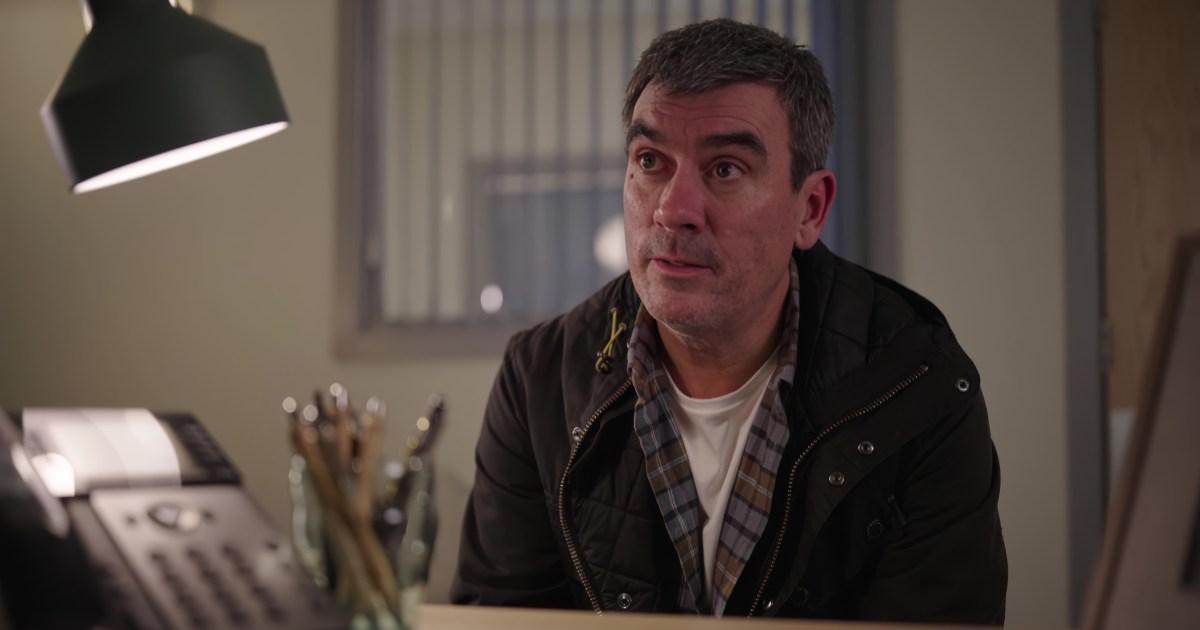
Cain Dingle’s special episode was a masterclass in straying from the standard soap format (Picture: ITV)
A lot has changed since Coronation Street first aired in 1960. We have more channels, the ability to catch up on episodes we’ve missed at any time and spoilers galore to sink our teeth into. With the rise of streaming services, anything we could possibly want to watch is literally at our fingertips.
Because of this, our favourite soaps have had to adapt. But one change that has divided fans is the increased use of new techniques to push boundaries and break away from the traditional soap format.
Personally, I have gone back and forth on this issue a lot. I’m a die-hard soap fan and kitchen-sink drama is my bread and butter. I’ve always preferred character-based drama to epic stunts, and I still have a hard time accepting the use of special effects in the soap genre.
As these format-bending episodes have become more frequent, I’ve felt like a yo-yo – constantly switching between thinking they’re fabulous to thinking they’re an insult to the history of soap. But why do I feel so deeply passionate about some episodes and completely put off by others?
Emmerdale’s most recent attempt at this new soap phenomenon finally gave me the answer. Boundary-pushing, format-altering special episodes absolutely have a place in soap, but they must be driven by the storylines and characters first and foremost.
In the special Emmerdale episode that aired this week, viewers followed Cain Dingle (Jeff Hordley), gaining insight into his inner world through internal monologuing. We joined him as he was diagnosed with prostate cancer, and stuck with him in the aftermath, as he struggled to come to terms with the news and eventually confided in Sarah Sugden (Katie Hill). It was an episode that really touched me in a way I didn’t expect, and I already think it will be one of my favourites this year.
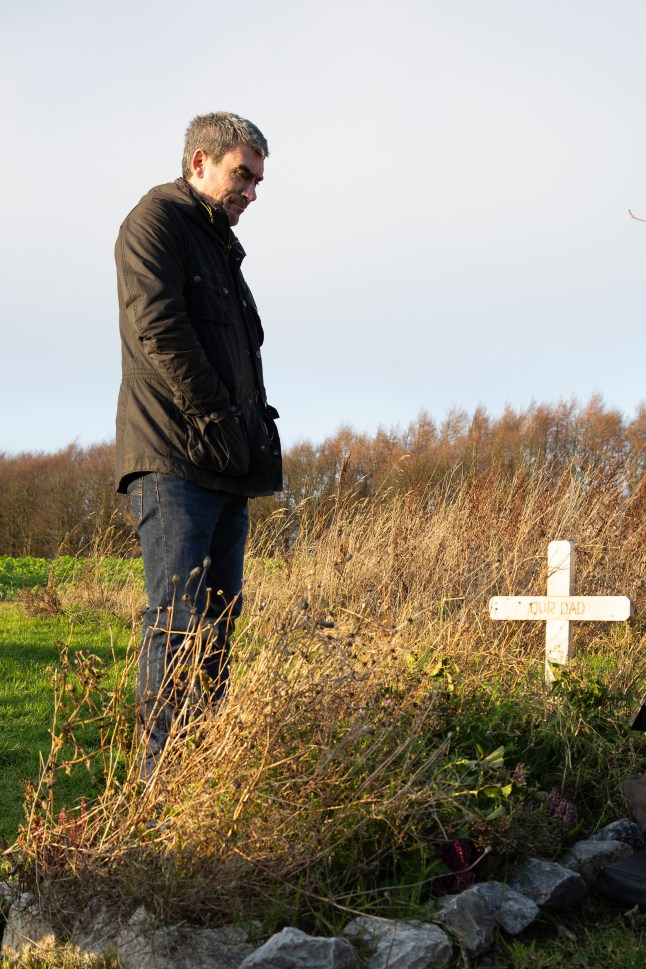
It felt like I was sharing Cain’s emotions (Picture: ITV)
Why then, when Coronation Street used the same technique of internal monologues in an episode last year, did I feel completely different?
Corrie’s take on this technique came as part of Shona and David Platt’s (Julia Goulding and Jack P Shepherd) pregnancy storyline. Overall, it was an incredibly moving story, depicting the terrifying situation many parents find themselves in when they learn that there is something wrong with their pregnancy.
In the first part of the episode, we followed Shona and heard her internal thoughts as the couple attended their appointment at the hospital. In part two, we went back to the beginning and watched the same scenes play out again, this time from David’s point of view.
While the concept of the episode sounded like a good idea, it didn’t work in practice.
I felt like Cain’s internal monologue heightened the emotional connection we, the audience, had with the character, but when the same technique was used for Shona and David, it was like a barrier that prevented us from really feeling their emotions with them.
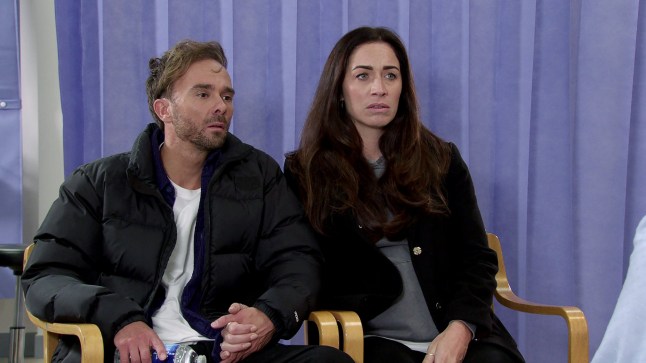
Coronation Street also used monologues in a special episode for Shona and David Platt (Picture: Danielle Baguley/Shutterstock)
I think a major factor in this disconnect was how each episode was shot. Both soaps strayed from the usual filming techniques in different ways, which I believe was what allowed Emmerdale to flourish while Coronation Street fell short.
Don’t miss a Soaps scoop! Add us as a Preferred Source
As a loyal Metro Soaps reader, we want to make sure you never miss our articles when searching for stories. We have all the latest soaps news, spoilers, videos, and interviews, with a vibrant community of highly engaged readers.
Click here and tick Metro.co.uk to ensure you see stories from us first in Google Search.

Now you can ensure you never miss a story from the Soaps team
Coronation Street director Gill Wilkinson’s approach was to have Shona and David break the fourth wall, with each character looking directly into the lens of the camera while their inner thoughts were spoken. I totally understand why this choice was made. In theory, it creates a connection between the character and the audience. Unfortunately, it didn’t come across in that way for me.
In the very first scene, for example, we heard Shona’s inner thoughts and looked into her eyes as her facial expressions reflected what we were hearing. It was very clear exactly how she was feeling, and yet, I felt absolutely nothing.
It was as if, rather than letting us into her inner world, Shona was externalising everything for our benefit. Instead of living her life, as she does in every other episode, she was performing it. And that is no criticism of Julia Goulding’s performance – she and Jack P Shepherd excelled in this story – it simply seemed that Shona the character had turned herself inside out and was saying: ‘Look, these are my emotions!’
Meanwhile, Cain went about his daily life as he normally would, and just so happened to receive earth-shattering news that turned his life upside down along the way. With Cain, we weren’t outsiders observing a performance; we were inside his head. It felt as though we became a part of the character, and his emotions became ours.

Shona and David’s pregnancy story was a poignant one (Picture: ITV)
On top of this, Cain’s face was the only one in focus for the majority of the episode, leaving us unable to make out the other characters beyond recognising their voices and blurry silhouettes. The effect of this was staggering: Cain was our only focus – the only character we could draw on for emotional connection, which deepened the overall impact of the episode tenfold.
It wasn’t until the very end, after Cain had opened up to Sarah, that she also came into focus – poignantly just as she told him that he no longer had to deal with his diagnosis alone. This was a masterful choice and had me in tears for the rest of the episode. We didn’t just hear Sarah’s words – we saw exactly what she meant and felt exactly how Cain was feeling. He had let her into his world, and by extension, so had we.
What’s more, we didn’t learn anything more about Shona or David from their inner monologues. Everything they said to themselves was something they would likely say out loud to one another on any ordinary day. Therefore, it felt as though the inner monologues served no real purpose other than to do something a bit different.
In contrast, Cain has always had a hardman exterior and rarely expresses his emotions – especially with anyone outside of his immediate family. While he maintained this stony exterior after his diagnosis, his inner thoughts told a different story. Rather than changing who Cain is at his core, these stylistic choices added another layer to him and enhanced our understanding of the character.
Cain’s episode also really benefited from the new schedule changes that hit the ITV soaps last month. Half an hour felt like just the right amount of time to stay with a single character without losing focus. As the credits rolled, I was left to dwell on the emotions the episode had elicited in me.

Corrie pulled it out of the bag with the episode that saw Shona give birth and undergo surgery (Picture: ITV)
Unfortunately, Shona and David’s episode wasn’t afforded the same luxury, as it was immediately followed by another 30 minutes of drama from the cobbles, this time with more stories and characters involved. There was no time to sit and process what we’d watched, and by the time the episode ended, I’d almost forgotten that the first half had strayed from format.
It’s not that Corrie can’t do it. When the Platts took centre stage last month as Shona and baby Harper underwent surgery, this episode was more impactful, because it had character and story at its heart. Even the surgeon, Vincent Harper, was a fully fleshed out character who got fans talking for days afterwards. It proved that the issue with the special episode was not the story, or the characters, or the performances – it was merely a case of letting style take precedence at the detriment of the fundamentals of soap.
As much as my heart will always be with the classic soap style, I am willing to embrace producers and directors pushing the boundaries and trying new things, provided they have the right motivation. The issues arise when they choose to mess around with style and format just to be different. For me, character and story should always come first. They should drive the stylistic choices, not the other way round.
As long as the characters and storylines maintain their integrity, then I’m happy to throw the soap rulebook out of the window. Just not all the time…
Arrow
MORE: Shona comes face to face with her dad in Coronation Street and is stunned by his situation
Arrow
MORE: It’s official, soap fans are seething at sport and the rage comments are wild
Arrow
MORE: The Traitors breakout star Stephen officially launches TV career in the best way possible
Comments
Add Metro as a Preferred Source on Google
Add as preferred source
The Soaps Newsletter – Weekly
Sign up for exclusive spoilers and interviews, handpicked by our Soaps Editor.