
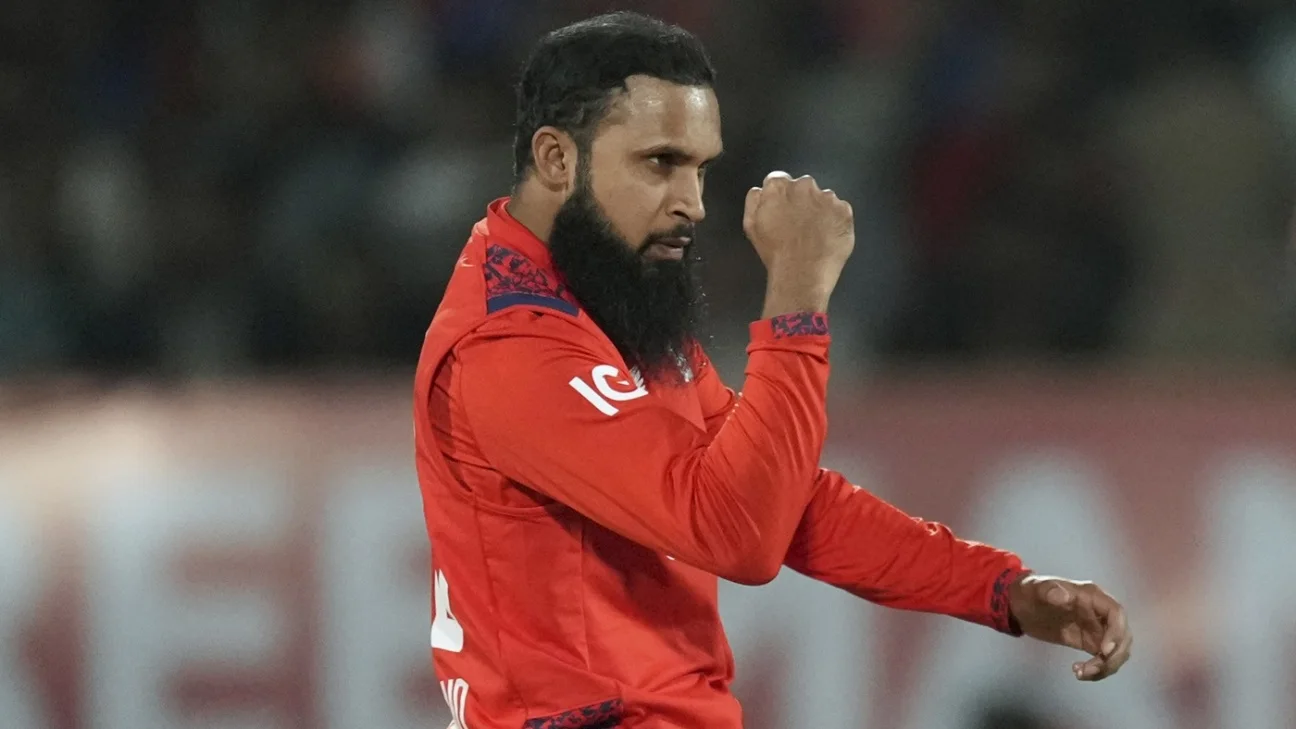
Although pushing 38 now, England legspinner Adil Rashid is in one of the most penetrative and consistent phases of his T20I career. ESPNcricinfo caught up with him ahead of the T20 World Cup.
The usual thing to say about spinners is that they usually mature a bit later than most other cricketers. How do you feel about your craft deep into your 30s?
As a legspinner anyway, you’re always learning and you’re always developing, regardless of age. Even in the past couple of years – 35 to 37 – I’m at a time where I’m still learning my craft and finding different ways to do things. I think that’s what keeps me going, actually. That’s what keeps me motivated, is that learning bit, you know? If you just stay still or you’re happy with what you’ve got, maybe then it’s time to probably have a rethink of what you want to do.
If there are specific things that you feel like you’re better at now than you were when you were, let’s say – 35 – what would that be?
I think I manage match situations better. Maybe a bit of experience plays into that. It plays into adapting to conditions as well. You also know at this age that sometimes things go your way, and sometimes they don’t. I think you also think more clearly about how to adapt to a situation and what’s required in this moment, on this pitch. All these things come in which you may not know when you’re younger.
Things have been going your way pretty often recently. You’re currently on a 24-match streak where you have not gone wicketless in a T20I (the last time Rashid failed to take a wicket in a T20I was back in June 2024). What allows you to have that consistency?
In T20 cricket, you can come in and get these wickets because people try to go after you. And you get situations where you might not bowl your best ball – a half-volley or a full toss – and you can still get a wicket. I do get hit at times as well. As a legspinner, you do get thrown off a bit when a batter goes after you and hits you. But because you’ve been through it now, you’re still thinking, ‘This is what I need to do now.’ Not that it guarantees that I’m not going to get hit again. But I have an awareness of what has a good chance of working.
So what goes through your mind now when you’re being hit, that didn’t go through your mind when you were younger?
I don’t think about technical things in those moments. It’s more like at the top of your mark, what are you going to bowl next? It’s taking that extra split second, having a think, taking your time, and being relaxed. I visualise, and then I go ahead.
Do you know what ball you’re going to bowl every time at the top of your mark?
The majority of times, you do. Sometimes it can change. If the batsman moves or does something, you’re trying to adjust. But most of the time, what I think about at the top of the mark is what I try to bowl.

Adil Rashid picked five wickets in three T20Is against Sri Lanka•Ishara S. Kodikara /AFP via Getty Images
Do you have more options now, when a batter is going after you, and maybe changes stance or does something unusual?
I think so. Again, that comes from just playing from such a long time and going through the ups and downs, and having faced all sorts of situations where you have to come in and bowl. And you read batsmen better. You pick things up instinctively after a while. The age I am now, those things happen naturally. A batter might go left, right, up or down, and the adjustment just comes more naturally to me.
Can you remember a time when you were younger when you were rattled?
It’s not like I don’t get rattled now! Even the world’s best spinners and most experienced bowlers come on and get hit for fours and sixes. But that’s part of the game. That’s sport. Everybody is going to feel the nerves. Everybody feels pressure, tension, and whatever else. We are all human.
But now you can control your emotions a bit more, because you’ve just experienced it, and been through a lot of bad patches. You’ve been through spells where things are just not going your way. And you’ve found ways to adapt and figured out what to do and what not to do.
How important is it for a legspinner to build up that resilience at the top level?
As young spinners come through, if you have that mindset early, it gives you the confidence you need from a young age. And then you get better and better from there. That bouncing back when you’re getting hit – because it will happen in T20 cricket, and it won’t be a once-off – is really important. Once you find a way that works for you, you think, ‘This is a good one,’ and you try that again.
“When I was growing up, there was Saqlain Mushtaq, and I also used to watch Shane Warne and Murali. But for the England side, there weren’t that many who I could follow, and take stuff off of. But it’s been good to see that evolve, with myself playing, and some good spinners coming on.”
Adil Rashid
Sounds like a lot of problem-solving…
I don’t have a preconceived idea of what is going to happen now. It’s all about that day, which batsman I’m bowling to, what kind of pitch it is… It’s more like, ‘This is happening today, so let’s adjust to that.’
As you’ve got more experience, do you work even more closely with your captain, or less?
I pretty much have the fields I have, and if the captain has an idea, we chat about it. Most of it is up to me. It’s quite open like that. But when you’ve played a lot, people tend to know ‘This is his strength.’ Captains are there for a reason, and they’ll have their ideas. And they’ll also give feedback.
How do you feel wristspin has changed since you’ve been playing internationals?
There’s a little more mystery now, and a lot more variations coming out. And there are more flickers (spinners who flick the ball rather than rip it). And you bowl a lot quicker. That’s not just wristspin – all spinners bowl a bit quicker. If you think back to Shane Warne and bowlers like that – the traditional legspinners – it was about getting the ball up and giving it flight. In the past 10 years, spinners are going the other way. There might not be that much drift, but there’s a bit more accuracy. But everyone’s got their own strengths and their own way of doing things.
Do you think you’re more adaptable now?
100%. And you have to be. Yes, you’ve learned a lot, but once you play against a lot of players, you’ve been out there getting exposed for years. People know what you’re bowling. So then you have to adapt. You have to start trying new things. It’s not that I’ve got a new ball all the time. It’s more about knowing what the team needs in the moment. Because my deliveries are all the same.
Adil Rashid: ‘I’m still learning my craft’•Associated Press
Were you ever tempted to go down the mystery route?
No, no, because I’m not that kind of a bowler. I tinker. How do I get a little more drift? How can I get more spin, you know? That’s more my thinking rather than learning how to flick. That is harder and takes more time to do. It’s not an overnight process.
England didn’t use to have a lot of great limited-overs spinners. What’s it been like watching that change during your career?
When I was growing up, there was Saqlain Mushtaq, and I also used to watch Shane Warne and Murali (Muthiah Muralidaran). But for the England side, there weren’t that many who I could follow, and take stuff off of. But it’s been good to see that evolve, with myself playing, and some good spinners coming on. Spin bowling has become a big thing.
What would you tell young spinners about what it takes to be successful at the top level?
You’ve got to have a big heart. That’s a big one. I’m a big believer in that, because spin bowling isn’t so easy when you get hit for sixes and fours, and if you don’t have a big heart you’re not really confident. You can’t be too fazed, and that’s really, really hard to do. You’ve got to remember when things aren’t going well that they can change quickly. You could end up being the match-winner with that mindset. Two or three wickets, and suddenly games change.
The other thing is to enjoy your craft. Whether you’re bowling the quicker stuff, or a bit more of the traditional, enjoy yourself and enjoy your skill.
You’ve arrived at a World Cup in India and Sri Lanka now, and you have a great record in Sri Lanka. What do you feel are the differences between Sri Lankan decks and Indian ones, keeping this World Cup in mind?
In Sri Lanka, it’s a bit more humid and a lot more sweaty. And the pitches in Sri Lanka can deteriorate a lot quicker. It’s a bit slower and takes more spin. In India, it’s a bit more cooler, and you may get smaller grounds with flatter wickets. It’s about adjusting to all of that.
Andrew Fidel Fernando is a senior writer at ESPNcricinfo. @afidelf