
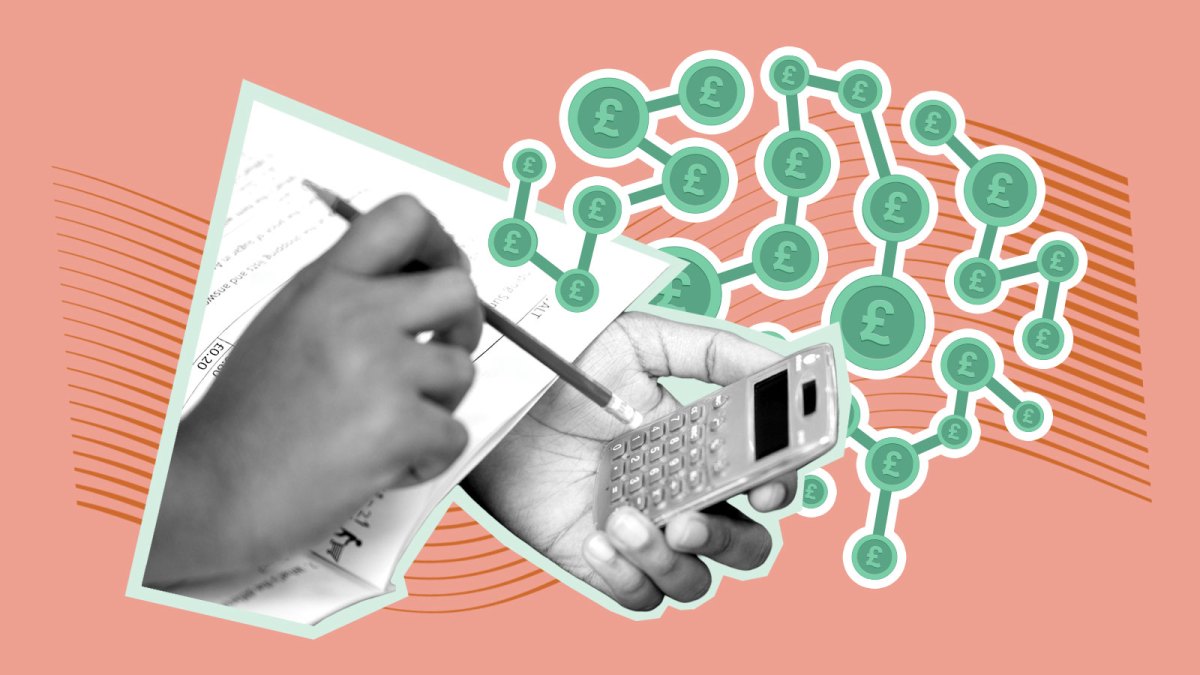
How much better off would you be if you had been taught more about money? Our nationwide survey has found that roughly nine out of ten of us learnt next to nothing about it at school — and most of us believe that we would be wealthier now if we had.
At the heart of our new Smarter with Money campaign is the drive to equip the nation with the valuable personal finance knowledge that can lead to a better life. We believe that smart, well-educated decisions about saving and investing can be life-changing. But before people can make those decisions they need to know how, and to understand that saving and investing is worthwhile.
This truly matters now, arguably more than ever. Graduates are leaving university with eye-watering levels of debt, it’s getting harder to buy a house and we are hurtling towards a retirement crisis because we aren’t saving enough into our pensions.
 World-class education
We want to see a priceless financial education given to all pupils, and to young people in the workplace. There are government plans afoot to make financial education part of the curriculum but we want to go further. We are calling for ministers to guarantee to provide 15 hours of money lessons a year for secondary school pupils, and to also offer this to all over 16s. The curriculum should include lessons on the power of investing in the stock market.
We would also love to see employers and big financial services firms do more to teach staff and their local communities about money.
A million more investors
We want a million more savers to reap the rewards of investing. The latest figures show that about 4 million people put money into a stocks and shares Isa in the 2023-24 tax year. We want to help this rise to at least 5 million a year.
For many, ordinary savings accounts are entirely appropriate and a smart way to put money aside. However, millions more of us could be making our money go much further by investing sensibly in the stock market. Some £2.2 trillion of our money is sitting in ordinary savings accounts, when it could be working a lot harder.
• How to get a nation of savers investing
Our Smarter with Money survey found that nearly half of us understand that our money will perform better in shares over five years but we opt for cash savings instead because we fear risk and do not know about how the stock market works.
We need to explain that for most, the rewards of the stock market far outweigh the risks. Savers also need to understand that their money is more than likely to be devalued by inflation if kept in an ordinary account.
Stop punishing savvy savers
There’s a great worry that seemingly endless tax grabs on pensions in particular are damaging confidence in long-term saving.
From 2029 the amount an employee can pay into a workplace pension scheme without paying national insurance on that contribution will be capped at £2,000 a year. LCP found that a worker who earns £52,000 a year and makes 10 per cent employee contributions into their pension using salary sacrifice will have to pay an extra £256 a year in national insurance after the changes.
This comes on top of the fact that pensions will be counted towards the value of estates for inheritance tax purposes from 2027. This move alone will mean that thousands more families face inheritance tax bills.
Budget leaks have also created a frenzy around the possibility that the government could come for the tax-free pension lump sum, driving many savers to make rash decisions with their retirement fund.
We want ministers and political parties commit to keeping their hands off our savings, pensions and investments so that we can invest with confidence and not be spooked into making poor decisions.
• Millions more workers may be affected by Reeves’s pension raid
Crack down on financial disinformation
The lack of financial education in schools has left a generation vulnerable to scams and lies on social media.
While the online age has empowered many of us to learn and put our money to better use, the internet is polluted with irresponsible “finfluencers” who are not always telling the truth about wealth and how they claim to have made it. Investors are being told they can make money easily by buying highly volatile cryptocurrencies such as bitcoin.
We want internet giants to take more responsibility for the fact that influential users are using their platforms to share irresponsible money content, while financial regulators need to exercise their power.
• The unqualified TikTokers transforming how young people invest
Demonstrate the power of investing
Finally, if we want to nurture an investment culture we need to demonstrate the power of investing — and there’s no better opportunity for that than when saving for a child.
Investing a little every month from birth until adulthood can help to set your child up for life. It could provide a deposit for a house or spare them from the burden of a student loan.
We want the government and employers to encourage parents and families to invest. This could include allowing them to use salary sacrifice to save into a Junior Isa or giving them the option of automatically channelling child benefit payments into an investment account for their child.
In America Donald Trump plans to give $1,000 to every baby born between 2025 and 2028. Some employers are also pledging to match that amount for staff.
Analysis by the investment platform AJ Bell revealed that parents saving the full Junior Isa allowance over the past 15 years would have £111,000 more if they had chosen to invest in the stock market rather than an average child savings account. That’s enough to pay off the average student loan and put a deposit down on a house.
With a few simple steps, we can help to ensure Britain gets a better financial education, making us better off and boosting the economy while we are at it.
Wealth creation is the key to financial freedom and a richer life. Ordinary savings accounts will not grow your money enough in the long run. The sooner we all learn that lesson, the better.