
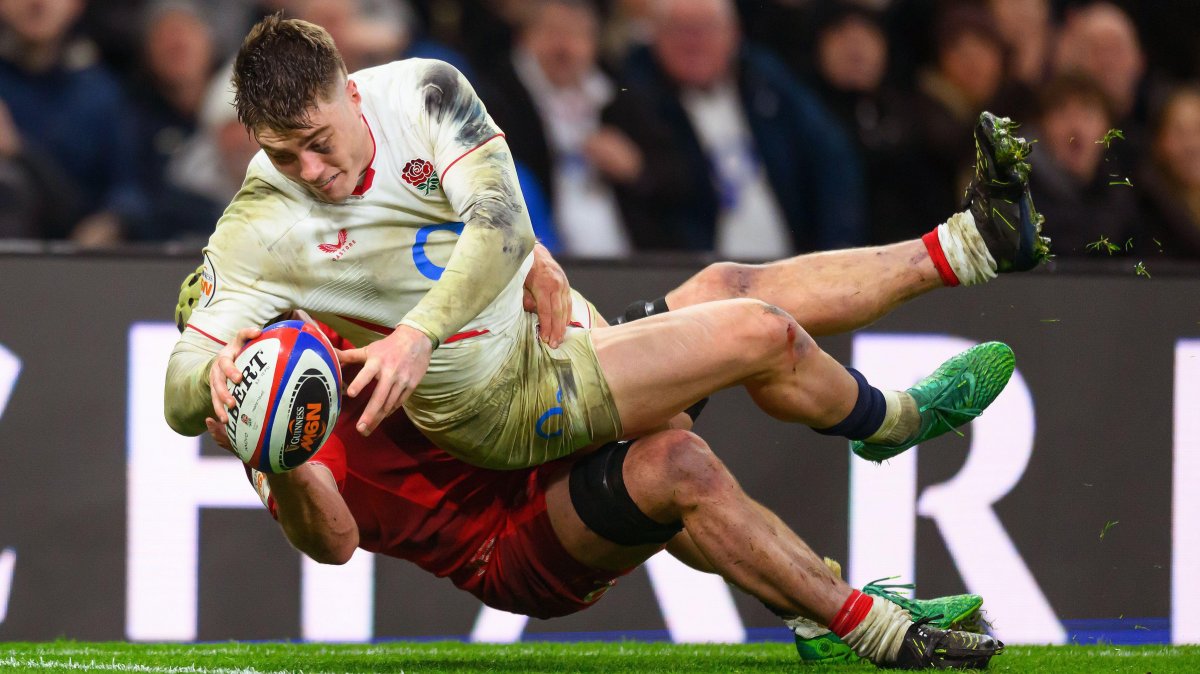
Call Saturday’s English rout of Wales a tale of two wings. One of them spending the entire first half on the left flank and scoring the easiest Six Nations hat-trick imaginable. The other, determined to make the conversion from wing to centre, continuing to convince that there isn’t anything he can do to add to England’s game in the midfield.
Tommy Freeman and all of Twickenham thought he had scored a try that was remarkably similar to the one he touched down in last season’s Six Nations finale in Cardiff. He was wearing — and playing — 13 in that instance as well; seeing the space from wide and darting, right to left, into and through the porous Welsh defence. This time, a neck roll by the replacement hooker Luke Cowan-Dickie cut short his celebrations as the try was disallowed.
The powerful Freeman blasted down the right flank and delivered what would have been a tryscoring pass to his fellow Northampton Saints player Henry Pollock, had the back-row not grazed the touchline. Still, in the final minute Freeman was third-time lucky, hammering his way through the remnants of Wales’s defence for yet another international score.
Wales, who had produced a plucky second-half display in the wake of a woeful and passive first-half performance, fell away when Freeman shifted from centre to wing. Of course, there were other factors but it seems a coincidence to see the late potency of the English attack where it had fallen away for a while in that second half.

Borthwick hoped to exploit Freeman’s speed at centre but his talents appear wasted there
SUNDAY TIMES PHOTOGRAPHER MARC ASPLAND
In the first half, England scored four tries as they built a 29-0 lead but Freeman was almost invisible. The one notable moment was a two-on-one overlap going left to right which should have been the most simple of scoring passes for an international-quality centre. Instead, Freeman threw the ball wastefully into touch.
On a number of occasions he was used as a ball-carrier, especially off lineouts, but there isn’t the subtlety of footwork or the timing of the pass to produce the results that England and Freeman expect. This positional experiment is worth exploring. Freeman wants to operate with as much ball as he can get his hands on. His is a positive attitude but Steve Borthwick has a tough decision to make ahead of the Calcutta Cup match in Edinburgh.
The idea to give him more ball to utilise isn’t working. The evidence of the second half, when he transferred back to the wing with Ben Earl making the hybrid move from the back row to the backs, suggests England will be taking Scotland lightly next week if they continue with Freeman at 13 rather than back on the wing.
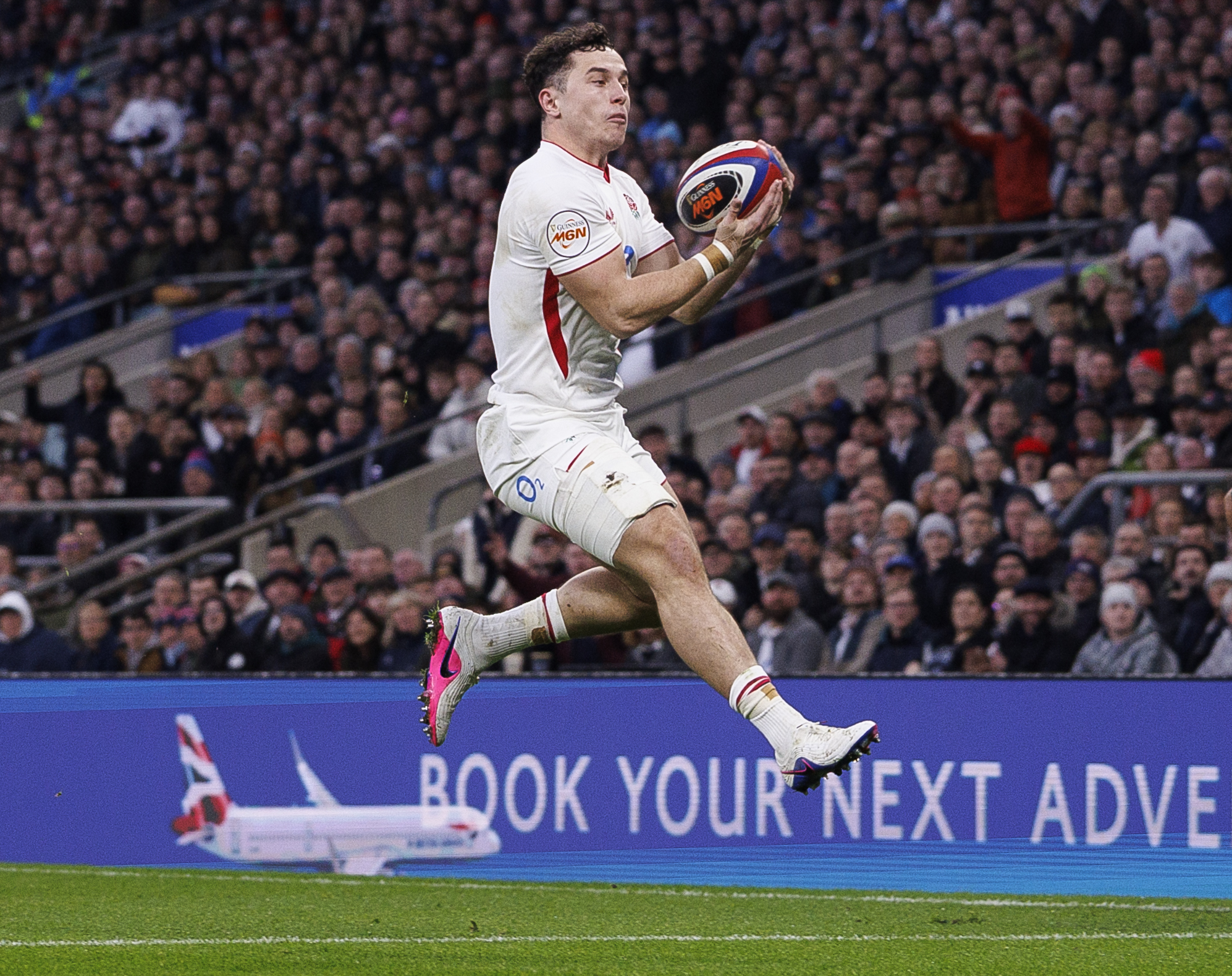
Arundell scores a first-half hat-trick
BOB BRADFORD – CAMERASPORT VIA GETTY IMAGES
Everything England want from their prolific scorer they can get from his reading of the game as a wing — out wide — and making his moves into the midfield. His performances against Australia in the autumn and in Saturday’s game indicate he finds it harder to pick the outside arc from the inside than he does vice versa. Out to in, he is a formidable threat but drifting from infield to wider, he is not making the same mark. Certainly, the failure to turn half-tries outside him into tries is a worry. Late in the second half he burst on to the ball near the Welsh line but could not conjure the tryscoring pass.
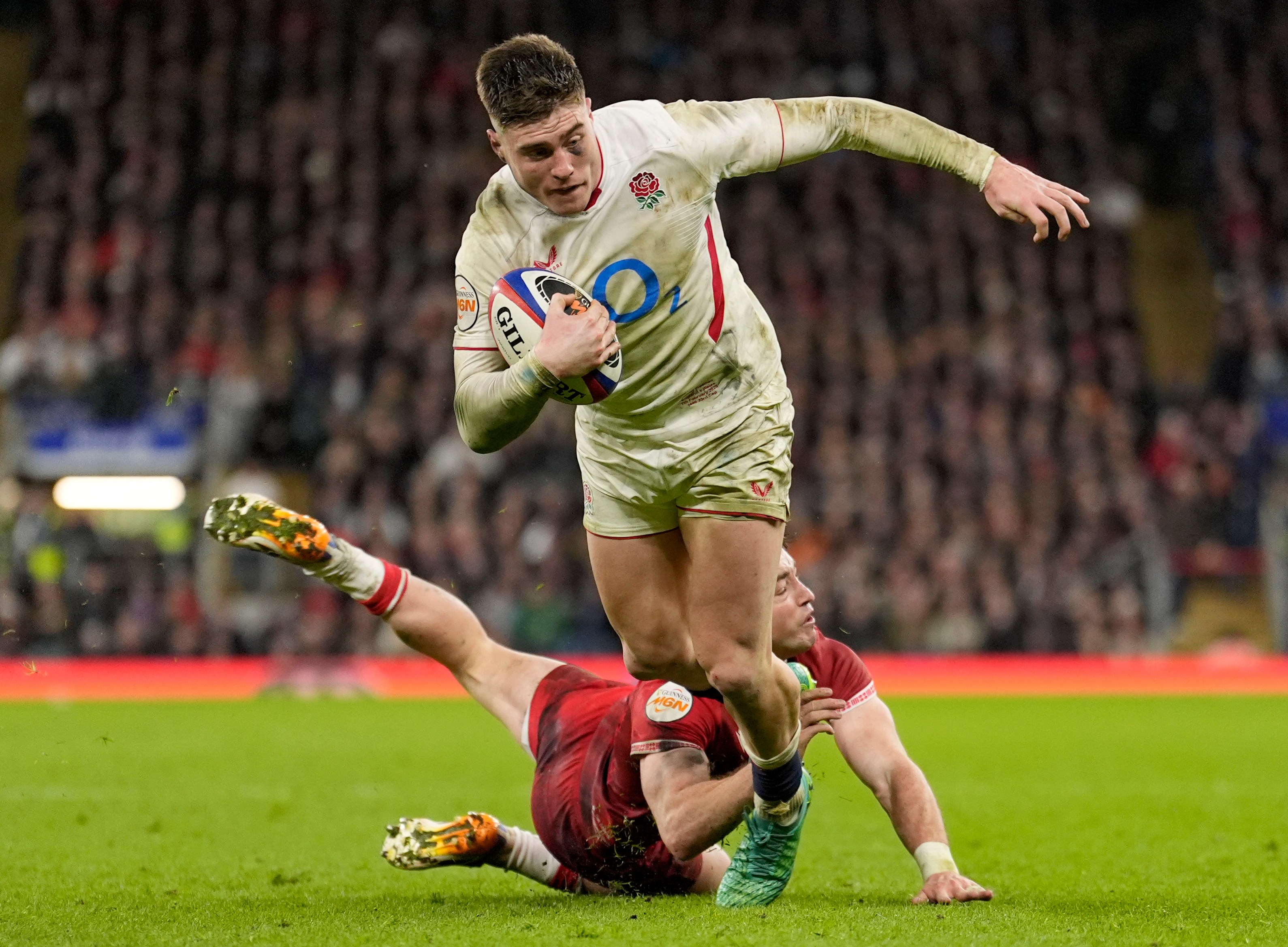
The Northampton Saint shines when playing with more freedom from the wing
PA
So, here’s where we are in the Freeman experiment. It’s not a failure but it’s definitely not anywhere near effective. If Scotland are expected to be easy prey, pick him at 13. If their defeat in Rome marks them as even more dangerous and cussed rivals, he should start where he finished against Wales — back in his less favoured but more familiar position of wing.
Which leaves England with a puzzle. What to do with Henry Arundell. The Bath wing scored a hat-trick that any professional wing would have scored but he has that something special. His debut for England from the bench in Australia is remembered for a try that combined his power and elusiveness. His try with his first touch off the bench against Fiji in the autumn reminded all of his searing acceleration.
Saturday’s match was Arundell’s 12th international. He has scored 11 tries in those appearances, a few of them no more than late cameos. Five of the tries came against Chile in the 2023 World Cup and Wales — at times — didn’t look much more of a challenge than the gutsy South Americans.
• Alex Lowe’s match report: Henry Arundell scores hat-trick as England crush listless Wales
Freeman and Immanuel Feyi-Waboso are the first-choice wings, with the aerially excellent Tom Roebuck a solid squad option, but Arundell has it in him to take the full-back position. Freddie Steward is not omnipotent in the air, with opponents jumping for the tap back with defensive blockers now illegal.
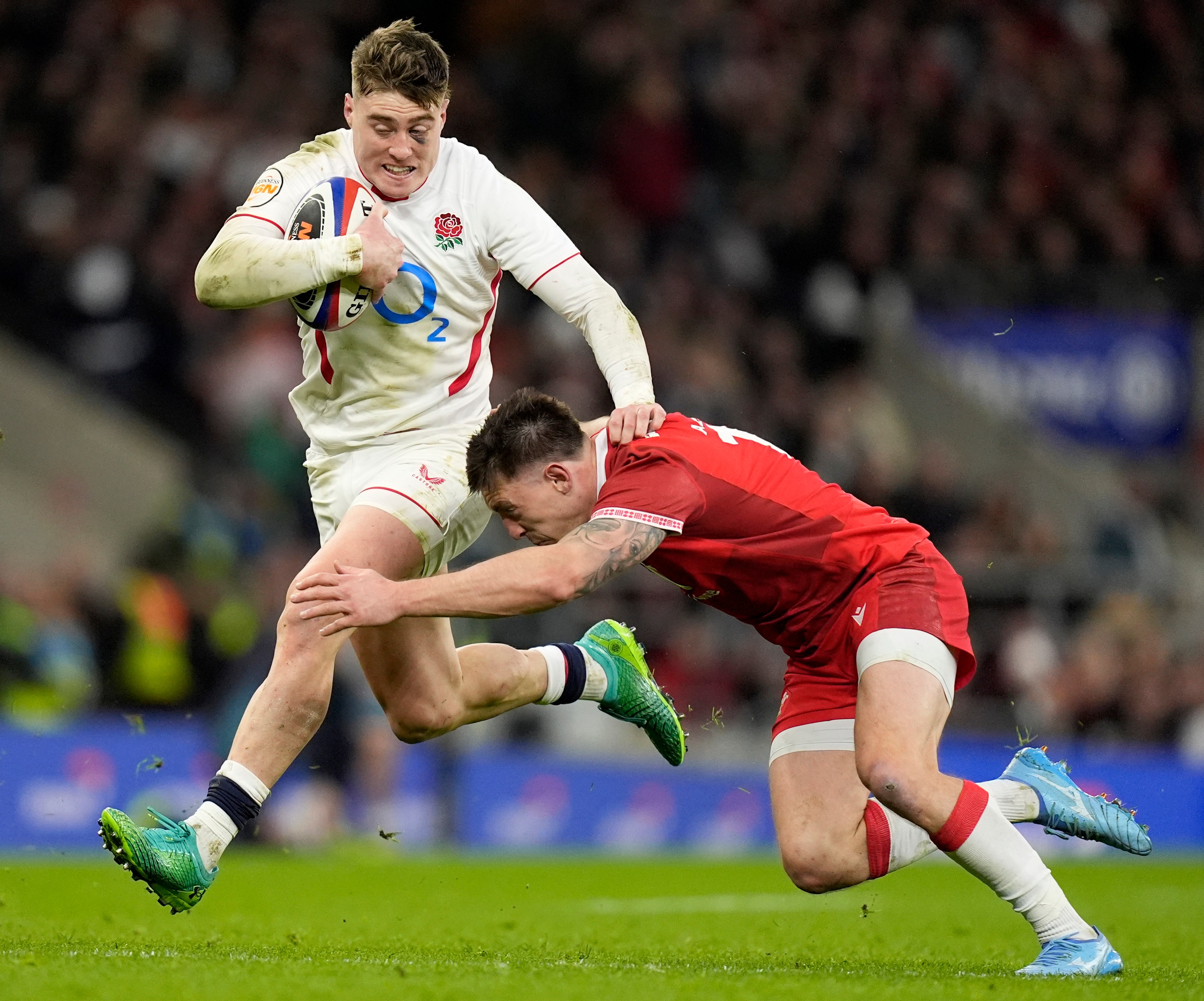
Freeman evades Wales’s Josh Adams
ANDREW MATTHEWS/PA WIRE
Arundell has the broken-field game that can ignite England in the last 20 minutes of a match. If England want to be the best team in Europe, let alone the world, they need a few extra players who can produce the unexpected. Arundell, compared post-match to Jonny May, has that special ability to change gear from third to fourth to overdrive.
It will take some rethinking regarding the bench but it could deliver more momentum than the ‘Freeman at 13’ experiment. The exciting thing about England is the amount of potential that remains untapped. They were conservative on Saturday. They will be something else when they let themselves go.