
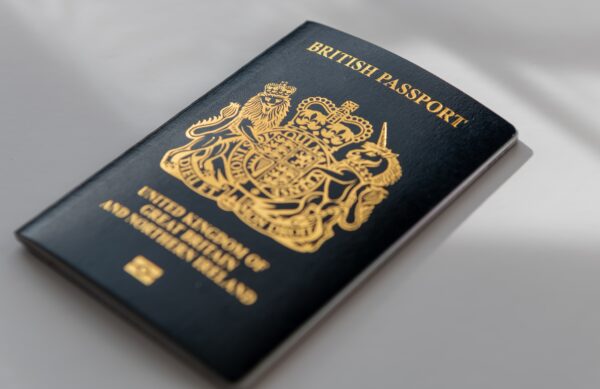
On 11 February 2025 Free Movement reported on the Home Office’s amended policy guidance, published the day before, which changes how good character is assessed in British citizenship applications.
These changes make it much harder for refugees and others who have travelled to the UK to seek protection to naturalise as British citizens. The policy since 10 February 2025 states that people who enter the UK illegally, or who arrive illegally having undertaken a dangerous journey, will ‘normally’ have their applications for British citizenship refused. It doesn’t matter when the person arrived in the UK; the policy has retrospective effect and potentially applies in perpetuity.
Effect of the policy change
The policy change was intended to replace the ban on obtaining British citizenship provided for in sections 31-32 of the Illegal Migration Act 2023, which were repealed by the Border Security, Asylum and Immigration Act 2025, effective from 2 December 2025.
Replacing a measure sanctioned by Parliament in primary legislation with a change to executive policy – without any form of consultation or even prior warning – raises constitutional and rule of law concerns. But the policy change is worse than the legislation it was intended to replace because of its retrospective effect. The Illegal Migration Act 2023 restrictions would have only applied to individuals who met the four conditions in section 2, which included arrival in the UK after the day on which the Act was passed. These restrictions did not, therefore, have retrospective effect.
Consistent themes in conversations we have had with people affected by this policy are the deep feelings of unfairness around its retrospective application and suddenly feeling unwelcome in the country in which they have made their homes. In many cases, people arrived when the UK was part of the Dublin system; under that system the UK had taken responsibility for deciding their asylum claim, rather than returning them to another EU country under the ‘take back’ provisions.
People we have advised have fled conflict and persecution in countries like Syria and the Democratic Republic of Congo, enduring unimaginable horrors and, in the face of significant adversity, managing to rebuild their lives in the UK. They thought the way in which they had travelled had been addressed when their applications for asylum and indefinite leave to remain were considered.
Legal challenge
Wilson Solicitors LLP filed a judicial review claim challenging the policy within three months of it being published. We filed it on behalf of a Syrian refugee (anonymised in the proceedings as CBW) who we believed would likely be refused under the policy.
CBW initially lodged skeletal grounds on the basis the Home Office had indicated in pre-action correspondence that they would publish amended policy guidance addressing Article 31 of the Refugee Convention. Amended guidance was not published by the date originally indicated and since there was no updated timescale for its publication, amended grounds were filed in June 2025.
These amended grounds argue that the policy guidance is unlawful on the basis: (1) it misdirects decision-makers on the law, specifically Articles 31 and 34 of the Refugee Convention; (2) it fails to direct decision-makers to consider the impact of refusal on Article 8 ECHR rights; (3) it is unlawfully discriminatory under Article 14 when read with Article 8; and (4) domestic public law grounds, including frustrating statutory purposes and irrationality / Wednesbury unreasonableness.
Meanwhile, we started receiving enquiries from people who had been refused British citizenship. Taking a cautious approach to the judicial review time limit, we lodged judicial reviews against these refusals within the three month long-stop time limit of the refusal decision. At the same time, we assisted with requests to the Home Office for reconsideration of the original decision.
Following CBW, our firm lodged a total of 17 claims for judicial review on behalf of individuals refused British citizenship on the basis that their illegal entry and/or dangerous journey meant they did not meet the good character requirement.
In an order dated 24 November 2025, Mr Justice Kimblin adjourned CBW’s application for permission to an oral hearing, noting that the grounds raised matters of ‘general application beyond the facts of the claim’. The judge referred to other claims raising the same issue and invited the parties to consider case management.
Subsequently, Wilson Solicitors and the Government Legal Department agreed an order providing for permission to be granted in five lead claims and for other claims to be stayed behind them. Paragraph 3 of the order provides a mechanism for other individuals who have had their applications refused under the policy to request an extension to the judicial review time limit until three months after the lead claims are heard.
This can be done by writing to named officials at the Government Legal Department with the individual’s details (name, date of birth and Home Office reference(s)) together with a copy of the decision. Upon giving notice, paragraph 3 operates to extend the judicial review time limit.
Developments
Two of the original lead claims have now been granted British citizenship. One of these has been substituted for another individual whose refusal decision has been maintained on reconsideration. This means that there are now four lead claims: CBW and three individuals (AAY, NEA and BMM) with reconsideration refusals. The full hearing has been fixed for 9-11 June 2026 before the Divisional Court, which normally hears cases that raise important public interest issues and comprises of a Court of Appeal judge and a High Court judge.
We have settled four cases after issuing judicial review proceedings. Three of these concerned individuals who travelled by aircraft and only transited in another country on their journey; the other individual entered on a valid visa but was deemed to be an illegal entrant after claiming asylum.
We have had other clients who arrived as children and others under the control of traffickers whose applications were granted in line with guidance and ministerial statements that such people are likely to have discretion exercised in their favour on the basis they were not considered to be in control of their journey (see, for example, here and here).