
Searches for ‘marine collagen’ on Boots.com saw a 227 per cent increase year-on-year, with collagen sales up by 62 per cent. Vida Glow, founded in Sydney, sells a box of its marine collagen every four seconds globally.
And it’s not just an Australian obsession either: According to YouGov polling, 21 per cent of Brits had used a wellness supplement between January – July 2025, with collagen topping the list. The study showed 15 per cent of women and 5 per cent of men had taken it.
Spend five minutes on social media and you’re likely to spot an influencer or beauty editor – with a glowing complexion – scooping a hefty portion of powdered collagen into their morning coffee or smoothie.
But before you jump on this bandwagon and start sprinkling marine collagen on your cornflakes, it’s worth asking: what does it actually do, and is it worth the hype? Find out below.
What is collagen?
Collagen is the most abundant protein in the body. Dr Anjali Mahto, consultant dermatologist at Self London, says to think of it as scaffolding that’s responsible for providing structure and strength to skin, muscles, bones and connective tissues. In a visual sense, collagen helps to keep skin plump and hair healthy.
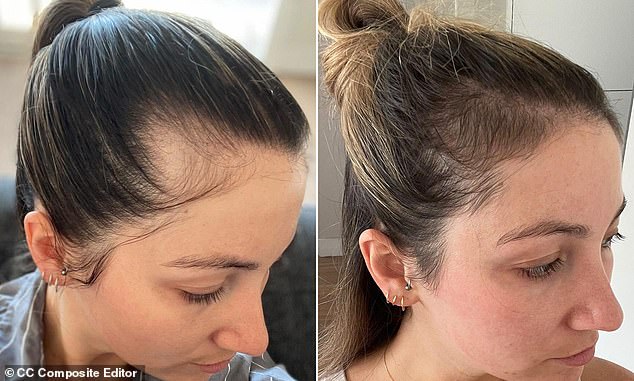
A Vida Glow customer whose hair began to reappear after treatment (right)
Bovine collagen is extracted from cow skin, while marine collagen is extracted from fish scales.
Why do we lose collagen?
We start to lose collagen in our 20s. ‘This decline is driven by intrinsic ageing (genetics) and accelerated by extrinsic factors like UV exposure, smoking and sugar intake,’ says Dr Mahto. Studies show that in the first five years after the menopause women lose 30 per cent of their collagen, due to a drop in oestrogen, which causes skin sagging and the formation of deep lines.
How do collagen supplements work?
Anna Lahey, founder of Vida Glow, says: ‘Marine collagen is highly bioavailable, meaning it’s easy for the body to absorb and use.’
Vida Glow’s marine collagen is hydrolysed, which means the larger collagen molecules are broken down into smaller, easily absorbable peptides.
This means the peptides can enter the bloodstream and increase the density of fibroblasts, the cells responsible for rebuilding connective tissue, including collagen.

We start to lose collagen, one of the effects of which is hair-loss, in our 20s
‘It works from the inside out, in a way topical skincare simply can’t,’ says Lahey.
For Lahey, marine collagen is a personal passion. ‘In my early 20s, I experienced sudden hair loss. I tried everything – topical treatments, professional therapies and medication – but nothing delivered lasting results.
‘Eventually, I was introduced to marine collagen as part of a more holistic, inside-out approach to beauty. I took it consistently and over the following months noticed a clear difference: my hair shedding slowed, my skin felt firmer, and my nails became stronger.’
After 12 weeks, the full benefits of marine collagen should be visible and can be maintained with continuing supplementation.
Are collagen supplements worth taking?
Opinion is divided among experts. There are studies that show positive results, for example in Vida Glow’s 12 week trial of its marine collagen supplement, 96 per cent of participants experienced a reduction in fine lines and wrinkles and 71 per cent reported new hair growth. However, the majority of these studies are funded by collagen supplement brands.
Lahey says: ‘At Vida Glow, we invest heavily in our own double-blind, placebo-controlled clinical trials. They’re expensive and time-consuming, but they are the gold standard, and they give us the most robust evidence that what we’re creating delivers genuine, measurable results.’
Consultant dermatologist Dr Angela Tewari explains: ‘Collagen supplementation has been around for at least 30 years with no reported adverse events to health. There is good evidence that daily use of 5g powder form of marine collagen will increase skin hydration, improve texture and fine lines over a three month period.
‘It’s a common misconception that these supplements just don’t work – they do but, like with most things, they may not work for everyone. For example, individual body metabolism can impact how effective the supplements are for each person.’
However, Dr Mahto is sceptical: ‘The fundamental biological issue is that collagen is a protein. When you ingest it, your stomach acid breaks it down into individual amino acids, just like it would a piece of food. Your body then distributes those amino acids wherever they are needed most for example your muscles – it doesn’t necessarily send them to your face just because the collagen supplement bottle says “for skin.”’
Claire Fullam, a trichologist and founder of Trua Hair clinic, advises that those suffering from thinning hair should look to their scalp health first and consider a blood test to find out if they have any deficiencies. ‘Understanding the scalp is sometimes far more beneficial to the hair than taking supplements,’ she says, ‘Collagen certainly won’t do you any harm and may help may skin become plump and glowy – but it’s an expensive hobby.’
Indeed, Lahey advises a holistic approach for the best results: ‘Collagen supplements are a powerful support, but they can’t fully counteract habits that accelerate collagen breakdown, such as excessive sugar and alcohol, poor sleep and chronic stress,’ she says. ‘Sun exposure is also one of the biggest external contributors to collagen loss, so daily SPF is essential. When collagen supplementation is paired with good lifestyle foundations, that’s when you truly see the difference.’
THE VERDICT
If you’re managing your nutrition, using sun protection and generally leading a healthy lifestyle then collagen supplements can offer hair and skin an extra boost (if you can afford to maintain the habit).