
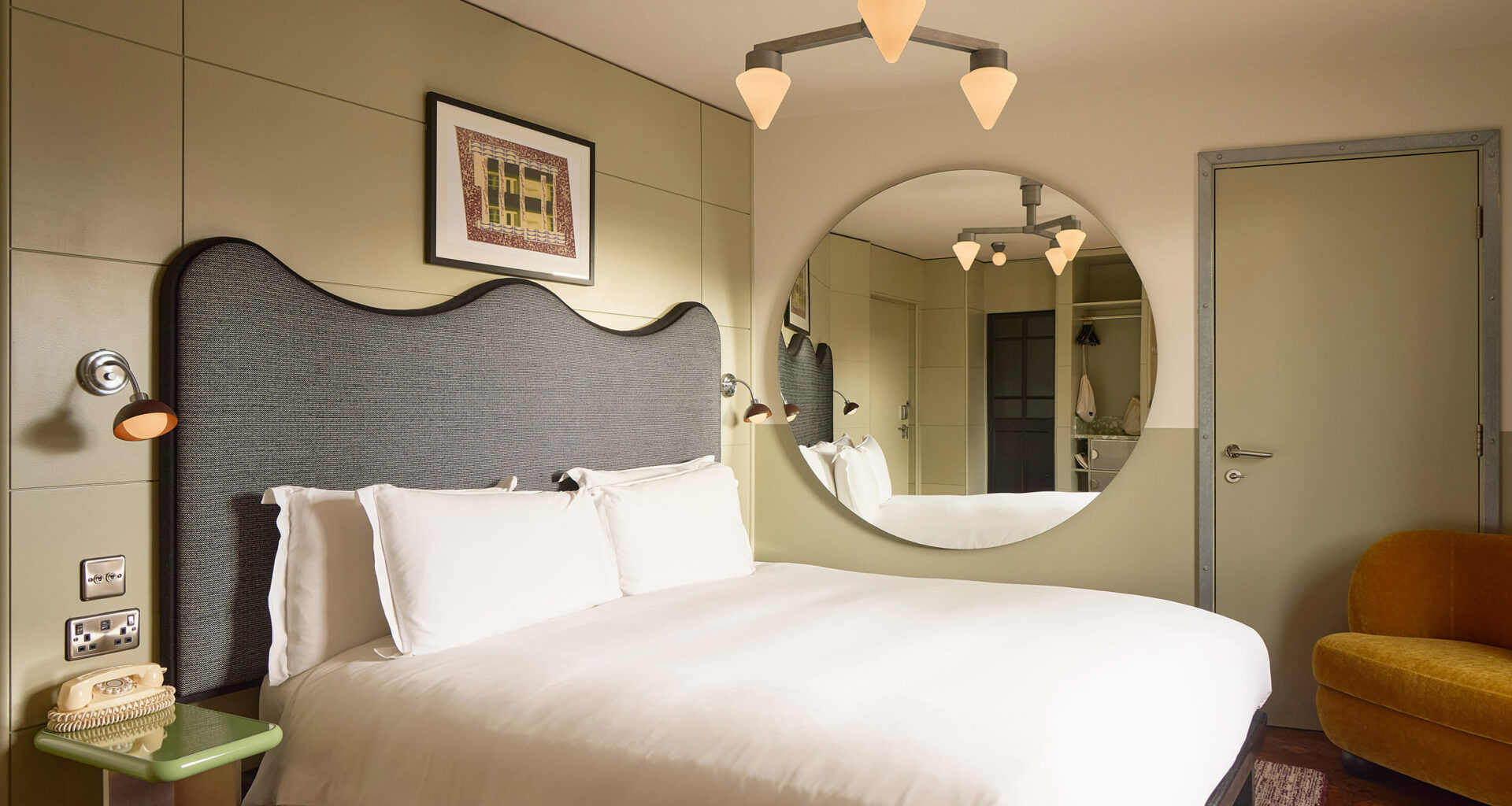
The original Hoxton hotel in east London has been given a refresh after two decades, featuring warm materials and second-hand furniture, as seen in our latest Dezeen Exclusive.
Opened twenty years ago, The Hoxton in Shoreditch was the international hotel chain’s first hotel. When it was time to give its interior an update, the in-house design team aimed to create a more contemporary feel.
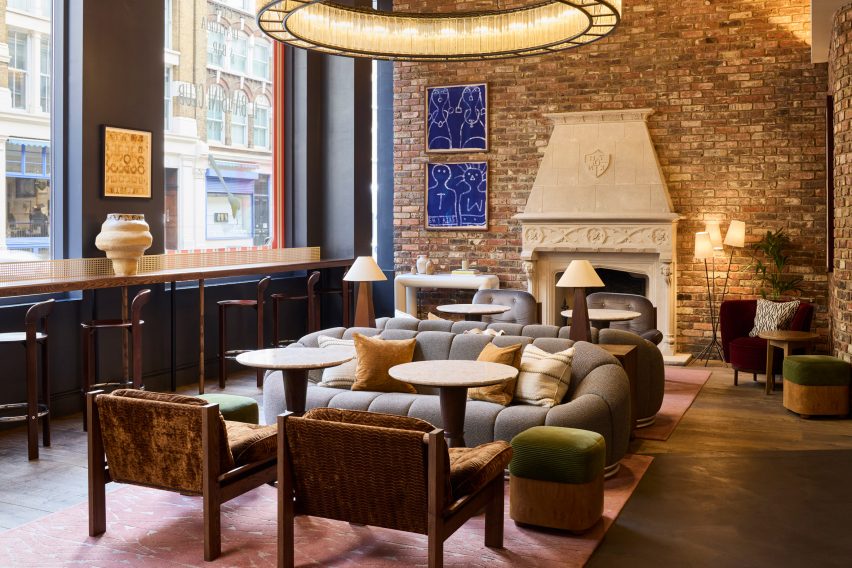 The revamp was designed to keep the hotel’s “warmth and homey character”
“The concept focused on refining the original spaces while keeping that familiar Hox warmth and homey character that regulars recognise instantly,” said Charlie North, the global vice president of design at Ennismore, the owner of Hoxton Hotels.
“We wanted the interiors to feel more contemporary and calm, but still rooted in Shoreditch and its industrial and creative heritage,” he told Dezeen.
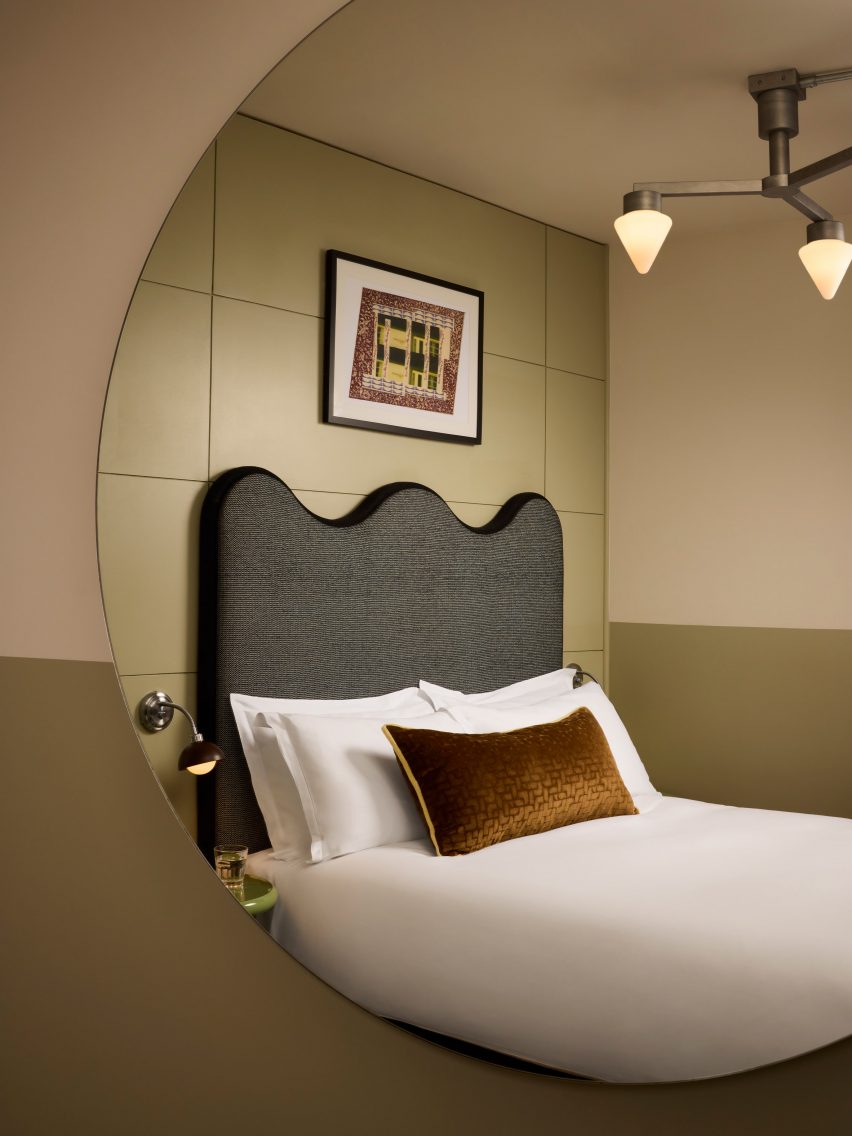 The headboards in the bedrooms were updated
The refurbishment saw the team update all 210 rooms at the hotel. It kept signature details such as the large circular mirrors and parquet floor, but updated others, such as the headboards in the bedrooms.
Overall, the update has a more mid-century design influence than the previous interiors, North said.
“We focused on materials that feel warm and easy to live with, while still elevated,” he explained.
“Dark timbers and a mix of marbles add layers and depth, while velvet and bouclé soften the spaces and make them feel comfortable and lived-in.”
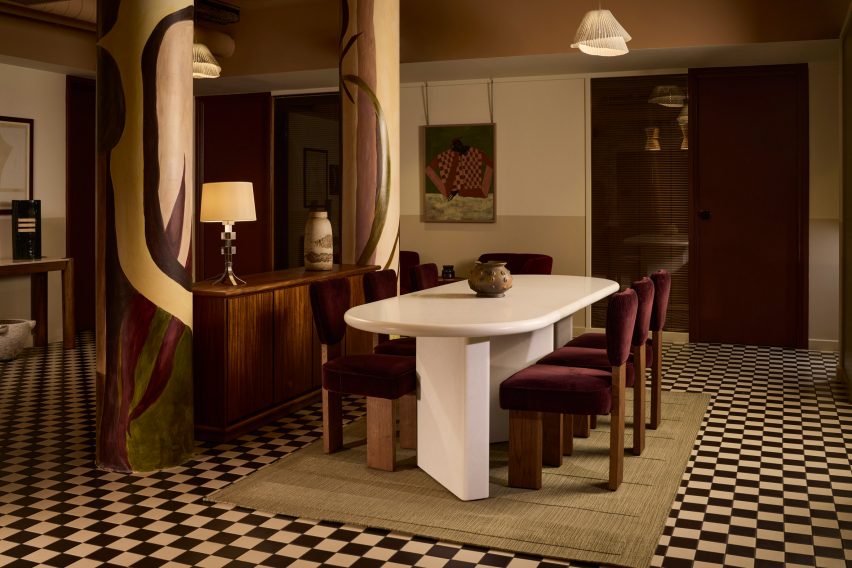 The interior has a mid-century-modern design influence
To create a sense of “history and personality”, much of the furniture chosen by the designers was restored or sourced second-hand.
The colour palette of the new interior was designed to balance out the high-energy of the surrounding Shoreditch area and offer a relaxed atmosphere.

Uchronia designs celadon-hued suite at Mandarin Oriental hotel as “weird underwater world”
“In the lobby, natural and monochrome tones are layered with dusty pinks and burgundies that complement the brickwork and stone, while in the rooms we leaned into muted greens with earthy yellows and browns, offering guests a softer, more settled environment,” North said.
Overall, the update was intended to reflect the changes the neighbourhood has gone through in the last two decades, moving from an arty, up-and-coming area to a more established creative location.
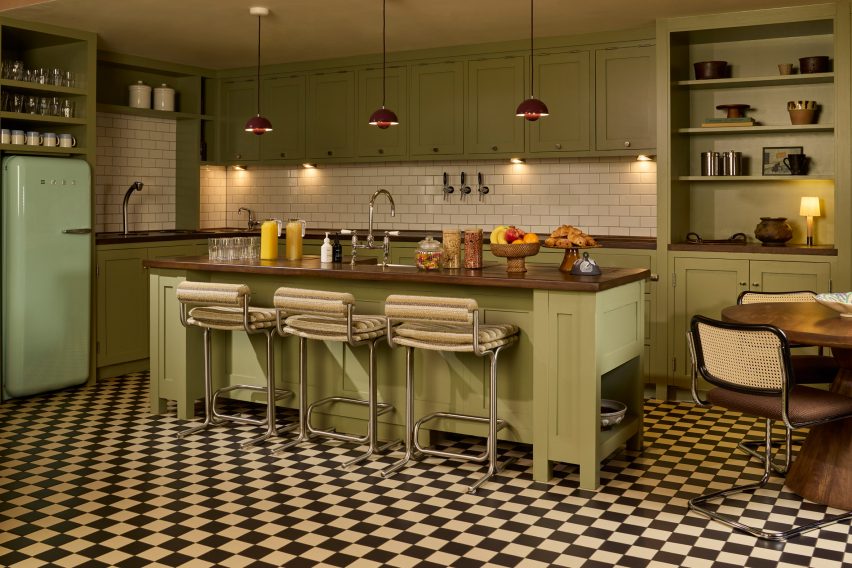 The Hoxton was given a colour update with muted green hues
“When The Hoxton first opened twenty years ago, Shoreditch was just starting to emerge as a creative hub, and the hotel was part of that early wave that helped shape the area as a place for culture and design,” North said.
“Over time, Shoreditch has grown into a more established, internationally recognised neighbourhood, and that evolution influenced the refresh, with interiors reflecting a more confident, considered version of the area, while still holding onto its creative spirit,” he concluded.
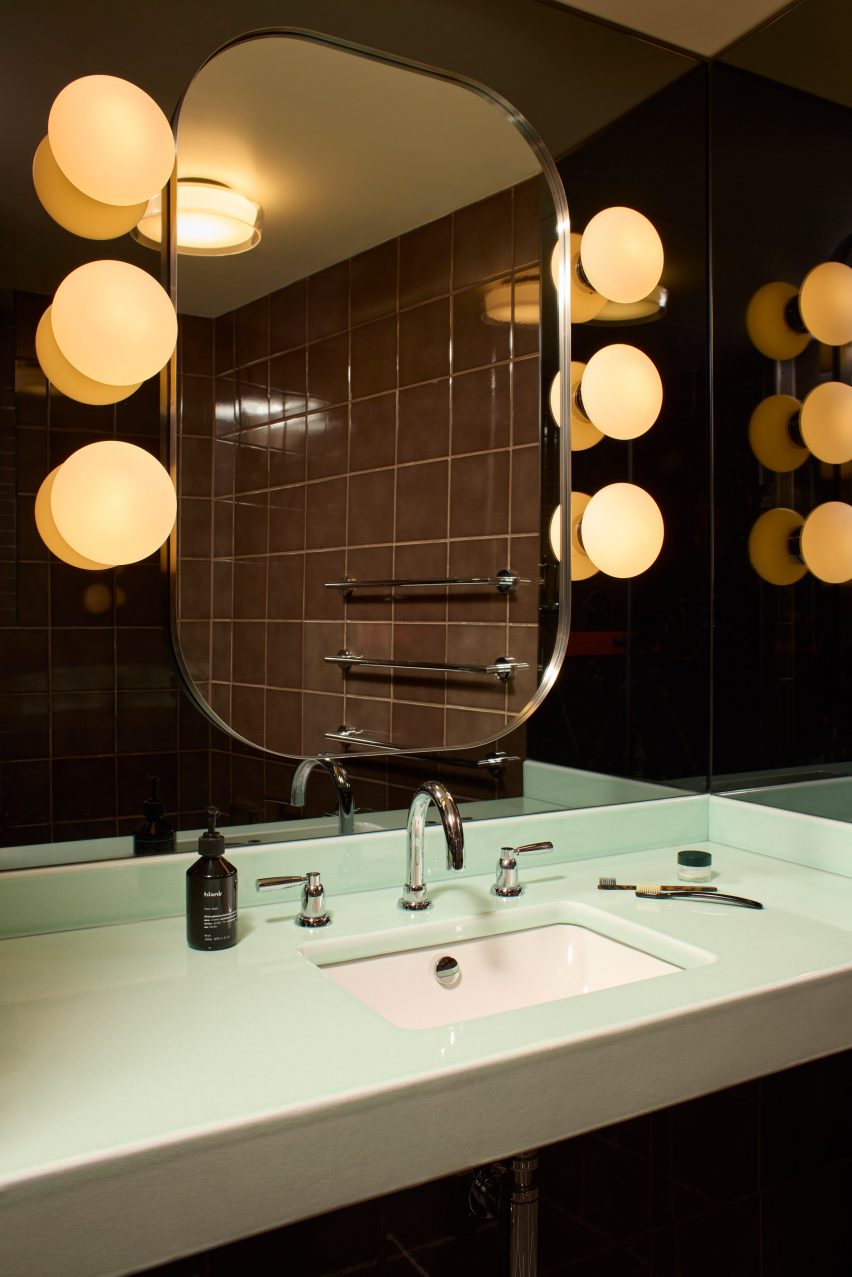 This year marks the 20th anniversary of the London hotel
Other recent London hotels featured on Dezeen include a room at the Mandarin Oriental designed by Uchronia and a 12-storey Notting Hill-building that combines hotels and residences under one roof.
The photography is courtesy of The Hoxton.