
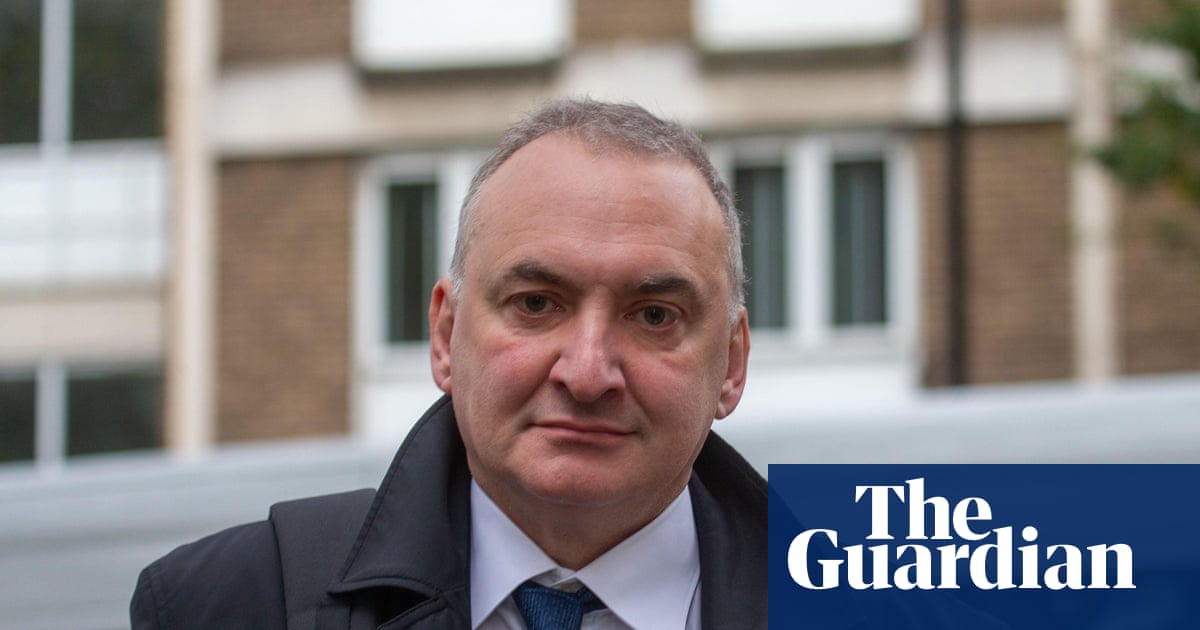
The most senior civil servant in Downing Street is negotiating his exit as part of a wider shake-up of Keir Starmer’s operation after one of the most dramatic 48 hours of the prime minister’s time in office, sources have told the Guardian.
Chris Wormald, the cabinet secretary, is understood to be negotiating the terms of his departure from No 10, which would make him the third senior member of staff to leave in recent days.
Wormald was appointed just over a year ago but has been under pressure for several months, with some of those close to Starmer having come to view him as a “disastrous” appointment.
One government source said “the writing is on the wall” for Wormald, with Starmer keen to reassert his authority over both his parliamentary party and the wider government after a turbulent past few days.
Another source said Wormald was in talks over taking a seat in the House of Lords as part of his exit deal.
Wormald was appointed at the end of 2024, moving from his previous post as the lead civil servant in the health department after the departure of Simon Case.
He was one of four people on the prime minister’s shortlist, which also included Olly Robbins, who is now permanent under-secretary at the Foreign Office, Antonia Romeo, the permanent secretary at the Ministry of Justice, and Tamara Finkelstein, the former permanent secretary at the environment department.
Wormald was seen as the safest of the four candidates, with Starmer at the time praising the “wealth of experience” he brought to the role.
However, since then government insiders have expressed irritation at Wormald’s reluctance to embrace major reform of the civil service, with some accusing him of “hand-wringing” about problems rather than coming up with solutions.
Wormald would be the latest senior Downing Street staff member to leave after the departures in the last 48 hours of Morgan McSweeney, the prime minister’s chief of staff, and Tim Allan, his communications director.
Allan’s resignation was followed hours later by a call from Anas Sarwar, the leader of Scottish Labour, for the prime minister to stand down, as he became the most significant party figure to call for a change of leader.
The departure of McSweeney, who has worked alongside the prime minister since he became Labour leader, has prompted a more widespread rethink of how Downing Street operates as Starmer tries to get back on the front foot.
The prime minister has appointed Vidhya Alakeson and Jill Cuthbertson as his joint acting chiefs of staff, but is understood to be considering changing the way the role works in the long term.
One suggestion is that Starmer should split the role in two, with one person taking charge of delivery across government and another handling politics and particularly relations with the Labour party.
Some inside Downing Street feel Wormald has been spread too thinly to get a grip on whether the government was delivering Starmer’s priorities.
Under David Cameron, the cabinet secretary role was split into one person advising the prime minister, another taking charge of the Cabinet Office and another taking on responsibility for the civil service more generally.
The shake-up comes just five months after the last Downing Street reorganisation, in which the Labour MP Darren Jones was appointed the prime minister’s chief secretary, with a remit to resolve inter-departmental fights and make sure the government was following through on its promises.