
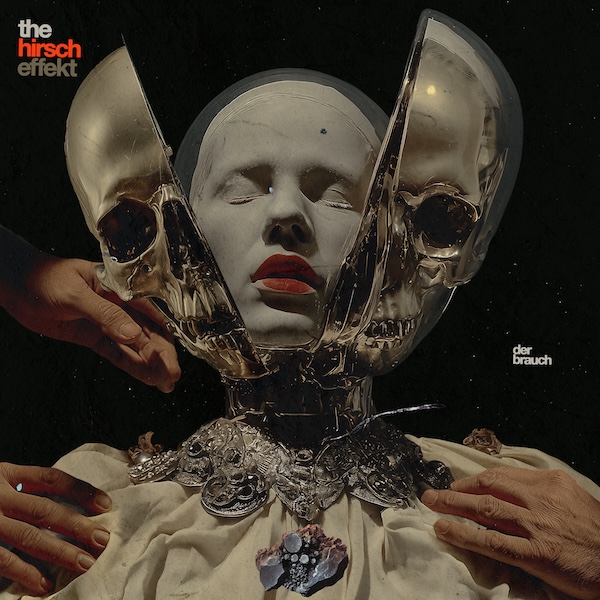
 Motivation can be a tricky thing. Take me, for instance—it’s my first review of 2026, and I’m already starting it later in the month than I meant to. For me, motivation has been a bit lacking. Now look at the subject of my first review, Der Brauch (“The Need”) from German progressive metal act The Hirsch Effekt. This is their seventh full-length release in sixteen years of existence, a commendable testament to motivation, at the very least. And while putting pen to paper (figuratively) can be a hard thing to do, I love writing about a motivated group. Though I hadn’t heard of The Hirsch Effekt before this year, I was eager to explore their unique take on progressive metal.
And progressive it is! Though perhaps the band would disagree with me—they describe their sound as being “rooted in Postpunk, Postrock, Artcore, Progressive Metal, Pop and classical music.” It’s an interesting blend with a couple of notable outliers, but frankly, that’s how I like my music. Lead vocalist and guitarist Nils Wittrock’s style could fit fairly well in most of those styles, a clean, somber croon with a hardcore edge—or vice versa, depending on the song. Bassist Ilja John Lappin lends his cello to proceedings, giving Der Brauch a symphonic, classical side that softens its otherwise loud approach. This, in turn, forces drummer Moritz Schmidt to be something of a chameleon, adapting to each of the aforementioned styles as songs demand. The result is a loud, hardcore-ish sound rooted in progressive metal that is nevertheless “nice” to listen to.
Der Brauch by The Hirsch Effekt
…or so it may appear at first glance. Truer is that Der Brauch is very much a multifaceted album and The Hirsch Effekt have a lot of tricks up their sleeves. Songs like “Das Seil” lean into their art/classical stylings, with lengthy, complex guitar noodling and cello support. It builds to a dramatic metal flourish and demonstrates much skill from each musician. Elsewhere, “Der Doppelgägner” features notably more intense guitar work, leaning towards the more extreme side of progressive metal. “Die Brücke,” on the other hand, is slow and dream-like, reminding me of Dawnwalker in the way it covers a lot of ground, seemingly in no rush to do so. Lastly, “Das Nachsehen” treads symphonic metal territory, using the cello as a lead instrument and building a genuinely dramatic sound. Throughout, the three bandmates, all of them vocalists, sing, growl, and scream their way through each style as needed.
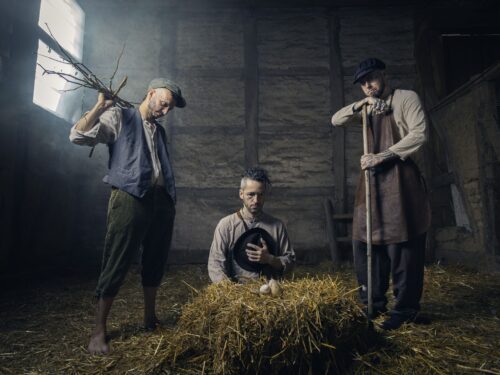
So there’s a lot happening here; The Hirsch Effekt is a dodecahedron of ideas on Der Brauch, something you may see as a strength or weakness depending on your preferences. I could argue, for example, that Der Brauch doesn’t have very strong flow as a complete album because the sound is constantly changing. You might return that the sound they cultivate is unmistakably theirs, and so it really isn’t that big a deal. For my part, I like their melodic leanings the best—the dramatic “Das Nachsehen” and surprisingly catchy “Der Brauch” in particular, with their huge choruses and passionate performances. By contrast, the longer, more wandering pieces like “Die Lüge” don’t land so well, and as a resul,t I find Der Brauch lags a little in the middle. I wouldn’t have minded if it were a bit less than its 49-minute runtime, despite the impressive array of ideas contained therein.
But all that is me. Really, The Hirsch Effekt has enough ideas and styles that it’s a hard album to put a number or description on. I’ve certainly enjoyed it, and will likely return to it after this review is published. But I think a lot of people will have varied experiences with Der Brauch (more so than the average album, I mean). It’s a fascinating listen, one that reveals more and more with every spin; strong, explorative, and motivated for sure.
Rating: 3.0/5.0
DR: 6 | Format Reviewed: 320 kb/s mp3
Label: Long Branch Records
Websites: thehirscheffekt.bandcamp.com | thehirscheffekt.de | facebook.com/thehirscheffekt
Releases Worldwide: January 30th, 2026
Give in to Your Anger: