
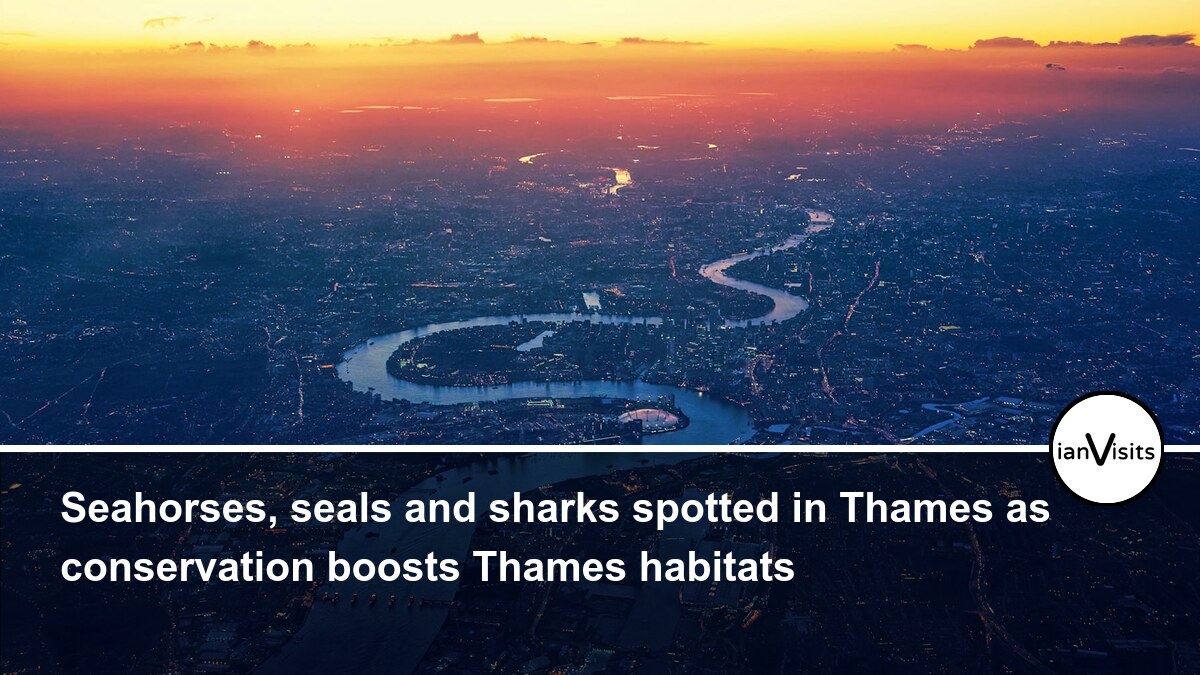
Conservation efforts along the 153 miles of the River Thames have delivered mixed results for wildlife, according to a new report that finds improvements in some species and habitats alongside emerging threats from climate change and pollution.
 Photo by Johannes Plenio on Unsplash
Researchers recorded increases in several wading bird species, marine mammals and restored natural habitats, including intertidal areas that act as nurseries for many fish. The river continues to support a surprising range of wildlife, with seahorses, eels, seals and even sharks – including tope, starry smoothhound and spurdog – now documented in the Thames.
However, the number of fish species found in the tidal stretch of the river has shown a slight decline since the early 1990s. Conservation scientists say more research is needed to understand the reasons behind the trend.
Climate change is already having a measurable impact on the river.
Since 2007, average summer water temperatures in London’s tidal Thames have risen by about 0.13°C per year. Long-term monitoring also shows that water levels have been increasing since records began in 1911, with sea levels around Tower Bridge and the Tower of London rising by an average of 5mm per year since 1993.
In addition, data from both recent and longer-term periods indicate significant increases in water temperature in the upper tidal Thames during summer and winter. Scientists warn that rising temperatures and sea levels are likely to affect wildlife by altering species’ lifecycles and geographic ranges.
The report also highlights major improvements in water quality over the past few decades.
Upgrades to five London sewage treatment works, along with the construction of the Lee Tunnel, have increased dissolved oxygen levels and reduced phosphorus and heavy metal concentrations in the water. A further improvement is expected now that the Thames Tideway Tunnel, which was connected to the Thames Water network in 2025, is designed to cut sewage overflows into the river.
Despite these gains, nitrate levels have been gradually increasing due to sewage effluent, posing a continuing risk to aquatic life.
Habitat restoration has become a growing focus of work along the estuary, with new saltmarsh areas and redesigned river edges created in recent years. Grey seal numbers have risen in the short term, and wading birds show long-term increases, although recent data indicate short-term declines for both wading and wildfowl species.
Further habitat creation is planned under the newly funded Transforming the Thames project, a partnership that brings together conservation groups, communities, government bodies, and landowners. The programme aims to expand restoration work across the Greater Thames Estuary to support the long-term recovery of wildlife and ecosystems.
The full report is here.