

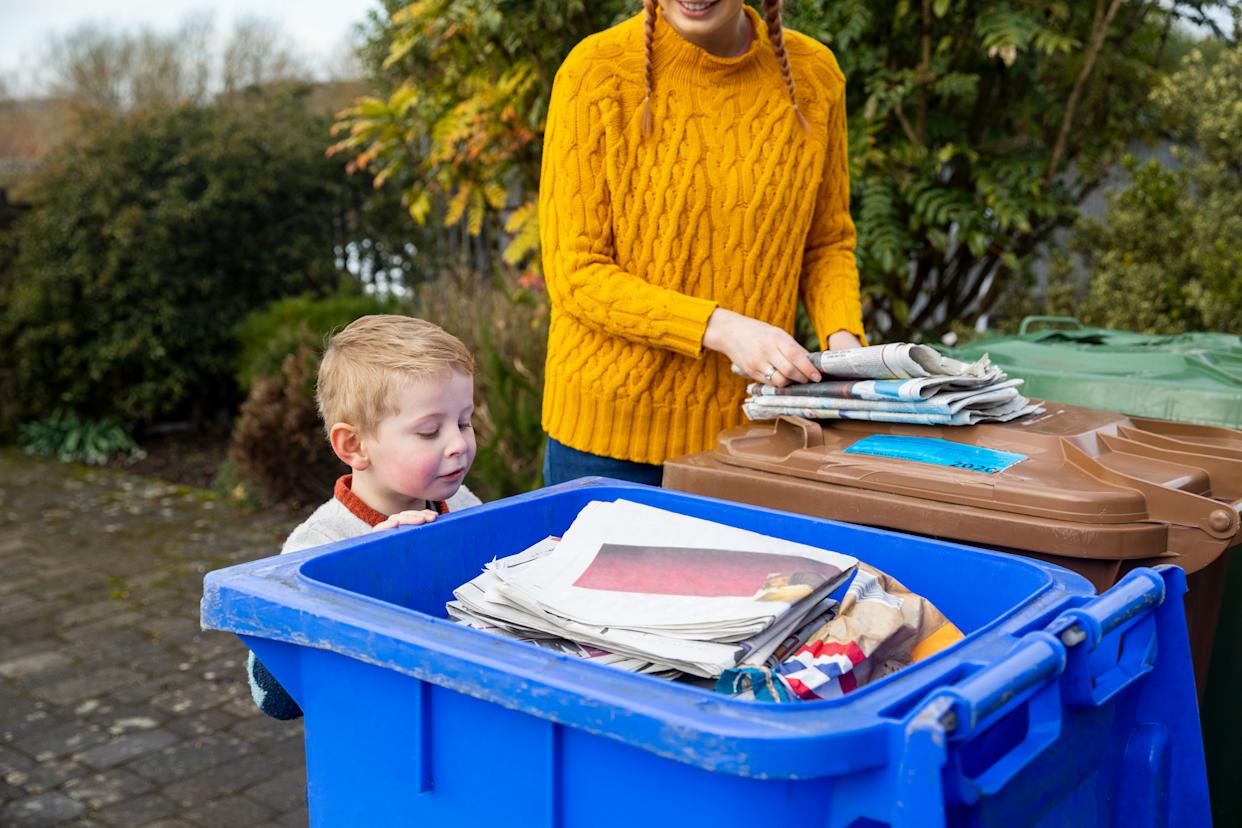
Paper and cardboard will need to be recycled separately under new legislation coming into force from 31 March.
(SolStock via Getty Images)
Many households will see changes to how they recycle cardboard and paper in the coming weeks, when the next phase of the government’s new recycling scheme comes into force.
From 31 March, new rules will roll out across England as part of the ‘Simpler Recycling’ scheme, with the aim of enabling consistent, streamlined collections from all households in a bid to boost recycling rates.
It means local councils will collect a standardised four bins from most households, consisting of:
residual (non-recyclable) waste
food waste (mixed with garden waste if appropriate)
all other dry recyclable materials (plastic, metal and glass)
Government statistics show that recycling rates have effectively ‘flatlined’ since 2015 – stuck at around 44%-45%.
The government hopes to raise that figure to 65% of municipal waste by 2035, and separating paper and cardboard is a key part of this.
The changes mean that any household that currently recycles paper and cardboard in a main recycling bin will soon need to put into a dedicated container.
Why are paper and cardboard separated?
Paper can become contaminated when it’s mixed with other materials, making it less easy to recycle.
Josh Pitman, managing director at sustainable packaging firm Priory Direct, told Yahoo News that keeping these materials clean and dry means they can be recycled into high-quality, recycled products more cost-effectively.
“Paper and cardboard are easily contaminated – both absorb moisture and grease, and once contaminated, it makes them unsuitable for recycling,” he said.
“Keeping these materials separate from other items for recycling means you reduce the risk of contamination and so improve the quality of the recycled materials at the other side of the process. Higher-quality materials mean they can be recycled multiple times. Lower quality may lead to them being rejected.”
Keeping paper separate means that paper tends to be clean and dry, and not covered in food waste.
Under Simpler Recycling, councils will also have to offer weekly food waste collections, which the government hopes will also help to minimise cross-contamination.
What are the other benefits?
Keeping materials separate makes the recycling process more affordable, too, which is crucial for councils.
“If materials are sorted more efficiently before collection, any resulting recycled products will sell for more, get rejected less and cost less to process, all of which is significant with local authorities operating under budget constraints,” explained Pitman.
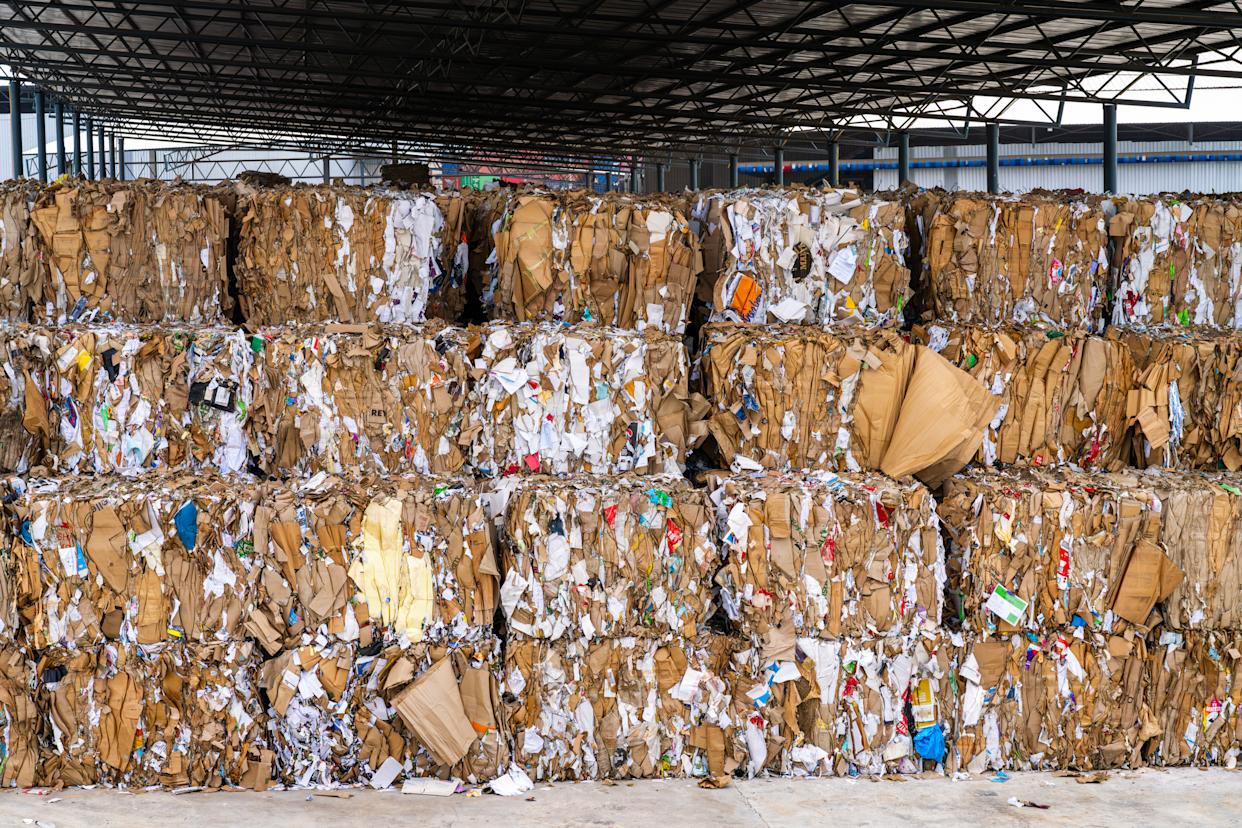
Recycling cardboard and paper separately will make the process more cost-effective.
(Witthaya Prasongsin via Getty Images)
Recycling paper separately also makes it easier to recycle flexible plastic such as bags, which are separated from other recycling using blasts of air.
One of the other major changes set to come into force under Simpler Recycling will see the introduction of kerbside plastic film collections from households, which will be introduced from March 2027.
This will include flexible plastic such as films and bags, wrappers, zip-lock pouches, sachets and bread bags, which will make it easier to separate recyclables in the future.
What else is being done to improve recycling?
The government’s upcoming deposit return scheme for drinks containers will see collection points in major supermarkets for glass and plastic bottles, and metal cans.
The public will pay a deposit on drinks bottles as part of the scheme, which comes into force from 1 October 2027. The deposit is refunded when the bottle is turned in for recycling.
It will apply to all single-use drinks containers that:
are made wholly or mainly from aluminium or steel, or polyethylene terephthalate (PET) plastic
have a capacity of between 150ml and 3 litres
are likely to be used only once or for a short period of time
In October 2025, Extended Producer Responsibility came into effect, meaning that manufacturers and importers have to cover the costs of recycling and collecting packaging.
This means that councils will be paid by plastics companies, effectively, to collect plastic which is then bought by recyclers.
What do recycling symbols mean?
You can tell whether a product can or can’t be recycled by looking for a label on its packaging.
This will let you know whether a product can be recycled, recycled when rinsed, recycled with a lid on, recycled at selected supermarkets or cannot be recycled at all.
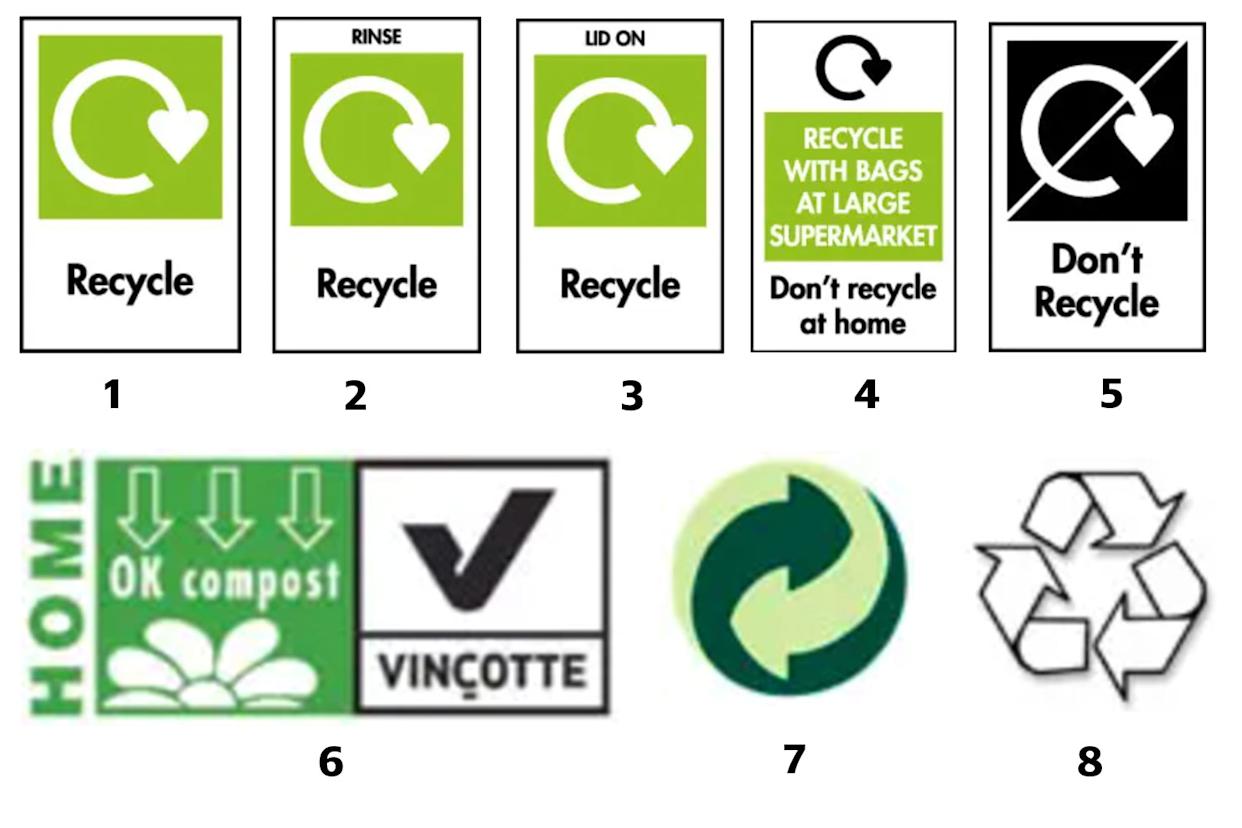
Recycling campaign group Recycle Now has put together a handy guide for how to identify which plastic products you can recycle.
Still confused? Click the image above to find out what the symbols on your packaging actually mean.