
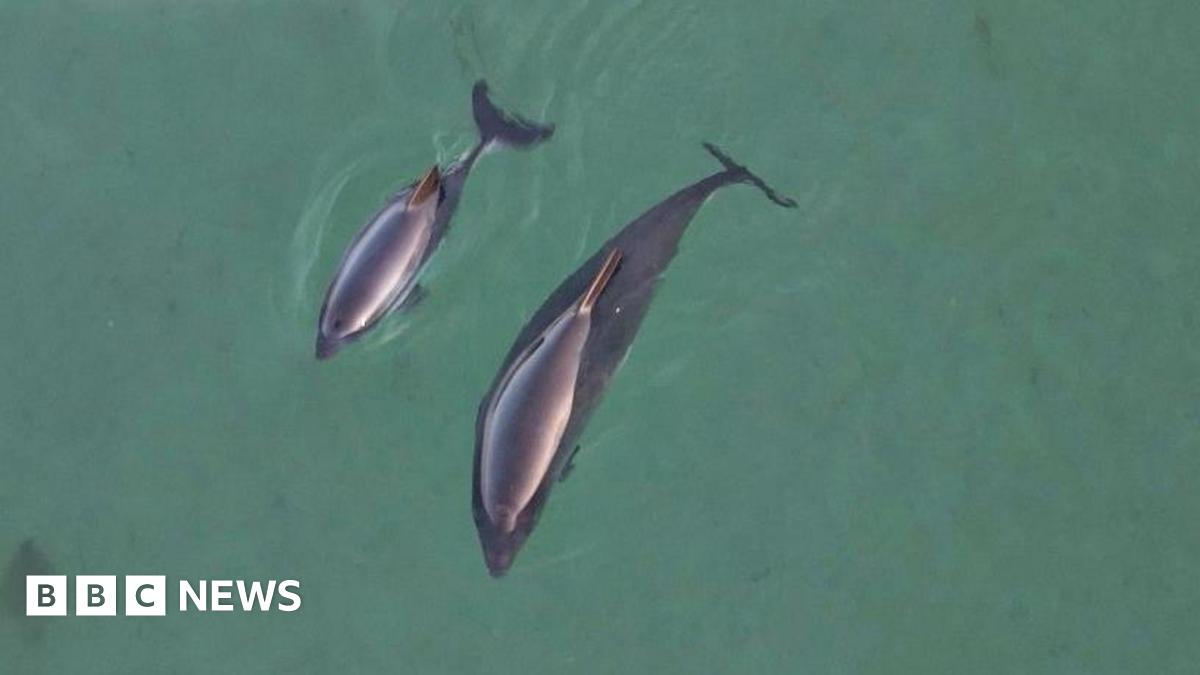
The study showed that porpoise activity dropped most significantly during summer daytime hours, when the Little Belt was busiest; and increased when vessels were not present.
Rachel Lennon said “chronic boat traffic may be limiting porpoises’ ability to feed and socialise effectively”.
Lennon, who co-led the study, said “We know from other studies that disruption to foraging can affect porpoises’ health, body condition and ultimately reproduction and survival.”
While the object of the study was not to directly assess the impact of boat traffic on porpoises, co-lead author Sharon Merkle said the disruption found was “likely to affect their ability to cope with other environmental stressors”.
Jonas Teilmann, professor at Aarhus University, which collaborated on the research, said: “This study adds to the growing understanding of how underwater noise and the increasing vessel traffic affects our environment.
“Our hope is that the results of this study will be used in future managing of the number of vessels, how fast they may move and their distribution in protected areas.”